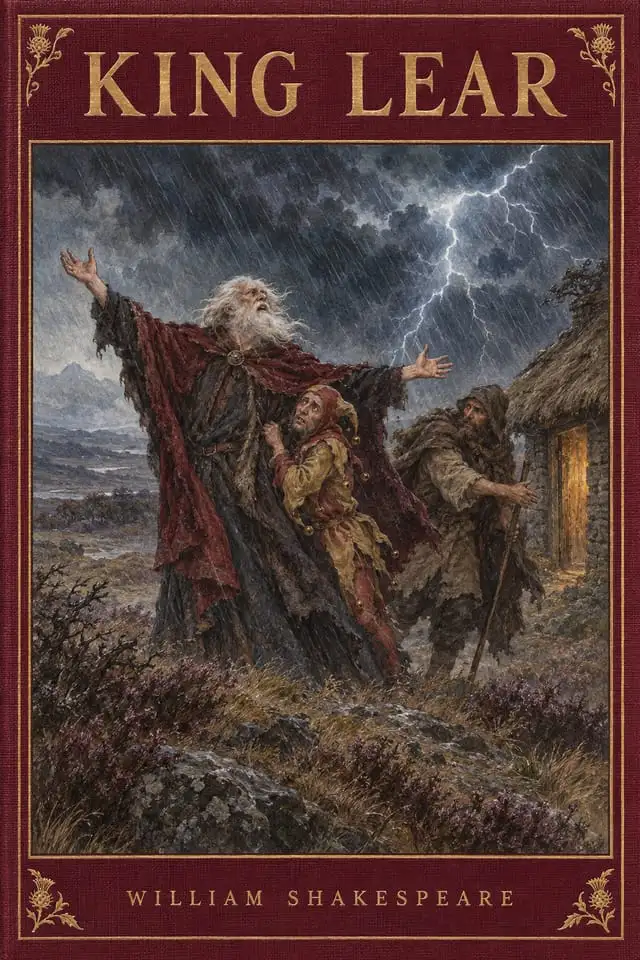
King Lear Study Guide
A-level set textAQA A-level (Lit B)Edexcel A-levelOCR A-levelEduqas A-level
Notes cover the whole book.
Characters
- KentHe identifies himself to Lear as the disguised servant Caius and, after his master's death, answers Albany's offer of rule by saying that his master calls him on a journey.First appears: Act 1, Scene 1
- GloucesterEdgar reports that he died smiling under the strain of joy and grief when his son revealed himself and told his story.First appears: Act 1, Scene 1
- EdmundDefeated by Edgar, he admits his crimes and tries to revoke his order against Lear and Cordelia before being carried off and reported dead.First appears: Act 1, Scene 1
- King LearHe imagines a shared life in prison with Cordelia, then returns carrying her dead body, seeks signs of breath and dies after calling attention to her lips.First appears: Act 1, Scene 1
- CornwallA messenger reports that he has died from the wound inflicted by the servant who opposed Gloucester's blinding.First appears: Act 1, Scene 1
- AlbanyHe arrests Edmund for treason, exposes Goneril's letter and, after Lear's death, asks Kent and Edgar to rule and sustain the damaged realm.First appears: Act 1, Scene 1
- GonerilExposed through her letter to Edmund, she leaves and kills herself after poisoning Regan, while Edmund reveals her part in the order to hang Cordelia.First appears: Act 1, Scene 1
- ReganAlready feeling ill when she publicly offers Edmund herself and her possessions, she is led away as her sickness worsens and is brought back dead, poisoned by Goneril.First appears: Act 1, Scene 1
- CordeliaDistressed for her captive father, she is led away with him and returns dead in his arms after being hanged under an order from Edmund and Goneril.First appears: Act 1, Scene 1
- King of FranceThe Gentleman reports that urgent affairs of state have recalled him to France, leaving Monsieur La Far in command.First appears: Act 1, Scene 1
- BurgundyCordelia's suitor, who withdraws when Lear refuses to give her the marriage portion he had offered.First appears: Act 1, Scene 1
- EdgarAfter defeating Edmund and revealing his identity, he reports Gloucester's death at their reunion and is asked by Albany to share the rule of the realm with Kent.First appears: Act 1, Scene 2
- OswaldKilled by Edgar after attacking Gloucester for a reward, he asks his killer to deliver the letters he carries to Edmund.First appears: Act 1, Scene 3
- The KnightOne of Lear's followers, who reports the household's declining respect for the king and says the Fool has been grieving since Cordelia left.First appears: Act 1, Scene 4
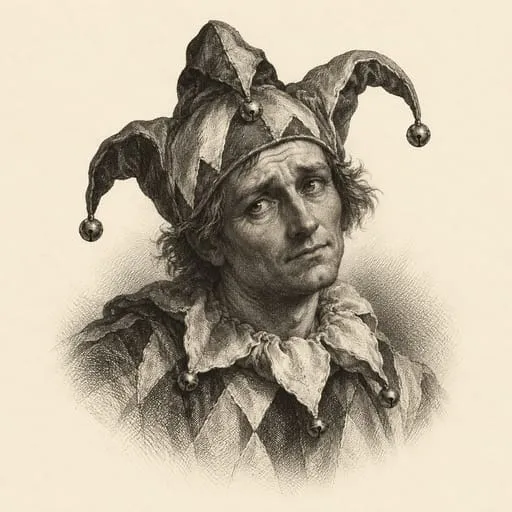
- FoolHe plays along with Lear's imaginary trial and is called upon by Kent to help carry the sleeping king to safety.First appears: Act 1, Scene 4
- The GentlemanHe enters with a bloody knife and reports Goneril's death and her confession that she poisoned Regan.First appears: Act 1, Scene 5
- CuranHe tells Edmund that Cornwall and Regan are coming to Gloucester's castle and reports rumours of war between Cornwall and Albany.First appears: Act 2, Scene 1
- First servantHe has served Cornwall since childhood and is killed by Regan from behind when he fights his master to stop Gloucester's blinding.First appears: Act 3, Scene 7
- Second servantHorrified by Cornwall's cruelty, he proposes following Gloucester and finding the disguised beggar to guide him.First appears: Act 3, Scene 7
- Third servantHe condemns Regan's cruelty and goes to fetch flax and egg whites for Gloucester's bleeding face.First appears: Act 3, Scene 7
- The Old ManA longstanding tenant of Gloucester and his father, he guides the blinded earl and promises to fetch clothes for poor Tom despite the danger.First appears: Act 4, Scene 1
- The Messenger to AlbanyHe reports Cornwall's death and Gloucester's blinding to Albany, brings Goneril a letter from Regan and identifies Edmund as the informer against his father.First appears: Act 4, Scene 2
- The DoctorHe oversees Lear's waking and advises against making him relive his lost time before his mind has settled further.First appears: Act 4, Scene 4
- The Messenger to CordeliaHe brings Cordelia news that the British forces are marching towards the French camp.First appears: Act 4, Scene 4
- Edmund's CaptainHe accepts Edmund's written instructions for the prisoners in return for promised advancement, and Edmund later reveals that the captain's commission is to hang Cordelia and make her death appear self-inflicted.First appears: Act 5, Scene 3
- The HeraldHe publicly calls for a challenger to prove Edmund a traitor and questions the armed Edgar about his identity and purpose.First appears: Act 5, Scene 3
Themes
- Power and authority
- Family love and duty
- Truth, flattery and deception
- Birth, rank and inheritance
- Nature, fate and responsibility
- Judgement, folly and madness
Context
- Marriage portions
- A dowry is wealth provided with a bride at marriage. Lear's withdrawal of Cordelia's portion makes the contrast between Burgundy's financial conditions and France's acceptance of her especially clear. Act 1, Scene 1
- Eclipses
- An eclipse is a darkening of the sun or moon. Gloucester treats these events as signs of disorder in human affairs, while Edmund argues that people use the stars to excuse their own behaviour. Act 1, Scene 2
- The Fool's cap
- The cap marks the Fool's occupation as an entertainer. By offering it to Kent and speaking of another for Lear, he turns the badge of his own role into an accusation of foolish behaviour. Act 1, Scene 4
- The stocks
- Stocks are a wooden device that holds a person's legs in place as punishment. Gloucester calls this a low punishment for petty offenders, which explains why its use on Lear's messenger is an insult to Lear's rank. Act 2, Scene 2
- The challenge
- Albany and Edmund throw down gloves as pledges to fight over the charge of treason. The herald's call makes the accusation public and invites a challenger to prove it in combat. Act 5, Scene 3
Chapter summaries
Act 1, Scene 1
At Lear's palace, Gloucester introduces Edmund to Kent and jokes about his birth outside marriage. Lear then announces his retirement from government and asks his three daughters which loves him most. Goneril and Regan win portions of land through extravagant speeches, while Cordelia's asides let the audience hear the love she cannot express in the terms Lear demands. When she describes the proper duties of a daughter rather than offering all her love, Lear disowns her and divides her share between her sisters. Kent challenges his judgement and is banished, while Lear keeps his royal title and a hundred knights but hands governing power to Albany and Cornwall. Burgundy refuses Cordelia without her dowry, whereas France accepts her for her own worth. After Cordelia and France leave, Goneril and Regan's private discussion replaces their public praise with criticism of Lear's temper and judgement.
Act 1, Scene 2
Alone at Gloucester's castle, Edmund rejects the customs that disadvantage him for being born outside marriage and announces his intention to obtain Edgar's land. He attracts Gloucester's attention by apparently trying to hide a letter, then presents it as evidence that Edgar resents the authority of old fathers. Gloucester accepts the handwriting as Edgar's and lets Edmund arrange how to discover more, while Edmund pretends to defend his brother. Gloucester connects the supposed betrayal with recent eclipses and the wider breakdown of family and political bonds. Once his father leaves, Edmund mocks the habit of blaming the stars for human wrongdoing, but adopts the same language of eclipses when Edgar enters. Edgar trusts Edmund's warning to avoid their father and carry a weapon, while the audience knows who has caused the danger. Edmund's closing speech makes the gap between his helpful manner and his private purpose explicit.
Act 1, Scene 3
At Albany's palace, Goneril asks Oswald whether Lear struck her gentleman for rebuking his fool, and Oswald confirms it. She describes Lear's knights as riotous and Lear himself as continually finding fault with the household. She plans to avoid Lear on his return from hunting, telling Oswald to say she is ill and to give him less attentive service. She accepts responsibility for this neglect and says she wants it to create an occasion for her to speak against him. Her description of old men as children recasts parental authority as dependence requiring correction. She claims Regan shares her refusal to be overruled and plans a letter asking her sister to act in the same way.
Act 1, Scene 4
Kent disguises his appearance and voice and persuades Lear to employ him, while a knight reports the household's reduced respect for Lear and the Fool's grief since Cordelia's departure. After Lear strikes Oswald for calling him Goneril's father, Kent wins the king's approval by tripping the steward. When the Fool arrives, his jokes about crowns, nothing and reversed family roles expose the cost of Lear's surrender of power. Goneril accuses Lear's followers of disorder, and Lear's question about who he is lets the Fool describe him as his own shadow. She then demands a smaller, better behaved household, while Lear insists that his followers are honourable men. Lear acknowledges his folly over Cordelia, curses Goneril with childlessness or a cruel child, and leaves expecting kindness from Regan after protesting at the loss of fifty followers. Goneril argues that the knights threaten her safety and sends Oswald to strengthen her case with Regan, while Albany warns that attempts to improve matters can do harm.
Act 1, Scene 5
In the court outside Albany's palace, Lear sends Kent ahead to Gloucester with letters for his daughter, limiting what Kent should tell her. Alone with Lear after Kent leaves, the Fool challenges his hope of a kinder reception by comparing the two daughters to sour apples. His jokes about noses and eyes suggest that Lear should use his senses to recognise what is before him. The snail that keeps its house supplies another image of the protection Lear has surrendered. Lear's brief admission that he did her wrong leaves the woman unnamed, while his broken remarks return to ingratitude and the possibility of taking back what he gave away. The Fool says that age should have followed wisdom, and Lear answers with an urgent prayer against madness. A gentleman announces that the horses are ready, bringing their preparations for departure to an end.
Act 2, Scene 1
At Gloucester's castle, Curan tells Edmund that Cornwall and Regan are coming that night and reports rumours of war between Cornwall and Albany. Edmund uses the visit to frighten Edgar, calls for a pretended sword fight and sends him away before wounding his own arm. When Gloucester arrives, Edmund presents his wound as evidence that Edgar attacked him for refusing to help murder their father. He also invents a speech in which Edgar dismisses his credibility as a son born outside marriage, turning the real motive for his own plotting into something Edgar supposedly said. Gloucester accepts the account, orders a hunt for Edgar and promises to make Edmund capable of inheriting his land. Regan links Edgar's supposed crime to Lear's followers, citing Goneril's warnings about them, while Cornwall recruits Edmund for his apparent trustworthiness. Regan explains that she has received letters from both Lear and Goneril and wants Gloucester's immediate advice rather than answering from her own home.
Act 2, Scene 2
Outside Gloucester's castle, Kent recognises Oswald, abuses him as a dishonest servant and draws his sword before beating him. Oswald's cries bring Edmund, Cornwall, Regan, Gloucester and servants outside, where Cornwall stops the violence. Kent denounces servants who encourage their masters' changing moods and insists that plain speaking is his occupation, while Cornwall treats his bluntness as a pose concealing dishonesty. Oswald presents Kent's earlier attack as flattery of Lear's anger, giving a competing explanation of conduct the audience has already seen. Cornwall orders Kent put in the stocks, and Regan insists on a longer punishment even though Kent argues that humiliating the king's messenger insults the king himself. Gloucester acknowledges Kent's fault but objects to this punishment as an insult to Lear, and Kent declines his offer to plead further. Alone, Kent identifies a letter as Cordelia's, says she has learnt of his disguised service and appeals to Fortune's wheel before sleeping.
Act 2, Scene 3
Edgar enters a wood alone and reports that a hollow tree sheltered him from the hunt after he heard himself publicly proclaimed. He says no port is free and that guards are watching for his capture, so ordinary escape seems closed to him. His soliloquy sets out a deliberate disguise: a dirty face, knotted hair and a blanket around his loins. He takes his model from the Bedlam beggars he describes as piercing their own bare arms with sharp objects and using curses or prayers to extract charity. His plan makes an appearance of madness and extreme poverty a means of survival, while his comparison with a beast shows how far he must descend from his former position. Calling himself poor Tom, he ends by saying that as Edgar he is nothing, making the loss of his name part of the disguise he intends to adopt.
Act 2, Scene 4
Arriving outside Gloucester's castle with the Fool and a gentleman, Lear refuses at first to believe Kent's account of his punishment, then demands to see Cornwall and Regan. The Fool mocks loyalty based on profit but declares that he will stay, while Gloucester tries to mediate and Kent is freed when Cornwall and Regan appear. Regan defends Goneril and tells Lear to accept guidance and admit he has wronged her, prompting him to kneel and act out a bitter plea to Goneril for clothing, shelter and food. Goneril arrives, Cornwall acknowledges ordering Kent's punishment, and the sisters move from allowing fifty followers to twenty-five and then questioning the need for even one. Lear argues that human life requires more than bare necessities, challenges their ingratitude and threatens revenge without being able to name what he will do. He leaves with Gloucester, Kent and the Fool after declaring his fear of madness; as a storm begins, the sisters say they will receive him without any followers. Gloucester returns and reports Lear's rage, Goneril tells him not to urge Lear to stay, and despite Gloucester's warning about the exposed countryside, Regan and Cornwall order the doors shut.
Act 3, Scene 1
On the stormy heath, Kent questions a gentleman he recognises about Lear's whereabouts. The Gentleman describes the bareheaded king challenging wind and rain while the Fool tries to relieve his suffering with jokes. His account sets Lear's exposed human body against weather so severe that even wild animals seek shelter. Kent reports a concealed division between Albany and Cornwall, servants supplying intelligence to France and a French force already gaining access to ports. He asks the Gentleman to go to Dover and report the wrongs done to Lear, giving him a purse and a ring that Cordelia can use to identify Kent. The ring offers evidence of an identity hidden by Kent's outward appearance, while their final agreement to search separately keeps the king's immediate safety at the centre of the scene.
Act 3, Scene 2
Lear enters with the Fool and commands the storm to destroy the world's capacity to produce ungrateful people. He first distinguishes the elements from daughters who owe him duty, then accuses the weather of joining them against him. The Fool's practical pleas for a dry house answer Lear's grand commands with the immediate need for shelter. Kent arrives and describes the storm's exceptional violence, after which Lear calls on the gods to expose hidden crimes and judges himself more wronged than guilty. Kent then offers a nearby hovel and says he will return to the house that has refused him entry to demand better treatment. Lear admits that his wits are turning, shows concern for the Fool's cold body and recognises that necessity can make poor shelter valuable. Once Lear and Kent leave, the Fool's prophecy mixes familiar wrongdoing with unlikely reforms before joking that Merlin will make this prophecy after his own time.
Act 3, Scene 3
At the castle, Gloucester complains to Edmund that the people controlling his house have forbidden him to plead for or support Lear. He confides news of division between the dukes and a dangerous letter which he has locked in his private room. Believing that an armed force will avenge Lear's injuries, he resolves to seek out his old master even if helping him costs his life. He asks Edmund to distract the duke and cover his absence by saying he has gone to bed ill. After Gloucester exits, Edmund's closing speech turns this act of trust into an opportunity to obtain his father's possessions by reporting both the forbidden aid and the letter.
Act 3, Scene 4
At the hovel, Lear tells Kent that the storm in his mind makes the weather less painful than his daughters' ingratitude. He sends the Fool inside first and prays for the homeless poor, admitting his own neglect and urging the powerful to experience poverty and give away their surplus. The Fool flees the hovel in fear before Edgar emerges in his disguise as poor Tom, talking of fiends, cold and an invented sinful past. Lear insists that daughters must have reduced Tom to this condition even when Kent says he has none, making another person's suffering fit his own grievance. Looking at Tom's bare body, Lear questions what human beings are without borrowed comforts and begins tearing off his clothes. Gloucester arrives with a torch and offers shelter, fire and food in defiance of the commands against helping Lear. He fails to recognise either disguised man, praises the banished Kent and mourns Edgar as a son who sought his life, while Lear insists on taking his supposed philosopher with him.
Act 3, Scene 5
At the castle, Cornwall announces his determination to take revenge on Gloucester before leaving his house. Edmund presents his disclosure as a painful conflict between family feeling and loyalty, and produces the letter as evidence of Gloucester's dealings with France. Cornwall uses the accusation against Gloucester to reinterpret Edgar's supposed attack, suggesting that the father helped provoke it. He awards Edmund the earldom whether the letter is true or false and orders him to locate Gloucester for arrest. Edmund's aside shows him calculating how his father's aid to Lear could strengthen suspicion, while his spoken words continue the performance of reluctant duty. Cornwall ends by promising Edmund a dearer father in himself, turning political patronage into a substitute family bond.
Act 3, Scene 6
Gloucester brings Lear, Kent, the Fool and Edgar into a farmhouse chamber and leaves to find further comforts. Lear appoints Edgar and the Fool as judges and Kent to the commission for an imaginary trial of Goneril and Regan. The Fool jokes about mistaking Goneril for a joint-stool, while Lear accuses the court of corruption when he imagines the other daughter escaping. Edgar's aside reveals that compassion is bringing him close to tears and threatening his performance as poor Tom. Lear asks what in nature creates hard hearts, then settles to rest after accepting Edgar as one of his hundred followers. Gloucester returns with a report of a murder plot and a litter ready for Lear, and Kent calls on the Fool to help carry the sleeping king away towards Dover. Alone, Edgar compares Lear's treatment by his children with his own treatment by his father and finds comfort in shared suffering while resolving to remain hidden until his innocence can be established.
Act 3, Scene 7
Cornwall sends Goneril and Edmund to Albany with the letter and news of the French landing, while Oswald reports that Gloucester has sent Lear towards Dover with followers. Before Gloucester is brought in, Cornwall admits that his power will serve his anger despite the claims of legal procedure. Bound to a chair and abused by Regan, Gloucester appeals to the obligations of guests towards their host and defends protecting Lear from the sisters' cruelty. Cornwall destroys one of his eyes, prompting a servant to claim that stopping his master is the best service he has ever given him. The servant and Cornwall fight, Regan kills the servant from behind, and Cornwall destroys Gloucester's remaining eye. When Gloucester appeals to Edmund, Regan reveals that his son informed against him, leading Gloucester to recognise his mistake about Edgar and ask the gods to protect him. Regan orders Gloucester expelled, Cornwall leaves bleeding from a wound, and two servants condemn the cruelty before planning a guide and care for Gloucester's injuries.
Act 4, Scene 1
Alone on the heath, Edgar argues that the lowest condition still leaves room for hope, but the sight of his blinded father makes him question whether he has reached the worst. An old tenant guides Gloucester, who fears that helping him may bring punishment on his helper. Gloucester admits that he judged badly when he could see and longs to encounter Edgar through touch. Edgar's asides reveal his pain and his struggle to continue acting as poor Tom while his father speaks of him without recognising him. Gloucester compares human beings to flies killed for the gods' amusement, yet gives Tom his purse and calls for wealth to be shared so that everyone has enough. He sends the Old Man to fetch clothes and asks the supposed beggar to guide him to the edge of a cliff at Dover, saying he will need no guide afterwards.
Act 4, Scene 2
Outside Albany's palace, Oswald reports that his master has reacted favourably to the French landing and angrily to praise of Edmund. Goneril sends Edmund back to raise and lead Cornwall's forces, gives him a favour and a kiss, and describes her husband with contempt. When Albany enters, he condemns her rejection of her father through images of a branch severed from its source and daughters turned into predatory animals. Goneril treats his moral objections as cowardice in the face of invasion, while his own anger includes threats of physical violence which he says he restrains because she is a woman. A messenger interrupts with news that Cornwall has died from his servant's wound after blinding Gloucester. Albany sees this death as evidence of divine justice, but Goneril's aside turns to the danger that the widowed Regan poses to her hopes concerning Edmund. After Goneril leaves to answer Regan's letter, the messenger identifies Edmund as Gloucester's betrayer and Albany promises revenge for the earl's injuries.
Act 4, Scene 3
Kent and the Gentleman meet in the French camp near Dover, where the Gentleman reports that urgent state affairs have recalled France and left Monsieur La Far in command. Asked about Cordelia's response to the letters, he describes her tears, patience and sorrow rather than an outburst of rage. His images of sunshine mixed with rain and pearls falling from diamonds give her grief both beauty and restraint. Kent attributes the sisters' different characters to the stars, offering his own explanation for how the same parents could produce such different children. He reports that Lear is in the town but refuses to meet Cordelia because he remembers his injustice towards her and feels overwhelming shame. With the dukes' forces active, Kent arranges to take the Gentleman to Lear and leave him there while an unnamed concern keeps Kent concealed.
Act 4, Scene 4
In a tent at the French camp, Cordelia describes a recent report of Lear singing wildly with weeds and flowers on his head. She sends soldiers to search the fields and offers all her wealth to anyone who can restore his reason. The Doctor answers her appeal with a practical account of the sleep Lear lacks and the herbs that may bring it. Cordelia's prayer turns the earth's hidden healing powers towards the care of her father, while her fear that his uncontrolled distress may kill him makes the search urgent. A messenger announces the approach of the British forces, for which Cordelia says preparations are already made. She declares that France has responded to her tears and that love and her father's rights, rather than swollen ambition, have brought her to arms.
Act 4, Scene 5
At Gloucester's castle, Regan questions Oswald about Albany's departing forces and Goneril's letter to Edmund. She regrets allowing the blinded Gloucester to live because his appearance wins sympathy against them, and guesses that Edmund has gone to kill him as well as discover the enemy's strength. Oswald insists that Goneril's orders require him to follow Edmund, refusing Regan's invitation to stay until her troops depart. Regan tries to have the letter unsealed and cites Goneril's looks at Edmund as evidence of her interest in him. Declaring that she has spoken with Edmund, Regan argues that her widowhood makes her a more suitable wife and sends Oswald with something for him and a warning for Goneril. She ends by promising advancement for Gloucester's murder, and Oswald presents his willingness to kill him as proof of political allegiance.
Act 4, Scene 6
Near Dover, Edgar, dressed as a peasant, describes an imagined cliff despite Gloucester's sense that the ground is level. After Gloucester falls forward intending to end his life, Edgar pretends to be someone below the cliff and invents a fiend at its summit, persuading his father that the gods have preserved him. Gloucester resolves to bear his suffering and later asks the gods to take his life without letting him attempt to end it himself. Lear enters dressed with wild flowers, recognises Gloucester and speaks of failed flattery, sexual appetite and the protection wealth gives wrongdoing. His mistaken praise of Edmund's kindness sits beside insights into corrupt authority, making Edgar identify reason within madness. A gentleman and attendants find Lear, but he runs away; after the Gentleman reports the approaching army, Oswald enters and tries to kill Gloucester for reward. Edgar defends his father, kills Oswald and reads the letter in which Goneril urges Edmund to kill Albany, resolving to show it to the threatened duke before leading Gloucester towards a friend's shelter.
Act 4, Scene 7
In the French camp, Lear sleeps in fresh clothes with music playing while Cordelia thanks Kent and agrees to keep his identity concealed. She entrusts the waking of her father to the Doctor and imagines her kiss as a medicine for the injuries her sisters have done him. Her account of the storm argues that even an enemy's dog would have deserved the shelter denied to Lear. Lear wakes confused, imagines Cordelia as a blessed spirit and himself as bound to a wheel of fire, then gradually recognises her while admitting uncertainty about his mind and surroundings. He acknowledges that she has cause to resent him, but she answers that she has none, and he asks her to forget and forgive. The Doctor says Lear's violent distress has subsided but warns against making him revisit the time he has lost before further recovery. Once Lear and Cordelia leave, Kent confirms Cornwall's death, reports that Edmund is said to command his forces and ends by linking the completion of his own purpose to the day's battle.
Act 5, Scene 1
In the British camp, Regan presses Edmund about his relations with Goneril, and he denies the intimacy she suspects. Goneril's aside reveals that keeping Edmund matters more to her than winning the battle, despite her public call to set domestic quarrels aside. Albany explains that he fights against invasion while recognising that Lear and others have just grievances against the state. After the others move away, Edgar appears in disguise, hands Albany the letter and promises a champion to prove its contents if Albany wins. Edmund then brings intelligence of the approaching enemy and urges Albany to prepare his forces. Left alone, he admits having sworn love to both sisters, plans to use Albany's support for the battle and leave Goneril to arrange her husband's death afterwards. He resolves to prevent Albany from pardoning Lear and Cordelia, treating their survival as a threat to his position.
Act 5, Scene 2
The scene opens with battle sounds as Lear, Cordelia and soldiers pass across the stage without speaking. Edgar leaves Gloucester in the shelter of a tree, asking him to pray that right will prevail. Sounds of retreat precede Edgar's return with news that Lear has lost and both father and daughter are prisoners. The battle's result reaches the audience through this brief report rather than a staged contest between the armies. Gloucester's refusal to move renews the despair Edgar has already tried to overcome. Edgar answers by comparing the need to endure death with the experience of birth, and Gloucester accepts the reminder before they leave together.
Act 5, Scene 3
Lear imagines prison as a life of shared songs and forgiveness with Cordelia, while Edmund sends a captain after them with secret written orders. Albany demands the prisoners and arrests Edmund for treason, then exposes Goneril's letter when Edgar defeats Edmund in combat. Edgar reveals his identity, interprets Gloucester's suffering as divine punishment and reports his father's death from joy and grief at their reunion. Goneril is reported to have poisoned Regan and killed herself, and Edmund's attempt to revoke his orders fails to save Cordelia. Lear carries Cordelia in dead and seeks signs of breath, confronting the audience with a loss that complicates Edgar's claim of divine justice. Kent identifies himself as Caius, a captain reports Edmund's death, and Albany offers to restore Lear's power and reward his friends. Lear dies after directing attention to Cordelia's lips, and Albany asks Kent and Edgar to rule, but Kent answers that his master calls him on a journey.
Key quotes
Unhappy that I am, I cannot heave My heart into my mouth: I love your majesty According to my bond; nor more nor less.
Cordelia separates the love she feels from the speech Lear wants to hear. Her measured account of duty challenges the competition in extravagant praise.
Family love and dutyTruth, flattery and deception
Only we still retain The name, and all the additions to a king;
Lear tries to keep the title and honours of kingship while handing its practical powers to others. The distinction exposes a tension in his plan for retirement.
Power and authorityBirth, rank and inheritance
See better, Lear; and let me still remain The true blank of thine eye.
Kent turns sight into an image of sound judgement and offers himself as Lear's target or point of reference. His direct command makes opposition an act of loyal service.
Judgement, folly and madnessTruth, flattery and deceptionPower and authority
Why bastard? wherefore base?
The repeated questions challenge the link between birth outside marriage and personal inferiority. Edmund disputes the labels used against him before revealing his plan to take Edgar's land.
Birth, rank and inheritanceNature, fate and responsibility
an admirable evasion of whoremaster man, to lay his goatish disposition to the charge of a star!
Edmund ridicules the use of astrology to avoid responsibility. His own deliberate deception shows a person choosing how to act rather than obeying the stars.
Nature, fate and responsibilityTruth, flattery and deception
Let me, if not by birth, have lands by wit:
Edmund sets his skill in deception against the advantage birth gives Edgar. Land is the stated object of the family betrayal.
Birth, rank and inheritanceFamily love and dutyTruth, flattery and deception
Idle old man, That still would manage those authorities That he hath given away!
Goneril identifies the conflict between Lear's surrender of power and his continued expectation of control. Her contemptuous address replaces the language of devotion she used before him.
Power and authorityFamily love and dutyTruth, flattery and deception
Old fools are babes again;
Goneril presents old age as a return to childhood. The comparison allows her to claim the right to discipline her father rather than obey him.
Judgement, folly and madnessFamily love and dutyPower and authority
All thy other titles thou hast given away; that thou wast born with.
The Fool treats folly as Lear's one remaining title. The joke makes the entertainer sound more perceptive than the king he serves.
Judgement, folly and madnessPower and authorityBirth, rank and inheritance
Who is it that can tell me who I am?
Lear's loss of expected respect unsettles his sense of identity. The question links his idea of himself to the authority others acknowledge.
Power and authorityJudgement, folly and madness
How sharper than a serpent’s tooth it is To have a thankless child!
Lear turns his hurt into the image of a serpent's bite. Spoken within a curse on Goneril's ability to have children, the complaint also shows the cruelty of his anger.
Family love and dutyNature, fate and responsibility
Thou shouldst not have been old till thou hadst been wise.
The Fool separates age from wisdom instead of treating them as the same thing. His rebuke reverses their expected roles, with the king receiving a lesson from his entertainer.
Judgement, folly and madnessPower and authority
O, let me not be mad, not mad, sweet heaven! Keep me in temper: I would not be mad!
The repeated word makes Lear's fear direct and urgent. His appeal for control over his mind exposes a vulnerability that his demands for obedience cannot resolve.
Judgement, folly and madnessPower and authority
Some blood drawn on me would beget opinion.
Edmund tells the audience what his self-inflicted wound is meant to achieve before Gloucester sees it. The visible injury becomes convincing evidence for a false account of the fight.
Truth, flattery and deceptionJudgement, folly and madness
Loyal and natural boy, I’ll work the means To make thee capable.
Gloucester rewards supposed loyalty with the promise of inheritance. His praise of Edmund as natural follows a deception that has turned him against his other son.
Family love and dutyBirth, rank and inheritanceNature, fate and responsibilityTruth, flattery and deception
Natures of such deep trust we shall much need; You we first seize on.
Cornwall recruits Edmund for the quality the audience has just seen him violate. Dramatic irony makes this confident assessment of character a further success for Edmund's performance.
Truth, flattery and deceptionPower and authorityJudgement, folly and madness
Sir, ’tis my occupation to be plain:
Kent makes direct speech a defining part of his service. Cornwall's accusation that bluntness can conceal craft challenges the idea that a manner of speaking guarantees honesty.
Truth, flattery and deceptionJudgement, folly and madness
You shall do small respect, show too bold malice Against the grace and person of my master, Stocking his messenger.
Kent argues that his office makes the punishment an attack on Lear's authority. Cornwall's refusal to relent shows how little protection that authority now supplies.
Power and authorityBirth, rank and inheritance
To take the basest and most poorest shape That ever penury, in contempt of man, Brought near to beast:
Edgar describes his disguise through a descent in social standing and a loss of human dignity. The comparison with a beast connects visible poverty with exposure and contempt.
Birth, rank and inheritanceNature, fate and responsibilityTruth, flattery and deception
That’s something yet: Edgar I nothing am.
The beggar's assumed identity offers a chance of survival that Edgar's own name cannot. His closing contrast between something and nothing makes disguise a loss as well as a resource.
Truth, flattery and deceptionBirth, rank and inheritanceJudgement, folly and madness
But I will tarry; the fool will stay, And let the wise man fly:
The Fool answers his own advice about abandoning a falling master with a promise to remain. His song separates loyalty from the calculation of personal advantage and questions what counts as wisdom.
Judgement, folly and madnessTruth, flattery and deceptionPower and authority
Allow not nature more than nature needs, Man’s life’s as cheap as beast’s:
Lear argues that reducing a person to bare physical needs removes something essential from human life. His defence of the followers becomes a wider claim about dignity, which he tests against his daughter's elaborate clothing.
Nature, fate and responsibilityBirth, rank and inheritancePower and authority
What they are, yet I know not: but they shall be The terrors of the earth.
Lear promises overwhelming revenge but cannot specify an action. The admission exposes the gap between the force of his language and his ability to command events.
Power and authorityJudgement, folly and madnessFamily love and duty
Strives in his little world of man to out-scorn The to-and-fro-conflicting wind and rain.
The Gentleman contrasts the scale of one human life with the storm Lear challenges. The effort to outdo the weather sounds defiant but also exposes Lear's physical helplessness.
Nature, fate and responsibilityPower and authority
There is division, Although as yet the face of it be cover’d With mutual cunning, ’twixt Albany and Cornwall;
Kent distinguishes the dukes' outward relationship from the conflict he reports beneath it. Political authority is divided as well as concealed behind appearances.
Power and authorityTruth, flattery and deception
I am a man More sinn’d against than sinning.
Lear presents himself chiefly as a victim of other people's wrongdoing. The audience can weigh his claim against his earlier treatment of Cordelia and Kent.
Judgement, folly and madnessFamily love and dutyNature, fate and responsibility
The art of our necessities is strange, That can make vile things precious.
Exposure changes Lear's estimate of a hovel's worth. His willingness to accept it connects the loss of royal comfort with a new understanding of ordinary needs.
Birth, rank and inheritanceNature, fate and responsibilityJudgement, folly and madness
Though I die for it, as no less is threatened me, the king my old master must be relieved.
Gloucester makes service to Lear a duty worth risking his life for. The decision sets personal loyalty against the commands imposed within his own house.
Power and authorityNature, fate and responsibility
The younger rises when the old doth fall.
Edmund reduces his father's danger to a means of advancement. The balanced opposition between younger and old makes family loyalty give way to competition for possessions and position.
Family love and dutyBirth, rank and inheritanceTruth, flattery and deception
O, I have ta’en Too little care of this!
Lear's prayer turns from observing poverty to acknowledging his own neglect. Suffering gives him grounds to question how he used his former power.
Power and authorityBirth, rank and inheritanceJudgement, folly and madness
unaccommodated man is no more but such a poor bare, forked animal as thou art.
Lear treats Tom's exposed body as evidence of what remains when social comforts are removed. The audience knows that this apparent example of bare humanity is also a deliberate disguise.
Nature, fate and responsibilityBirth, rank and inheritanceTruth, flattery and deception
I had a son, Now outlaw’d from my blood; he sought my life, But lately, very late: I loved him, friend;
Gloucester expresses grief over Edgar while Edgar stands beside him unrecognised. The audience can hear the father's love and recognise that his judgement rests on a deception.
Family love and dutyTruth, flattery and deceptionJudgement, folly and madness
True or false, it hath made thee earl of Gloucester.
Cornwall separates the reward from the truth of the evidence. His power can turn an accusation into Edmund's advancement without a settled judgement of Gloucester's guilt.
Power and authorityTruth, flattery and deceptionBirth, rank and inheritance
thou shalt find a dearer father in my love.
Cornwall offers paternal affection as a reward for betraying a father. The promise joins Edmund's pursuit of rank to a new personal allegiance.
Family love and dutyBirth, rank and inheritancePower and authority
My tears begin to take his part so much, They’ll mar my counterfeiting.
Edgar's aside separates his outward performance from his inward response. Lear's suffering threatens the disguise because Edgar feels compassion rather than merely acting a role.
Truth, flattery and deceptionJudgement, folly and madnessFamily love and duty
Is there any cause in nature that makes these hard hearts?
Lear turns the imagined dissection of Regan into a question about the source of cruelty. His search for an explanation connects wounded family feeling with an inquiry into human nature.
Nature, fate and responsibilityFamily love and dutyJudgement, folly and madness
How light and portable my pain seems now, When that which makes me bend makes the king bow, He childed as I father’d!
Edgar compares rejection by a father with rejection by children. Recognising a shared burden makes his own pain easier to carry, even though Lear's rank is higher.
Family love and dutyBirth, rank and inheritanceJudgement, folly and madness
yet our power Shall do a courtesy to our wrath, which men May blame, but not control.
Cornwall openly makes authority the servant of anger. His admission distinguishes the power to punish from a just process that could restrain him.
Power and authorityJudgement, folly and madness
But better service have I never done you Than now to bid you hold.
The servant defines loyalty as resisting his master's cruelty. His attempt to stop the violence makes moral judgement more valuable than obedience or social rank.
Power and authorityBirth, rank and inheritanceJudgement, folly and madness
O my follies! then Edgar was abused. Kind gods, forgive me that, and prosper him!
Learning who betrayed him makes Gloucester recognise his injustice towards Edgar. His physical loss of sight coincides with a clearer judgement of his sons.
Family love and dutyTruth, flattery and deceptionJudgement, folly and madness
I stumbled when I saw:
Gloucester separates physical sight from sound judgement. His admission gives a moral meaning to stumbling now that he needs another person to guide his steps.
Judgement, folly and madnessTruth, flattery and deceptionFamily love and duty
As flies to wanton boys, are we to the gods. They kill us for their sport.
The comparison makes divine power seem careless and cruel rather than just. Gloucester speaks from suffering, so the claim expresses his despair rather than an established explanation of events.
Nature, fate and responsibilityPower and authority
So distribution should undo excess, And each man have enough.
Giving away his purse leads Gloucester to demand a wider sharing of wealth. Personal suffering has made him consider the needs of someone who appears poorer than himself.
Birth, rank and inheritanceNature, fate and responsibilityJudgement, folly and madness
Tigers, not daughters, what have you perform’d?
Albany uses a predator to describe conduct he sees as a violation of family duty. His question judges the sisters by their actions towards Lear rather than their earlier declarations of love.
Family love and dutyNature, fate and responsibilityTruth, flattery and deception
This shows you are above, You justicers, that these our nether crimes So speedily can venge!
Albany interprets Cornwall's death as prompt punishment from the gods. This confidence in divine justice differs sharply from Gloucester's account of divine cruelty in the preceding scene.
Nature, fate and responsibilityPower and authorityJudgement, folly and madness
it seem’d she was a queen Over her passion;
The Gentleman uses Cordelia's royal rank as an image of control over emotion. Her tears show strong feeling without the rage he explicitly denies.
Judgement, folly and madnessPower and authorityFamily love and duty
these things sting His mind so venomously, that burning shame Detains him from Cordelia.
Kent explains Lear's refusal to meet his daughter as the painful result of recognising his own wrongs. Shame prevents the meeting even though Cordelia's reported grief shows her concern for him.
Family love and dutyJudgement, folly and madness
Our foster-nurse of nature is repose, The which he lacks;
The Doctor presents sleep as a nurturing power that Lear needs. His plain prescription gives Cordelia a practical answer to her urgent appeal for help.
Nature, fate and responsibilityJudgement, folly and madness
No blown ambition doth our arms incite, But love, dear love, and our aged father’s right:
Cordelia states the purpose of her military action in the language of family care and rightful authority. The repetition of love places her personal concern beside the public question of Lear's rights.
Family love and dutyPower and authority
My lord is dead; Edmund and I have talk’d; And more convenient is he for my hand Than for your lady’s:
Regan turns her widowhood into an argument against her married sister's claim to Edmund. Their rivalry gives the sisters competing interests within the same political alliance.
Family love and dutyPower and authority
Preferment falls on him that cuts him off.
Regan makes killing Gloucester a route to advancement. The promise treats his life as an obstacle to power and offers a servant personal profit for removing him.
Power and authorityBirth, rank and inheritance
Why I do trifle thus with his despair Is done to cure it.
Edgar states a compassionate purpose for deceiving his father. The audience can compare that purpose with the elaborate false account of a fall and rescue that he constructs.
Truth, flattery and deceptionFamily love and dutyJudgement, folly and madness
Plate sin with gold, And the strong lance of justice hurtless breaks: Arm it in rags, a pygmy’s straw does pierce it.
Lear imagines wealth as armour against punishment and poverty as exposure to it. The opposed images challenge justice that responds to a person's position rather than the wrong itself.
Birth, rank and inheritancePower and authorityJudgement, folly and madness
O, matter and impertinency mix’d! Reason in madness!
Edgar names the mixture the audience hears in Lear's speeches. Perceptive attacks on hypocrisy coexist with confusion and mistaken beliefs rather than proving that Lear has recovered.
Judgement, folly and madnessTruth, flattery and deception
I am a very foolish fond old man,
Lear describes himself through age and fallibility rather than commanding recognition of his royal power. His admission accompanies a cautious effort to recognise the people around him.
Judgement, folly and madnessPower and authorityFamily love and duty
No cause, no cause.
Cordelia answers Lear's admission that he has wronged her without demanding repayment or proof of affection. The repeated refusal makes forgiveness direct and brief.
Family love and duty
Pray you now, forget and forgive: I am old and foolish.
Lear asks for patience and forgiveness instead of insisting on obedience. His plain request recognises a need that royal rank cannot satisfy by command.
Family love and dutyJudgement, folly and madnessPower and authority
I had rather lose the battle than that sister Should loosen him and me.
Goneril's aside exposes a private priority that conflicts with her public demand for unity. The audience hears how rivalry over Edmund weakens the alliance before the fighting begins.
Family love and dutyTruth, flattery and deceptionPower and authority
To both these sisters have I sworn my love;
Edmund's soliloquy reveals the double promise concealed by his assurances to Regan. His questions about which sister to take treat these pledges as choices to be calculated for his own advantage.
Truth, flattery and deceptionFamily love and dutyPower and authority
pray that the right may thrive:
Edgar asks Gloucester to pray that moral right and military success will coincide. His report of Lear's defeat shows that this hope has not been fulfilled by the battle.
Nature, fate and responsibilityPower and authority
Men must endure Their going hence, even as their coming hither; Ripeness is all: come on.
Edgar presents endurance as necessary at both ends of life. The final command turns his reflection into immediate care for Gloucester, who agrees and leaves with him.
Nature, fate and responsibilityJudgement, folly and madnessFamily love and duty
We two alone will sing like birds i’ the cage:
Lear turns imprisonment into an image of companionship with Cordelia. The song he imagines offers intimacy and forgiveness within a situation where others control their lives.
Family love and dutyPower and authority
The gods are just, and of our pleasant vices Make instruments to plague us:
Edgar interprets Gloucester's suffering as punishment connected with Edmund's conception. Cordelia's murder later in the scene makes it difficult to treat this judgement as a complete explanation of suffering.
Nature, fate and responsibilityFamily love and dutyJudgement, folly and madness
Why should a dog, a horse, a rat, have life, And thou no breath at all?
Lear measures Cordelia's death against the life of ordinary animals. His unanswered question makes the loss personal and challenges any easy account of a just order.
Family love and dutyNature, fate and responsibility