Hamlet Study Guide
A-level set textAQA A-level (Lit B)Edexcel A-levelOCR A-levelEduqas A-level
Notes cover the whole book.
Characters
- FranciscoA soldier on guard outside the castle, cold and sick at heart, who leaves when Bernardo relieves him.First appears: Act 1, Scene 1
- BernardoA member of the night watch who has seen a figure like the dead king with Marcellus and now witnesses its appearance with Horatio.First appears: Act 1, Scene 1
- HoratioPrevented by Hamlet from drinking the remaining poison, he survives and offers to explain the deaths to Fortinbras and the assembled audience.First appears: Act 1, Scene 1
- MarcellusA watchman who joins Horatio in swearing to keep secret what they have seen and heard that night.First appears: Act 1, Scene 1
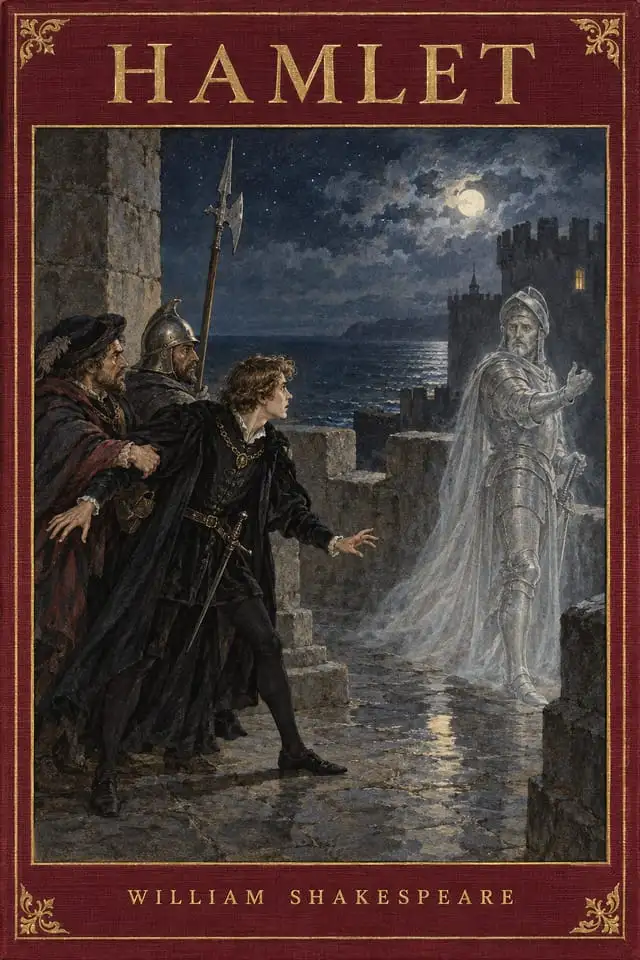
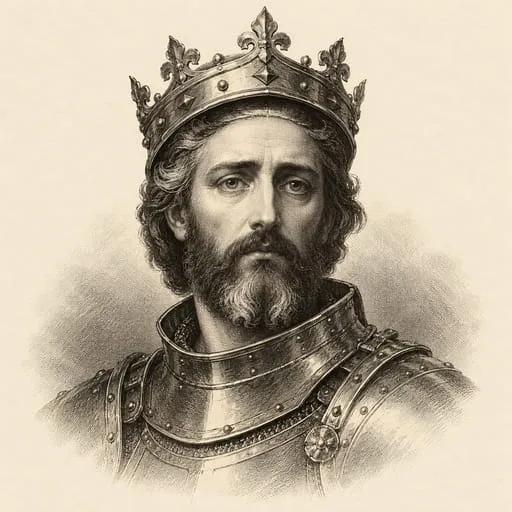
- The GhostThe spirit appears to Hamlet in his mother's room, renews its command and urges him to help his distressed mother, who neither sees nor hears it.First appears: Act 1, Scene 1
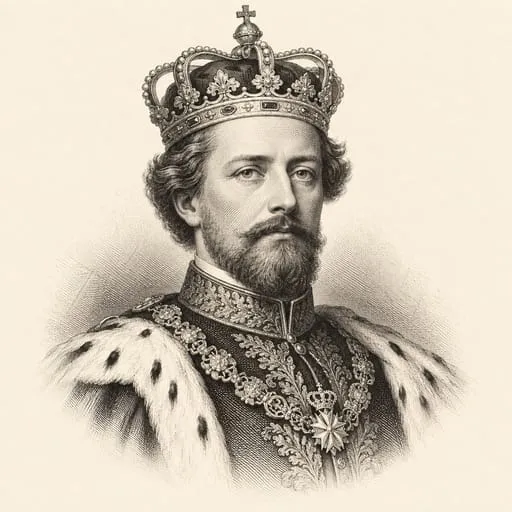
- The KingAfter Laertes exposes his plot, he dies when Hamlet stabs him and forces him to drink the poisoned potion.First appears: Act 1, Scene 2
- Queen GertrudeShe drinks from the cup intended for Hamlet despite the King's instruction not to drink and dies after telling her son that the drink has poisoned her.First appears: Act 1, Scene 2
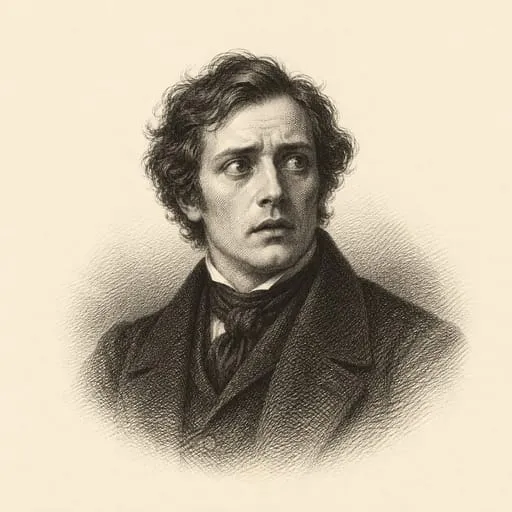
- HamletAfter accepting the match with trust in providence, he is mortally wounded by the poisoned sword, kills the King when Laertes exposes the plot, asks Horatio to tell his story and supports Fortinbras' election before dying.First appears: Act 1, Scene 2
- PoloniusHiding behind the Queen's wall hanging to overhear Hamlet, he cries for help and is stabbed to death through it by the prince.First appears: Act 1, Scene 2
- LaertesWounded with his own poisoned weapon after striking Hamlet, he exposes the King's part in the plot and seeks mutual forgiveness with Hamlet before dying.First appears: Act 1, Scene 2
- VoltimandThe returning envoy who reports that Norway's king has restrained Fortinbras and now requests passage through Denmark for an expedition against Poland.First appears: Act 1, Scene 2
- CorneliusThe envoy who returns from Norway with Voltimand and receives the King's thanks for their work.First appears: Act 1, Scene 2
- OpheliaHer body is brought for burial with restricted rites because she may have taken her own life, while her brother insists on her innocence.First appears: Act 1, Scene 3
- ReynaldoPolonius' messenger, sent to take money and notes to Laertes and question his acquaintances in Paris, who objects that invented accusations could dishonour him.First appears: Act 2, Scene 1
- RosencrantzThe English ambassador confirms his death after Hamlet describes replacing the royal commission with an order for its bearers to be killed.First appears: Act 2, Scene 2
- GuildensternThe English ambassador reports that he is dead, fulfilling the substituted commission Hamlet says he sent in place of the order for his own execution.First appears: Act 2, Scene 2
- First PlayerAn actor whose speech about Priam and Hecuba brings tears to his eyes, and who agrees to perform The Murder of Gonzago and learn an extra speech that Hamlet proposes to write.First appears: Act 2, Scene 2
- PrologueA performer who briefly asks the court to hear the tragedy patiently before the Player King and Player Queen enter.First appears: Act 3, Scene 2
- Player KingThe ruler in the players' performance, identified by Hamlet as Gonzago, who questions the permanence of human promises and is poisoned while sleeping.First appears: Act 3, Scene 2
- Player QueenThe wife in the players' performance, identified by Hamlet as Baptista, who swears never to marry again if her husband dies.First appears: Act 3, Scene 2
- LucianusThe murderer in the players' performance, introduced by Hamlet as the king's nephew, who pours poison into the sleeping ruler's ears.First appears: Act 3, Scene 2
- Prince FortinbrasReturning victorious from Poland, he finds the royal family dead, asserts a claim to the kingdom and orders military honours for Hamlet.First appears: Act 4, Scene 4
- CaptainAn officer sent by Fortinbras to the Danish king, who tells Hamlet that the army aims to take a small, unprofitable piece of Polish land already defended by troops.First appears: Act 4, Scene 4
- Gentleman with the QueenA gentleman who reports Ophelia's distress and warns that listeners fit her broken speech to their own thoughts.First appears: Act 4, Scene 5
- Gentleman reporting the risingA second gentleman who warns the King that Laertes is overcoming his officers with a crowd calling for Laertes to be king.First appears: Act 4, Scene 5
- DanesLaertes' followers, who enter behind him but agree to wait outside the door while he confronts the King.First appears: Act 4, Scene 5
- ServantA servant who tells Horatio that sailors have arrived claiming to carry letters for him.First appears: Act 4, Scene 6
- First SailorOne of the sailors bringing Hamlet's letters, who hands Horatio a letter from the traveller bound for England.First appears: Act 4, Scene 6
- MessengerA messenger who delivers Hamlet's letters for the King and Queen, explaining that he received them through Claudio rather than seeing the sailors himself.First appears: Act 4, Scene 7
- First ClownA gravedigger who jokes about the rules of burial, answers Hamlet with verbal tricks and identifies Yorick's skull.First appears: Act 5, Scene 1
- Second ClownThe First Clown's companion, who says that the dead woman's rank has secured Christian burial and leaves to fetch drink.First appears: Act 5, Scene 1
- First PriestThe priest who refuses further funeral rites for Ophelia because she may have taken her own life, saying that powerful intervention has already enlarged the ceremony.First appears: Act 5, Scene 1
- OsricA courtier who brings the King's fencing wager to Hamlet in elaborate language, judges the hits and announces Fortinbras' arrival from Poland.First appears: Act 5, Scene 2
- LordA lord who checks Hamlet's readiness for the fencing match and conveys the Queen's request that he greet Laertes courteously before they begin.First appears: Act 5, Scene 2
- First AmbassadorAn envoy from England who arrives after the King's death and reports that Rosencrantz and Guildenstern have been killed in obedience to the command received there.First appears: Act 5, Scene 2
Themes
- Revenge and duty
- Appearance, truth and deception
- Death and grief
- Family, gender and obedience
- Kingship and the state
- The supernatural and uncertainty
- Corruption and moral judgement
Context
- A king's progress
- A progress is a ruler's formal journey through the country. Hamlet turns that royal movement into a journey through a beggar's digestive system. Act 4, Scene 3
- Foils
- Fencing practice uses blunted weapons to reduce the risk of injury. The King counts on Hamlet treating the proposed bout as sport and not examining the swords. Act 4, Scene 7
- Requiem
- A requiem is a religious service or prayer for the dead. The priest refuses this further rite because Ophelia may have taken her own life. Act 5, Scene 1
- Signet
- A signet bears a design used to stamp a seal on a document as a mark of authority. Hamlet says his father's signet matched the Danish seal, allowing him to seal the replacement commission. Act 5, Scene 2
Chapter summaries
Act 1, Scene 1
The opening challenges between sentries establish a cold, uneasy night outside the castle. Marcellus has brought the sceptical Horatio to witness a figure that he and Bernardo have already seen twice. The Ghost interrupts Bernardo's account, and Horatio's disbelief gives way to fear when he recognises the dead king's appearance and armour. Asked about Denmark's military preparations, Horatio reports that young Fortinbras is gathering men to recover lands his father lost to the dead king in combat. Horatio interprets the apparition as a possible warning to the state, but neither his questions nor the men's attempt to stop it produces an explanation. As dawn approaches, he proposes telling young Hamlet, believing the silent spirit will speak to him.
Act 1, Scene 2
Before the assembled court, the King presents mourning for his brother and celebration of his marriage as feelings that can be balanced. He sends Cornelius and Voltimand to ask Norway's king to restrain Fortinbras, then grants Laertes permission to return to France. Hamlet's aside reveals hostility beneath this public ceremony, while his speech to his mother distinguishes inward grief from outward signs that anyone could perform. The King calls persistent mourning unmanly and urges Hamlet to treat him as a father and remain at court. Hamlet agrees to his mother's request to stay, but his soliloquy reveals a wish to escape life, restrained by God's prohibition of suicide, and disgust at her swift marriage to his uncle. When Horatio, Marcellus and Bernardo describe the Ghost, Hamlet questions them closely and resolves to speak to it in secret, suspecting foul play.
Act 1, Scene 3
Preparing to depart, Laertes tells Ophelia to treat Hamlet's affection as something youthful and temporary. He argues that a prince's marriage cannot depend on private desire because the safety of the state depends on his choice. His concern for Ophelia's chastity and reputation presents fear as her best protection, but she challenges him to observe the restraint he recommends. Polonius blesses Laertes and gives him a long series of rules about friendship, speech, clothing, quarrels and money. After Laertes leaves, Polonius dismisses Ophelia's account of Hamlet's vows, comparing them to false payment and traps. His command that she stop speaking to Hamlet, and her promise to obey, show how little freedom she has to test her own judgement.
Act 1, Scene 4
On the cold platform, Hamlet, Horatio and Marcellus hear trumpets and cannon accompanying the King's drinking. Hamlet argues that this custom damages Denmark's reputation, then considers how one fault can spoil the judgement of a person's other qualities. When the Ghost appears, Hamlet addresses it as his father while openly questioning whether it comes from heaven or hell. It beckons without answering, and Horatio warns that it might lure Hamlet towards danger or take a form that destroys his reason. Hamlet says he values his life little, asserts that his immortal soul cannot be harmed by it, and threatens anyone who prevents him from following. Left behind, Marcellus calls Denmark rotten, and the two companions follow rather than leave Hamlet alone.
Act 1, Scene 5
Alone with Hamlet, the Ghost describes itself as his father's spirit, condemned to suffer in fire until its earthly sins are purged. It says the story of a fatal snakebite is false and accuses Hamlet's uncle of pouring poison into its ears during an afternoon sleep. The Ghost stresses that death came without spiritual preparation and orders revenge, while forbidding Hamlet to plot against his mother. After it leaves, Hamlet vows to make its command his overriding concern and writes down the thought that a smiling man can be a villain. When Horatio and Marcellus arrive, Hamlet speaks evasively and refuses to tell them what passed between him and the Ghost. With the Ghost calling from below, the men swear to conceal the night's events and give no hint of knowledge if Hamlet chooses to adopt strange behaviour. Hamlet's closing complaint presents the task of putting things right as a burden forced upon him.
Act 2, Scene 1
At his house, Polonius instructs Reynaldo to question Danes in Paris before visiting Laertes. He recommends pretending to know Laertes slightly and inventing minor faults to draw out accounts of his behaviour. Reynaldo worries about damage to Laertes' reputation, but Polonius presents deception as a clever means of finding truth. After Reynaldo leaves, Ophelia arrives frightened and describes Hamlet's disordered clothing, trembling knees and silent examination of her face. Hamlet does not appear on stage, and his earlier suggestion that he might adopt strange behaviour leaves his intentions uncertain. Ophelia confirms that she has refused his letters and access as ordered, and Polonius now blames rejected love instead of doubting Hamlet's seriousness. He decides to take her to the King, turning his interpretation of a private encounter into court business.
Act 2, Scene 2
The King and Queen enlist Hamlet's childhood friends Rosencrantz and Guildenstern to entertain him and discover the cause of his changed behaviour. Voltimand and Cornelius return with news that Fortinbras has vowed not to attack Denmark and with Norway's king's request for Fortinbras' troops to pass through Danish territory to fight Poland. Polonius reads Hamlet's love letter to the royal couple and proposes that he and the King secretly watch an encounter with Ophelia to test his theory of rejected love. Left with Hamlet, Polonius interprets his pointed jokes as madness, though his asides acknowledge meaning in the replies. Hamlet then makes his old friends admit they were summoned and describes losing all pleasure in the world and humanity, before welcoming the visiting players. The First Player's account of Priam's killing and Hecuba's grief moves the actor to tears, prompting Hamlet, once alone, to condemn his own failure to act for his father. His closing soliloquy turns self-accusation into a plan to observe the King's response to a staged murder, because he fears the Ghost may be a devil exploiting his melancholy.
Act 3, Scene 1
Rosencrantz and Guildenstern report little success in discovering Hamlet's troubles, but say the players have pleased him. The King and Polonius arrange to overhear his encounter with Ophelia, and the King's aside reveals a conscience hurt by the gap between his words and his deed. Hamlet's meditation weighs suffering in life against the uncertainty of what follows death, connecting thought with the failure to act. When Ophelia offers to return his gifts, he contradicts his own admission that he once loved her and attacks human sinfulness, women's behaviour and marriage. The audience knows her father is listening when she tells Hamlet that he is at home. After Hamlet leaves, Ophelia describes his reason through an image of bells out of tune, treating his cruelty as evidence of a ruined mind. The King instead rejects the explanation of love and doubts the appearance of madness, deciding on England while Polonius proposes another secret hearing with the Queen.
Act 3, Scene 2
Hamlet tells the players to act with restraint and make their speech and movement reflect nature. In private he praises Horatio's balanced judgement, explains the test and asks him to watch his uncle during the murder scene. Before the assembled court, Hamlet makes sexual jokes to Ophelia and bitter comments about his mother's cheerfulness. A silent show presents poisoning and the widow's acceptance of the poisoner's love, followed by spoken scenes in which a wife vows never to remarry and Lucianus poisons the sleeping ruler. The King rises and calls for light, ending the performance, and Horatio confirms that he noticed the response to the poisoning which convinces Hamlet to trust the Ghost. When Rosencrantz and Guildenstern bring his mother's summons and question him, Hamlet uses a recorder to accuse them of trying to manipulate him. Alone at the end, he describes a violent mood but resolves to use verbal cruelty against his mother without physically harming her.
Act 3, Scene 3
The King treats Hamlet as a threat to his safety and orders Rosencrantz and Guildenstern to take him to England. They justify obedience by arguing that many lives depend on a ruler's security, and Polonius then reports his plan to hide behind the Queen's wall hanging. Left alone, the King directly admits his brother's murder and asks whether forgiveness is possible while he keeps its rewards. He contrasts earthly justice, which the gains of crime can buy off, with divine judgement, where concealment is impossible. Hamlet enters after the King kneels and assumes that killing him at prayer would send his soul to heaven. Wanting damnation as well as death, Hamlet puts away his sword and leaves for his mother's room. The King's closing admission that his thoughts have not followed his words creates dramatic irony: the audience knows the prayer has failed, while Hamlet has acted on its appearance.
Act 3, Scene 4
Polonius hides behind the wall hanging before Hamlet enters his mother's room, and their exchange quickly becomes a contest over which father has been offended. Frightened that Hamlet will murder her, the Queen cries for help; Polonius echoes her, and Hamlet stabs through the hanging before asking whether he has killed the King. Discovering Polonius, Hamlet rebukes his intrusion and continues his attack on his mother's marriage, contrasting pictures of the two brothers until she admits seeing corruption in her soul. The Ghost enters, reminds Hamlet of his neglected purpose and directs his attention to his mother's distress. She sees and hears nothing of the apparition and calls it a product of Hamlet's mind, while he rejects her explanation of madness. Hamlet urges repentance and abstinence from his uncle's bed, expresses regret for Polonius' death while presenting himself as heaven's instrument, and tells his mother his madness is a tactic. She promises to keep his words secret, and Hamlet voices distrust of the schoolfellows carrying the sealed instructions for England before dragging Polonius' body away.
Act 4, Scene 1
After asking Rosencrantz and Guildenstern to leave, the Queen describes Hamlet's killing of the hidden Polonius as an act of madness. She says he has taken away the body and is weeping over what he has done. The King immediately imagines that he would have been killed had he been in Polonius' place. He fears blame for failing to restrain Hamlet and compares his earlier concealment of the problem to allowing a hidden disease to spread. He recalls Rosencrantz and Guildenstern, orders them to bring the body to the chapel and plans Hamlet's departure at dawn. His closing image of slander as a poisoned shot makes the management of royal reputation central to his response to the killing.
Act 4, Scene 2
Hamlet announces that the body is safely stowed before Rosencrantz and Guildenstern arrive to question him. Asked what he has done with it, he answers with an image of the body's kinship with dust. He calls Rosencrantz a sponge that absorbs the King's favour, rewards and authority until the King chooses to squeeze it dry. The comparison attacks the dependence of royal servants and turns the questioning back on the questioners. Hamlet's riddling language about the king and the body continues to withhold a clear answer. He finally agrees to go to the King, ending with words that turn the pursuit into a game.
Act 4, Scene 3
The King says Hamlet's popularity prevents open use of the law against him and insists that his sudden removal must appear carefully considered. Rosencrantz reports that Hamlet is guarded outside but has not disclosed where the body lies. Brought in with Guildenstern, Hamlet describes worms feeding on Polonius and imagines a dead king passing through a beggar's body. These grotesque jokes reduce political rank to the shared physical fate of all bodies. Hamlet finally directs the search towards the lobby stairs, and the King presents immediate departure for England as a measure for Hamlet's own safety. After Hamlet and his escorts leave, the King's speech reveals that letters sent to England order Hamlet's immediate death. His image of Hamlet as a fever makes murder sound like a cure for his own danger.
Act 4, Scene 4
Marching with his soldiers, Fortinbras sends a Captain to greet the Danish king and request the promised passage through his kingdom. After the prince leaves, Hamlet arrives with Rosencrantz, Guildenstern and others and questions the officer. The Captain explains that the campaign concerns land worth little in rent or sale, though Poland has already garrisoned it. Hamlet first treats the likely cost in lives and money as a diseased consequence of wealth and peace. Once alone, however, he uses the same expedition to accuse himself of failing to avenge his father despite having motive and means. His soliloquy admires action for honour while still calling the soldiers' object a fantasy of fame and their battlefield too small to hold the dead. He ends by demanding bloody thoughts of himself rather than resolving that tension between courage and waste.
Act 4, Scene 5
A gentleman and Horatio persuade the reluctant Queen to receive Ophelia, warning that listeners may draw dangerous conclusions from her broken speech. Ophelia sings about burial and a woman's betrayal after a sexual encounter, while the King attributes her condition to grief for her father. After sending Horatio to watch her, he admits that Polonius' secret burial has helped to stir public suspicion. Another gentleman announces that Laertes is forcing his way in with followers who want him made king. Laertes enters armed, rejects allegiance and fear of damnation, and demands revenge, while the Queen denies that the King killed his father. Ophelia's return, songs and talk of flowers increase her brother's anguish and his desire for vengeance. The King offers judgement by Laertes' chosen friends, and Laertes agrees while insisting that the death and lack of proper funeral honours require investigation.
Act 4, Scene 6
A servant announces sailors carrying letters, and Horatio admits them, expecting news from Hamlet. The First Sailor hands him a letter, which he reads aloud. Hamlet reports boarding a pursuing pirate ship during a forced fight, then being stranded aboard it when the ships separated. He describes the pirates' mercy as an exchange for a favour he must perform, rather than explaining it as simple kindness. The letter asks Horatio to help deliver Hamlet's letters to the King and come urgently to hear matters Hamlet will not set out fully in writing. It also says Rosencrantz and Guildenstern continue towards England, and Horatio agrees to help the sailors deliver the letters before they guide him to Hamlet.
Act 4, Scene 7
The King tells Laertes that the Queen's attachment to Hamlet and Hamlet's popularity prevented a public prosecution. A messenger brings Hamlet's letters, and the King reads that he has returned alone and asks to appear before him the next day. The King then presses Laertes to prove his love for his father through action, presenting delay as a threat to that love. They plan a fencing match in which Laertes will use an unblunted sword, and Laertes proposes coating its point with a deadly substance he has bought. The King adds a poisoned drink in case the sword fails, intending the killing to look accidental even to Hamlet's mother. The Queen enters with an account of Ophelia falling into a brook when a branch broke, singing while her clothes held her up until they became soaked and pulled her under. Laertes weeps despite calling tears womanly, and the King follows him out, fearing renewed anger.
Act 5, Scene 1
In the churchyard, two gravediggers joke about the inquiry into a woman's drowning and suggest that her rank has secured burial denied to others. Hamlet and Horatio arrive, and the First Clown's songs, skulls and verbal tricks turn the grave into a place where social rank and legal claims lose their force. Learning that one skull belonged to Yorick, Hamlet recalls physical affection and laughter before imagining even great rulers reduced to useful clay. The arrival of the King, Queen, Laertes and a funeral procession reveals that the grave is Ophelia's. The priest says doubts about whether she took her own life limit the rites, despite powerful intervention, while Laertes condemns his judgement and the Queen mourns a hoped-for marriage. Laertes leaps into the grave, Hamlet follows and they grapple before attendants part them, and Hamlet turns mourning into a contest over who loved her most. After Hamlet leaves, the King reminds Laertes of their previous discussion and urges patience while their plan proceeds.
Act 5, Scene 2
Alone with Horatio, Hamlet describes forging an order for Rosencrantz and Guildenstern to be killed without time for confession, says their fate does not trouble his conscience and regrets his outburst against Laertes. Osric brings the fencing wager, and Hamlet accepts despite an inward warning, rejecting Horatio's offer to postpone it and declaring trust in providence. Before the assembled court, Hamlet asks Laertes' pardon and attributes his wrongs to madness, while Laertes accepts his offered love but reserves judgement on the question of honour. During the match the Queen drinks from the poisoned cup, and Laertes wounds Hamlet before they exchange weapons and Hamlet wounds him. Laertes exposes the plot and blames the King, whom Hamlet stabs and forces to drink the poison; Laertes then dies asking for mutual forgiveness, and Hamlet prays that he be forgiven. Dying, Hamlet prevents Horatio from drinking poison, asks him to tell his story and gives Fortinbras his voice in the election. Fortinbras arrives with English ambassadors who confirm the courtiers' deaths, claims rights in Denmark and orders military honours for Hamlet, while Horatio offers a public account to prevent further harm from ignorance and error.
Key quotes
Who’s there?
The play begins with a challenge rather than an explanation. The watchmen's need to establish who is present makes uncertainty part of the scene before the Ghost appears.
The supernatural and uncertaintyAppearance, truth and deception
Before my God, I might not this believe Without the sensible and true avouch Of mine own eyes.
Horatio distinguishes hearsay from direct experience. Seeing the apparition convinces him that it exists without explaining what it wants.
The supernatural and uncertaintyAppearance, truth and deception
This bodes some strange eruption to our state.
Horatio treats the Ghost as a possible sign of public disorder. His interpretation connects the dead king's appearance with Denmark's military anxiety.
The supernatural and uncertaintyKingship and the state
With mirth in funeral and with dirge in marriage,
The King's paired opposites make grief and celebration sound carefully balanced. His orderly public language differs sharply from Hamlet's private distress at the same events.
Kingship and the stateDeath and griefAppearance, truth and deception
But I have that within which passeth show; These but the trappings and the suits of woe.
Hamlet insists that his grief exceeds its visible signs. The image of clothing suggests that outward mourning can be put on without revealing what someone feels.
Death and griefAppearance, truth and deception
Fie on’t! ah fie! ’tis an unweeded garden, That grows to seed; things rank and gross in nature Possess it merely.
The neglected garden turns Hamlet's disgust into an image of unchecked growth and decay. His soliloquy shows how grief and anger at his mother's marriage colour his view of the world.
Corruption and moral judgementDeath and griefFamily, gender and obedience
His greatness weigh’d, his will is not his own; For he himself is subject to his birth:
Laertes presents royal rank as a limit on Hamlet's freedom. His warning makes courtship a political question as well as a private feeling.
Kingship and the stateFamily, gender and obedience
This above all: to thine ownself be true, And it must follow, as the night the day, Thou canst not then be false to any man.
Polonius links being true to oneself with honesty towards others. His advice to Laertes contrasts with his insistence that Ophelia accept his judgement of Hamlet.
Family, gender and obedienceAppearance, truth and deception
I shall obey, my lord.
Ophelia's brief answer ends the discussion on her father's terms. It does not tell us that her own account of Hamlet's behaviour has been disproved.
Family, gender and obedienceAppearance, truth and deception
Be thou a spirit of health or goblin damn’d, Bring with thee airs from heaven or blasts from hell,
Hamlet sets out opposite explanations for the apparition. His recognition of his father's shape does not settle whether its intentions are good.
The supernatural and uncertaintyAppearance, truth and deception
I do not set my life in a pin’s fee;
Hamlet dismisses the danger to his life as he insists on following the Ghost. His low estimate of life's value recalls the despair he expressed alone at court.
Death and griefThe supernatural and uncertainty
Something is rotten in the state of Denmark.
Marcellus gives the frightening encounter a political meaning through an image of decay. The statement expresses his alarm without establishing the cause of Denmark's disorder.
Corruption and moral judgementKingship and the stateThe supernatural and uncertainty
Revenge his foul and most unnatural murder.
The Ghost makes revenge a command grounded in Hamlet's love for his father. Calling the murder unnatural presents it as a violation of family bonds as well as a killing.
Revenge and dutyFamily, gender and obedienceCorruption and moral judgement
That one may smile, and smile, and be a villain;
Hamlet turns the Ghost's accusation into a warning about deceptive appearances. His act of writing gives this new distrust a place among the things he means to remember.
Appearance, truth and deceptionCorruption and moral judgement
The time is out of joint: O cursed spite, That ever I was born to set it right!
Hamlet imagines the time as a joint that has slipped out of place. He sees restoring order as his duty, but curses having been born to perform it.
Revenge and dutyKingship and the stateCorruption and moral judgement
Your bait of falsehood takes this carp of truth:
Polonius imagines truth as a fish that can be caught with a lie. The image makes his supervision of Laertes depend on the deception he recommends to Reynaldo.
Appearance, truth and deceptionFamily, gender and obedienceCorruption and moral judgement
No, my good lord, but, as you did command, I did repel his letters and denied His access to me.
Ophelia explains her conduct as obedience to her father. Her answer exposes his part in the rejection that he now treats as the cause of Hamlet's behaviour.
Family, gender and obedienceAppearance, truth and deception
Though this be madness, yet there is method in’t.
In an aside, Polonius recognises order within the behaviour he calls madness. His partial insight complicates his confident explanation of Hamlet's condition.
Appearance, truth and deception
What’s Hecuba to him, or he to Hecuba, That he should weep for her?
Hamlet is struck by an actor's tears for someone with no personal claim on him. He turns the performance into a reproach to himself, contrasting imagined grief with his own motive for revenge.
Appearance, truth and deceptionDeath and griefRevenge and duty
the play’s the thing Wherein I’ll catch the conscience of the king.
The language of catching makes theatre a trap for concealed guilt. Hamlet wants evidence beyond the Ghost's word, having just admitted that the spirit could be deceiving him.
Appearance, truth and deceptionRevenge and dutyThe supernatural and uncertaintyCorruption and moral judgement
Thus conscience does make cowards of us all; And thus the native hue of resolution Is sicklied o’er with the pale cast of thought,
Hamlet makes thought a colour that drains the health from resolve. His reflection on death broadens into a claim about why people fail to act.
Death and griefRevenge and duty
Now see that noble and most sovereign reason, Like sweet bells jangled, out of tune and harsh;
Ophelia hears disorder where she once heard harmony. The comparison expresses her distress and her interpretation of Hamlet's behaviour, rather than settling whether he is mad.
Appearance, truth and deceptionFamily, gender and obedience
Madness in great ones must not unwatch’d go.
The King closes the scene by presenting surveillance of a prince as necessary. His fear turns the question of Hamlet's state of mind into a matter of royal security.
Kingship and the stateAppearance, truth and deception
to hold, as ’twere, the mirror up to nature;
Hamlet defines acting as a reflection of life. His own use of the performance turns that reflection into a means of exposing concealed guilt.
Appearance, truth and deceptionCorruption and moral judgement
’Sblood, do you think I am easier to be played on than a pipe?
Guildenstern cannot play the recorder, yet Hamlet accuses him of trying to control a person as though he were an instrument. The visible prop gives Hamlet's resistance to questioning a physical focus.
Appearance, truth and deceptionKingship and the state
I will speak daggers to her, but use none;
Hamlet distinguishes violent speech from physical violence as he prepares to meet his mother. The weapon metaphor makes the cruelty he intends explicit even as he sets himself a limit.
Family, gender and obedienceRevenge and dutyCorruption and moral judgement
May one be pardon’d and retain the offence?
The King recognises that asking for forgiveness conflicts with keeping the benefits of his crime. His question makes repentance a demand for change rather than a matter of saying the right words.
Corruption and moral judgementKingship and the state
O, this is hire and salary, not revenge.
Hamlet imagines killing a praying man as paying him a reward through salvation. His desire to control his uncle's fate after death makes revenge extend beyond the taking of a life.
Revenge and dutyDeath and griefCorruption and moral judgement
My words fly up, my thoughts remain below: Words without thoughts never to heaven go.
The King's final couplet separates the visible act of prayer from inward repentance. The audience hears that distinction after Hamlet has left believing the apparent prayer protects his uncle's soul.
Appearance, truth and deceptionCorruption and moral judgement
Nay, I know not: Is it the king?
Hamlet asks who he has struck only after killing the hidden man. The question exposes the uncertainty behind a sudden action that he cannot undo.
Revenge and dutyDeath and griefCorruption and moral judgement
Thou turn’st mine eyes into my very soul; And there I see such black and grained spots As will not leave their tinct.
The Queen adopts Hamlet's language of inward sight and describes guilt as a stain that will not wash away. Her admission of moral distress does not establish that she took part in the murder.
Family, gender and obedienceCorruption and moral judgement
Do not forget: this visitation Is but to whet thy almost blunted purpose.
The Ghost imagines Hamlet's resolve as an edge needing to be sharpened. Its reminder interrupts his prolonged attack on his mother and returns attention to the command he has not carried out.
Revenge and dutyThe supernatural and uncertaintyFamily, gender and obedience
It had been so with us, had we been there:
The King's first response turns Polonius' death into an imagined threat to himself. His reaction places personal safety beside the loss of another man's life.
Kingship and the stateDeath and grief
But, like the owner of a foul disease, To keep it from divulging, let it feed Even on the pith of Life.
The King describes concealment as something that allows danger to grow. His disease image acknowledges a failure of control while presenting his earlier inaction as excessive love for Hamlet.
Appearance, truth and deceptionKingship and the stateCorruption and moral judgement
Compounded it with dust, whereto ’tis kin.
Hamlet substitutes a general truth about mortal bodies for the practical answer Rosencrantz wants. The cold reply distances his speech from the person he has killed.
Death and griefAppearance, truth and deception
when he needs what you have gleaned, it is but squeezing you, and, sponge, you shall be dry again.
The sponge image makes royal favour temporary and exploitative. Hamlet presents Rosencrantz as a tool whose usefulness depends entirely on the King's needs.
Kingship and the stateCorruption and moral judgement
your fat king and your lean beggar is but variable service, two dishes, but to one table: that’s the end.
Hamlet's meal image gives king and beggar the same destination as food for worms. The levelling comparison challenges the rank of the man questioning him.
Death and griefKingship and the state
For like the hectic in my blood he rages, And thou must cure me:
The King casts Hamlet as a disease inside his own body. Having just demanded Hamlet's death, he uses the language of healing to describe the removal of a person.
Corruption and moral judgementKingship and the state
We go to gain a little patch of ground That hath in it no profit but the name.
The Captain describes gaining land with no material value. His plain account makes the scale of military effort look disproportionate to its object.
Kingship and the stateAppearance, truth and deceptionDeath and grief
My thoughts be bloody, or be nothing worth!
Hamlet ends his self-questioning with a command to his own mind. He now measures the worth of thought by its commitment to violence.
Revenge and dutyCorruption and moral judgement
And botch the words up fit to their own thoughts;
The gentleman warns that Ophelia's hearers supply meanings of their own. His account cautions against treating every detail of her songs as a definite disclosure about her life.
Appearance, truth and deception
To hell, allegiance! vows, to the blackest devil! Conscience and grace, to the profoundest pit! I dare damnation.
Laertes casts off political obedience and spiritual restraint in consecutive exclamations. Revenge for his father becomes a claim stronger than either duty to the ruler or concern for his soul.
Revenge and dutyFamily, gender and obedienceKingship and the stateCorruption and moral judgement
There’s rosemary, that’s for remembrance; pray, love, remember: and there is pansies, that’s for thoughts.
Ophelia gives explicit meanings to these flowers, making remembrance part of her broken speech. The appeal to remember connects her apparently disordered language with the grief surrounding her father's death.
Death and griefFamily, gender and obedienceAppearance, truth and deception
They have dealt with me like thieves of mercy: but they knew what they did; I am to do a good turn for them.
Hamlet pairs theft with mercy, then explains that the mercy carries an obligation. His account presents survival as a negotiation while leaving the required favour unspecified.
Kingship and the stateAppearance, truth and deception
I have words to speak in thine ear will make thee dumb; yet are they much too light for the bore of the matter.
The letter promises a private account while withholding its substance. Hamlet's insistence that words cannot carry the matter's weight creates urgency without explaining the news.
Appearance, truth and deception
To show yourself your father’s son in deed More than in words?
The King makes violent action a test of Laertes' identity as a son. His question uses family loyalty to press a grieving man towards the King's own purpose.
Family, gender and obedienceRevenge and dutyKingship and the stateCorruption and moral judgement
Revenge should have no bounds.
The King endorses Laertes' willingness to kill even in a church. His absolute statement removes moral restraint while he arranges a concealed killing.
Revenge and dutyCorruption and moral judgementAppearance, truth and deception
Till that her garments, heavy with their drink, Pull’d the poor wretch from her melodious lay To muddy death.
The Queen's account moves from song to the physical weight of soaked clothing. The blunt final words break through the gentler images of flowers and floating that precede them.
Death and grief
If this had not been a gentlewoman, she should have been buried out o’ Christian burial.
The Second Clown presents burial as a privilege shaped by rank. His plain accusation gives the comic exchange a serious concern with unequal treatment.
Kingship and the stateCorruption and moral judgementDeath and grief
Here hung those lips that I have kissed I know not how oft. Where be your gibes now? your gambols? your songs?
Hamlet's remembered kisses give the skull a personal history. His unanswered questions set living warmth and movement against the silence of the remains in his hand.
Death and grief
I loved Ophelia: forty thousand brothers Could not, with all their quantity of love, Make up my sum.
Hamlet measures love through exaggerated numbers as he challenges Laertes. His declaration makes grief both a personal claim and a public rivalry.
Death and griefFamily, gender and obedienceAppearance, truth and deception
If it be now, ’tis not to come; if it be not to come, it will be now; if it be not now, yet it will come: the readiness is all:
Hamlet's repeated alternatives make the time of death uncertain but its arrival unavoidable. He answers Horatio's offer to delay the match by valuing readiness over prediction.
Death and griefThe supernatural and uncertainty
I am justly kill’d with mine own treachery.
Laertes recognises his own responsibility when the weapon he prepared wounds him. Calling the result just turns the reversal of the plot into a judgement on his conduct.
Revenge and dutyCorruption and moral judgementDeath and grief
Thou livest; report me and my cause aright To the unsatisfied.
Hamlet gives Horatio the duty of explaining events to those who do not understand them. His concern for an accurate account makes the struggle over truth continue after the violence ends.
Appearance, truth and deceptionDeath and grief