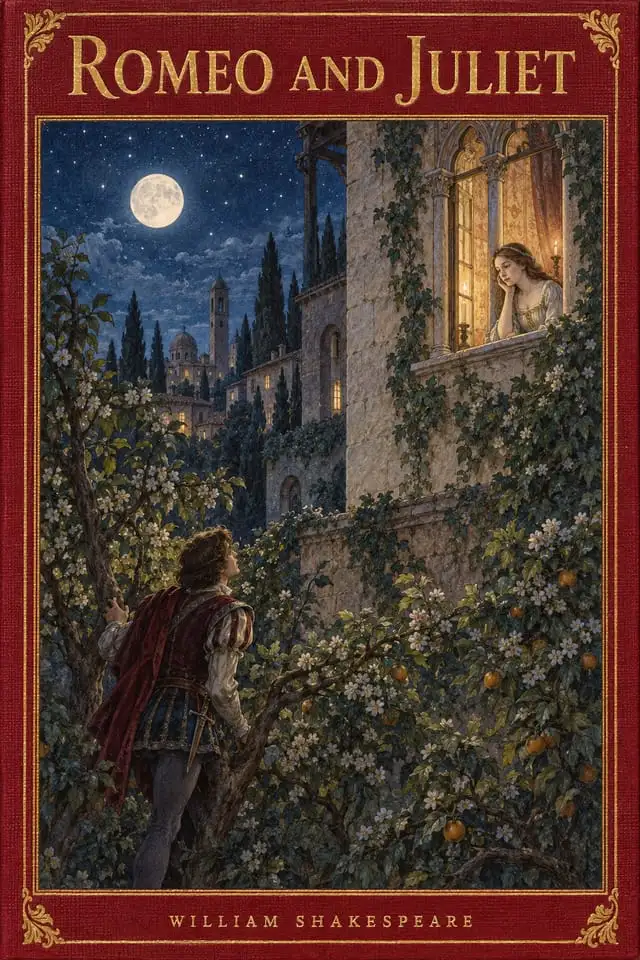
Romeo and Juliet Study Guide
GCSE set textAQA GCSEEdexcel GCSEOCR GCSEEduqas GCSE
Notes cover the whole book.
Characters
- SampsonA man of Capulet's household who makes sexual threats against Montague women and provokes Abraham by biting his thumb.First appears: Act 1, Scene 1
- GregorySampson's fellow in Capulet's household, who mocks his courage but helps him provoke a quarrel with the Montague men.First appears: Act 1, Scene 1
- AbrahamA man of Montague's household who challenges Sampson's insulting gesture and disputes his claim that Capulet is the better master.First appears: Act 1, Scene 1
- BalthasarRemains near the tomb despite Romeo's threats, then tells the Prince about their journey and produces Romeo's letter for his father.First appears: Act 1, Scene 1
- BenvolioTries to avoid a public quarrel, reports Mercutio's death to Romeo and gives the Prince an account of both fatal fights.First appears: Act 1, Scene 1
- TybaltFatally wounds Mercutio under Romeo's arm, flees and then returns to fight Romeo, who kills him.First appears: Act 1, Scene 1
- First CitizenEnters with armed citizens and calls for both the Capulets and the Montagues to be beaten down.First appears: Act 1, Scene 1
- CapuletSees Juliet bleeding in the tomb, offers Montague his hand as a brother and promises a memorial for Romeo beside Juliet's.First appears: Act 1, Scene 1
- Lady CapuletComes to the tomb with Capulet and feels that the sight of death warns her of her own approaching grave.First appears: Act 1, Scene 1
- MontagueReports his wife's death, discovers Romeo dead and promises a gold statue honouring Juliet after Capulet offers reconciliation.First appears: Act 1, Scene 1
- Lady MontagueHas died that night, according to Montague, from grief at Romeo's exile.First appears: Act 1, Scene 1
- The PrinceHears the witnesses and reads Romeo's letter, condemns both households' hatred and admits that tolerating their conflict has cost him two kinsmen.First appears: Act 1, Scene 1
- RomeoKills Paris after failing to persuade him to leave, lays him in the tomb and dies by poison beside Juliet before she wakes.First appears: Act 1, Scene 1
- ParisBrings flowers to Juliet's tomb, tries to arrest Romeo as a threat to the dead and is killed in their fight, asking to be laid beside Juliet.First appears: Act 1, Scene 2
- Capulet's servantCannot read the guest list his master gives him and asks Romeo for help before inviting him to the feast provided he is not a Montague.First appears: Act 1, Scene 2
- The Nurse (Angelica)Goes to wake Juliet with affectionate teasing, then raises the alarm and laments when she believes her dead.First appears: Act 1, Scene 3
- JulietWakes beside the dead Romeo, refuses to leave with the friar, kisses Romeo in search of poison and kills herself with his dagger.First appears: Act 1, Scene 3
- The servant who announces the guestsInterrupts the discussion of marriage to tell Lady Capulet that the guests have arrived and supper is ready.First appears: Act 1, Scene 3
- MercutioFights Tybalt after condemning Romeo's refusal to fight, curses both households when fatally wounded under Romeo's arm and dies offstage.First appears: Act 1, Scene 4
- First ServingmanDirects the clearing of Capulet's hall and asks for a piece of marchpane to be saved for him.First appears: Act 1, Scene 5
- Second ServingmanComplains about the demands on the servants and urges the others to work briskly.First appears: Act 1, Scene 5
- Second CapuletAn older relative who sits with Capulet and disputes how long it has been since they took part in a masked entertainment.First appears: Act 1, Scene 5
- ChorusReports that Romeo and Juliet love one another but that their families' enmity restricts their chances to meet.First appears: Prologue
- Friar LaurenceLeaves the tomb when Juliet refuses to follow him and the watch approaches, then publicly explains the secret marriage and potion and offers his life if found at fault.First appears: Act 2, Scene 3
- PeterAsks the musicians for comforting music, then threatens them and trades insults and musical puns when they refuse.First appears: Act 2, Scene 4
- Mercutio's pageAccompanies Mercutio, who sends him to fetch a surgeon after Tybalt wounds him.First appears: Act 3, Scene 1
- First Musician (Simon Catling)Enters with Paris and Friar Laurence, refuses Peter's request for music and answers his insults and wordplay; Peter addresses him as Simon Catling.First appears: Act 4, Scene 5
- Second Musician (Hugh Rebeck)Tells Peter to put away his dagger, jokes that musicians play for money and proposes staying for dinner; Peter addresses him as Hugh Rebeck.First appears: Act 4, Scene 5
- Third Musician (James Soundpost)A musician whom Peter addresses as James Soundpost and who cannot explain the phrase 'silver sound'.First appears: Act 4, Scene 5
- The ApothecaryA poor seller of drugs in Mantua who supplies Romeo with poison despite the death penalty, saying that poverty rather than willingness makes him consent.First appears: Act 5, Scene 1
- Friar JohnReturns Laurence's undelivered letter after officials confined him and another friar in a house suspected of infection, preventing his journey to Mantua.First appears: Act 5, Scene 2
- Paris's pageKeeps watch for Paris, summons the watch when the fight begins and later tells the Prince why his master came to the tomb.First appears: Act 5, Scene 3
- First WatchmanDirects the search of the churchyard, sends for the Prince and both households and reports the bodies and detained witnesses.First appears: Act 5, Scene 3
- Second WatchmanBrings Balthasar forward after finding him in the churchyard.First appears: Act 5, Scene 3
- Third WatchmanBrings in the trembling Friar Laurence and reports taking digging tools from him as he left the churchyard.First appears: Act 5, Scene 3
Themes
- Love and desire
- Family loyalty and identity
- Violence and honour
- Authority and obedience
- Marriage and gender
- Fate and choice
- Appearance and perception
Context
- Biting the thumb
- Sampson uses the gesture as an insult but denies directing it at Abraham when he learns that admitting it would put him in the wrong under the law. Act 1, Scene 1
- Friar
- A friar belongs to a religious order. Romeo treats Laurence as a spiritual adviser and asks him to perform the marriage. Act 2, Scene 3
- Confession and the visit to the friar
- Religious confession gives Juliet a reason to visit the friar. Romeo proposes that she use this visit for their marriage, while the Nurse carries the arrangements between them. Act 2, Scene 4
- Apothecary
- An apothecary prepares and sells medicines. Romeo seeks a deadly drug from someone whose ordinary trade involves remedies. Act 5, Scene 1
- Jointure
- Property settled on a wife to support her in widowhood. Capulet calls the joining of the fathers' hands Juliet's jointure, using marriage language for reconciliation after her death. Act 5, Scene 3
Chapter summaries
Prologue
The opening speaker addresses the audience directly and sets the scene in Verona. Two households of equal standing have renewed an old quarrel, making citizens shed one another's blood. Their children are described as lovers whose lives are governed by hostile stars. The speech announces their deaths and says that only this loss can end the parents' rage. Its fourteen lines form a sonnet, giving a tightly ordered shape to an account of violence and suffering. By revealing the outcome before the action begins, the speech directs attention towards how the conflict produces it and asks the audience to listen patiently.
Act 1, Scene 1
Sampson and Gregory turn jokes about courage and sexual domination into a challenge to the Montague men. Sampson wants to provoke a fight while keeping the law on his side, and his aside to Gregory exposes that calculation. Benvolio draws his sword to separate the fighters, but Tybalt treats his drawn weapon as a reason to attack. The quarrel spreads through the households and draws in citizens before the Prince condemns both family heads and threatens death for another disturbance. Once the others have gone, Montague and Lady Montague discuss Romeo's isolation and sadness with Benvolio. Romeo then explains his unreturned love through contradictory images such as love mixed with hate and fire mixed with cold. Benvolio offers the practical remedy of looking at other women, which Romeo rejects.
Act 1, Scene 2
Capulet says that he and Montague should be able to obey the Prince's demand for peace. Paris raises his marriage proposal, and Capulet argues that his daughter, not yet fourteen, should wait another two years. He nevertheless invites Paris to win her affection and says that his own consent depends on her agreement. The servant sent to invite the guests cannot read their names, so the action brings Romeo into contact with the list. Benvolio identifies Rosaline as the woman Romeo loves and uses her invitation to argue that he should compare her with other beauties. Romeo's language treats loyalty to Rosaline as a religion, resisting Benvolio's attempt to make attraction a matter of fair comparison. He agrees to attend for the opposite reason to Benvolio's: to admire the woman he already loves.
Act 1, Scene 3
Lady Capulet first asks the Nurse to leave so she can speak privately to Juliet, then immediately calls her back. The Nurse's long recollection of breastfeeding and weaning Juliet shows an intimacy grounded in daily care, while her repeated sexual joke prompts Juliet to ask her to stop. Juliet is not yet fourteen, but Lady Capulet argues that women younger than Juliet are already mothers and says she herself became a mother at about Juliet's age. Juliet describes marriage as an honour she has not been thinking about. Her mother praises Paris through an extended image of a handsome book which needs Juliet as its cover, and points to the possessions she would share. The Nurse answers with a joke about pregnancy, giving a bodily meaning to the promised benefits. Juliet agrees to consider Paris without promising love, and a servant's announcement brings the discussion to an end as the feast begins.
Act 1, Scene 4
The companions discuss how to enter the masked entertainment, and Benvolio rejects the need for a lengthy introductory speech. Romeo wants to carry a torch rather than dance, describing love as a weight that holds him down. Mercutio answers his sadness with puns and sexual mockery, urging him to fight back against love. When Romeo mentions a dream, Mercutio imagines Queen Mab travelling through sleepers' lives and producing dreams that reflect their desires. The speech moves from tiny, delicate details to money, violence and sexual pressure before Romeo stops him. Mercutio then dismisses dreams as the products of an idle brain, while Benvolio worries about arriving too late. Romeo instead fears arriving too early at an event that may set him on a course towards an early death, yet entrusts his course to a higher guide and chooses to proceed.
Act 1, Scene 5
The scene opens with servingmen clearing the hall before Capulet welcomes the guests and encourages dancing. Romeo sees Juliet and describes her through images of brightness against darkness, questioning whether he has loved before. Tybalt recognises his voice and wants to kill him because he treats Romeo's presence as an insult to the family, but Capulet praises Romeo's reputation and insists on obedience in his own house. Tybalt leaves angrily, treating his enforced restraint as an injury. Romeo and Juliet build a shared sonnet out of a playful exchange about saints, pilgrims, hands and lips, moving towards kisses through an image they both help create. The Nurse's interruption separates them, and her answers reveal Juliet's family to Romeo and Romeo's family to Juliet. Their attraction has preceded knowledge of their names, leaving Juliet to describe love and inherited hatred as joined together.
Prologue
Chorus enters to describe the change from Romeo's old desire to his new affection for Juliet. The former love is personified as someone dying, with the new affection waiting to inherit. Both lovers are drawn by beauty, but their mutual attraction meets the obstacle of their families' enmity. Romeo cannot openly visit as a suitor, and Juliet has even fewer opportunities to meet him. The fourteen-line sonnet closes by setting the sweetness of their meetings against these difficulties, crediting passion and time with making meetings possible.
Act 2, Scene 1
Romeo turns back towards Capulet's house because he feels that his heart remains there, then climbs the orchard wall. Benvolio sees where he has gone and asks Mercutio to call him. Mercutio turns the search into a mock attempt to summon a spirit, using exaggerated lovers' language and sexual descriptions of Rosaline. His assumption creates dramatic irony because the audience already knows that Romeo now loves Juliet. Benvolio warns that the mockery may anger Romeo, but Mercutio continues until he decides that the orchard is too cold for sleeping. The two leave because Romeo clearly does not want to be found.
Act 2, Scene 2
Romeo watches Juliet at an upstairs window and describes her as a source of light while she does not know he is listening. Her speech questions why his family name should make him an enemy, and his aside lets the audience hear him deciding whether to reveal himself. When he speaks, Juliet recognises his voice and warns that her relatives will kill him if they find him. She admits her love openly but asks him to trust her sincerity rather than expect a performance of reluctance. She stops him from swearing by the changing moon because she wants constant love, then compares their sudden agreement to a brief flash of lightning. The Nurse calls from within, interrupting a conversation in which Juliet makes marriage the condition of Romeo's continued courtship and arranges to send a messenger at nine. Their repeated attempts to part combine pleasure with reluctance, and Romeo finally leaves to ask his spiritual adviser for help.
Act 2, Scene 3
Alone at dawn, Friar Laurence gathers plants and describes how the same flower can provide medicine or poison. He argues that good things can become harmful through misuse and that grace and uncontrolled desire struggle within people as opposing powers do within plants. Romeo arrives without having been to bed and explains that he and Capulet's daughter love one another and want to marry that day. The friar rebukes the speed with which Romeo has abandoned Rosaline, questioning whether young men's love rests in their eyes rather than their hearts. Romeo answers that Juliet returns his love, which Rosaline did not. Laurence agrees to assist because the marriage may turn the households' hatred into love, but closes by warning Romeo against haste.
Act 2, Scene 4
Benvolio reports Tybalt's letter, and Mercutio interprets it as a challenge while describing Tybalt's precise, showy fencing. Romeo joins them and matches Mercutio's wordplay, which his friend welcomes as a return to sociability. The Nurse arrives with Peter, endures Mercutio's insults, and asks to speak privately with Romeo before Mercutio and Benvolio leave. She warns Romeo that deceiving a young woman would be wrong, making her concern for Juliet part of the comic encounter. Romeo tells her that Juliet should come to confession at Friar Laurence's cell that afternoon and be married there. He also arranges for his man to bring the Nurse a rope ladder for a secret visit that night, reassuring her that the man can keep their confidence. The Nurse blesses Romeo and reports Juliet's dislike of Paris before departing with Peter.
Act 2, Scene 5
Alone in the orchard, Juliet measures the Nurse's absence from nine until noon and imagines that youthful feeling should make a messenger travel faster. The Nurse arrives with Peter and sends him to the gate before answering Juliet. Her complaints about tiredness and aching bones, praise of Romeo's body and question about Juliet's mother repeatedly postpone the message. Juliet points out that the Nurse has breath enough to explain her breathlessness and that the explanation takes longer than the message would. At last the Nurse asks whether Juliet has permission to go to confession, then directs her to the friar's cell, where a husband is waiting. The Nurse describes her own labour and makes a sexual joke about Juliet's coming night before Juliet hurries away towards the marriage.
Act 2, Scene 6
Friar Laurence hopes that heaven will bless the marriage, while Romeo says that no sorrow can outweigh the joy of seeing Juliet and that, once married to her, he would defy even death. Laurence answers with images of fire meeting gunpowder and sweetness becoming sickening, urging moderation rather than intensity. Juliet enters, and Romeo asks her to describe the happiness they share. She replies that her feeling has more substance than words can express and compares it to wealth beyond counting. Laurence ends their exchange by leading them away to be married and insisting that they cannot remain alone before the church joins them, so the ceremony itself is not shown in this scene.
Act 3, Scene 1
Benvolio urges Mercutio to leave the hot streets, but Mercutio mocks his caution and provokes Tybalt when he arrives. Romeo refuses Tybalt's challenge because he now regards him as a kinsman, though he does not reveal the marriage. Mercutio treats this restraint as dishonour and fights Tybalt, who wounds him under Romeo's arm as Romeo tries to separate them. Mercutio curses both households before leaving with Benvolio, who returns to report his death. Romeo blames his love for Juliet for weakening his courage, chooses revenge and kills Tybalt when he returns. Before the Prince, Lady Capulet demands Romeo's death and disputes Benvolio's account, while Montague argues that Romeo has punished Mercutio's killer. The Prince, himself related to Mercutio, imposes banishment and a fine, making the feud's public cost part of his judgement.
Act 3, Scene 2
Alone in the orchard, Juliet calls for night to conceal Romeo's arrival and imagines their first sexual union as both a victory and a surrender. The Nurse enters with the cords but interrupts this anticipation with cries of death that leave Juliet uncertain whether Romeo, Tybalt or both have died. Once the Nurse explains that Romeo killed Tybalt and is banished, Juliet describes him through contradictory images of beauty and evil. Yet she immediately rejects the Nurse's wish for shame upon Romeo and insists on her loyalty to her husband. She reasons that Tybalt would have killed him, then finds the word 'banished' more painful than Tybalt's death. The cords seem useless to her until the Nurse promises to fetch Romeo from Laurence's cell, and Juliet sends her ring as a message of continued love.
Act 3, Scene 3
Friar Laurence presents banishment as mercy, but Romeo insists that life outside Verona has no value because Juliet is there. He rejects philosophy as useless unless it can restore her to him or reverse the sentence, and falls to the ground. The Nurse's repeated knocking interrupts the argument and makes the danger of discovery immediate. When she reports Juliet's grief, Romeo imagines his name as a weapon against her and draws his sword to attack the body that bears it. Laurence stops him, condemns his behaviour through insulting comparisons with women and beasts, and argues that killing himself would also injure Juliet. He then turns to practical arrangements: Romeo should visit his wife and leave for Mantua while Laurence seeks an opportunity to reveal the marriage, reconcile their families and obtain a pardon. The Nurse gives Romeo Juliet's ring, restoring his comfort, and the friar promises to use Romeo's man to send news.
Act 3, Scene 4
Capulet tells Paris that Tybalt's death has left no time to discuss the proposed marriage with Juliet, who remains offstage. Paris acknowledges that grief prevents courtship, while Lady Capulet offers to learn Juliet's wishes the next morning. Capulet instead promises his daughter's love on the assumption that she will obey him completely. This reverses his earlier insistence that Paris must win her heart and obtain her agreement. After asking what day it is, he fixes the wedding for Thursday, and Paris wishes it could be sooner. Capulet limits the celebration because a large feast might make the family appear careless of Tybalt's death. The audience knows that Juliet is already married, giving dramatic irony to a conversation in which her father treats her agreement as certain.
Act 3, Scene 5
At the upstairs window, Juliet initially denies the signs of dawn to keep Romeo with her, then urges him away when he accepts the risk of staying. The Nurse warns of Lady Capulet's approach, and Romeo descends and leaves after promising messages and expressing confidence that they will meet again. Lady Capulet mistakes Juliet's tears for grief over Tybalt, proposes poisoning Romeo in Mantua and hears apparent agreement in replies that conceal Juliet's love. She then announces the Thursday wedding to Paris, which Juliet refuses. Capulet answers her refusal with insults and threats of forced attendance, homelessness and disinheritance, while Lady Capulet declines to help her obtain a delay. The Nurse first defends Juliet against his abuse but then urges her to marry Paris, praising his looks and treating Romeo's banishment as grounds for abandoning the first marriage. Juliet pretends to accept this comfort and sends the Nurse away before declaring that she will no longer confide in her and will seek the friar's help, retaining the power to die if no remedy exists.
Act 4, Scene 1
Paris tells Friar Laurence that Capulet is hurrying the marriage to relieve Juliet's grief for Tybalt, though Paris has had little opportunity to speak to her of love. When Juliet arrives, Paris calls her his wife, but her evasive answers withhold the agreement he assumes. Alone with the friar, she invokes her existing marriage to Romeo and threatens to use her knife if no other remedy is available. Laurence proposes that she consent outwardly to Paris and drink a potion which, he says, will make her appear dead for forty-two hours. He expects the family to place her in their vault and promises to send letters so that Romeo can join him there and take Juliet to Mantua when she wakes. Juliet's willingness to face graves and dead bodies expresses how strongly she rejects the second marriage, while the friar's detailed instructions make the escape depend on several people carrying out a secret plan.
Act 4, Scene 2
Capulet directs two servingmen to invite guests and hire cooks, with a joke about cooks licking their fingers interrupting the preparations. Juliet arrives looking cheerful and presents her opposition to her father as a sin which Friar Laurence has taught her to repent. Her promise of complete obedience follows the friar's secret instructions, so the audience understands it differently from Capulet. He praises the friar and brings the marriage forward to the next morning, overruling Lady Capulet's reminder that the wedding was set for Thursday and her warning that supplies will be short. Juliet leaves with the Nurse to choose ornaments, while Capulet's relief makes him willing to stay awake and organise the household himself.
Act 4, Scene 3
After choosing her clothes with the Nurse, Juliet asks for privacy, saying that she needs to pray, and sends both the Nurse and her mother away. Her soliloquy exposes the fear concealed by her practical arrangements and her outward obedience. She lays down a dagger as an alternative if the potion fails to prevent the wedding. She wonders whether the friar has given her poison to avoid disgrace for marrying her to Paris after already marrying her to Romeo, but counters this suspicion by recalling his established holiness. Her questions then imagine waking before Romeo arrives, suffocating in the vault or losing her reason among her ancestors' bones and Tybalt's decaying body. She thinks she sees Tybalt's ghost seeking Romeo, then addresses Romeo as she drinks and falls upon the bed.
Act 4, Scene 4
In Capulet's hall, Lady Capulet and the Nurse organise food while Capulet urges everyone to work faster despite the early hour. The Nurse mocks his concern with domestic work, and Lady Capulet teases him about his past pursuit of women when he claims he can stay awake all night without becoming ill. Servingmen carry cooking supplies and fuel, and one answers Capulet's order with a joke about finding logs without Peter's help. Capulet hears the music announcing Paris's approach and sends the Nurse to wake and dress Juliet, creating dramatic irony because the audience has just seen her drink the potion.
Act 4, Scene 5
The Nurse begins by teasing Juliet about sleep and her wedding night, but turns to cries for help when she cannot wake her. Lady Capulet begs her child to revive, and Capulet takes Juliet's coldness and stiffness as proof that she is dead. Paris arrives with Friar Laurence and musicians for the wedding, only to join the family's lamentations. Capulet personifies Death as a rival bridegroom who has become his son-in-law and heir, making the expected marriage a language for his loss. The friar, whose plan depends on Juliet appearing dead, offers religious consolation and tells the household to dress her for church and prepare to follow her to the grave. Capulet turns wedding food, music and flowers into a catalogue of funeral arrangements, using repeated contrasts to express the collapse of his expectations. Once the family and friar have gone, Peter's request for music becomes a comic exchange of insults, threats and musical puns, ending with the musicians' practical decision to wait for dinner.
Act 5, Scene 1
Alone in Mantua, Romeo takes comfort from a dream in which Juliet finds him dead and revives him with kisses. Balthasar arrives and reports seeing Juliet placed in her family's vault, mistaking her apparent death for a real one. Romeo immediately declares defiance of the stars and orders ink, paper and horses, dismissing Balthasar's warning about his pale and wild appearance. With no letter from the friar, he resolves to lie with Juliet that night and recalls an apothecary whose poverty he believes he can exploit to obtain poison. The Apothecary first invokes Mantua's death penalty, but Romeo argues that a society which leaves him starving has no claim on his obedience. After securing the poison, Romeo calls gold the greater poison and treats the drug as a medicine because he intends it to end his separation from Juliet.
Act 5, Scene 2
Friar John returns to Laurence's cell without having reached Mantua. He explains that he sought another friar to accompany him, but town officials confined them in a house suspected of infection. Fear of infection also prevented him from finding anyone to carry the letter onwards or return it to Laurence. Laurence recognises the danger of the failed message, calls on John to fetch an iron crowbar and prepares to enter the monument himself. Left alone, he says Juliet will wake within three hours and plans to keep her in his cell until Romeo can come. The scene explains a practical interruption to the secret plan, while Laurence's appeal to unhappy fortune presents the failure as something beyond his control.
Act 5, Scene 3
Paris brings flowers to Juliet's tomb, mistakes Romeo's arrival for an attempt to desecrate the bodies and tries to arrest him, leading to a fight in which Romeo kills him. Romeo places Paris in the tomb and observes the colour in Juliet's lips and cheeks without understanding that she lives, then drinks poison and dies with a kiss. Laurence arrives shortly before Juliet wakes, but fear of the approaching watch makes him leave when she refuses his offer of refuge among nuns; she kisses Romeo for any remaining poison and then stabs herself with his dagger. Paris's page brings the watch, who discover the bodies, detain Balthasar and Laurence and summon the Prince and the households. Laurence explains the marriage, potion and undelivered letter, while Balthasar's testimony, the page's account and Romeo's letter supply further evidence of how the deaths occurred. Montague reports that his wife has died from grief at Romeo's exile, adding another loss to the discovery of his son's death. The Prince blames the households' hatred and his own tolerance of their quarrels, while Capulet offers reconciliation and the fathers promise costly memorials to each other's children, ending the scene with peace purchased through loss.
Key quotes
From ancient grudge break to new mutiny, Where civil blood makes civil hands unclean.
The repetition of 'civil' makes the violence a crime against the shared community. An inherited grievance becomes fresh action, so the feud involves present behaviour as well as the past.
Family loyalty and identityViolence and honour
A pair of star-cross’d lovers take their life;
The description places love beside death and suggests that hostile stars govern the lovers' lives. The audience receives this account of their fate before meeting them.
Love and desireFate and choice
What, drawn, and talk of peace! I hate the word, As I hate hell, all Montagues, and thee:
Tybalt makes hatred of a family inseparable from hatred of peace itself. His refusal to accept Benvolio's explanation turns an attempt to stop the fight into more violence.
Violence and honourFamily loyalty and identity
If ever you disturb our streets again, Your lives shall pay the forfeit of the peace.
The Prince claims authority over a public space damaged by private hatred. His threat makes both households answerable for the city's peace.
Authority and obedienceViolence and honour
Why, then, O brawling love! O loving hate!
Romeo's oxymorons join emotions that seem opposed. Speaking just after he notices evidence of the brawl, he links the language of his unreturned love with the violence of the feud.
Love and desireViolence and honour
But woo her, gentle Paris, get her heart, My will to her consent is but a part;
Capulet distinguishes his permission from his daughter's willingness. He makes winning her affection part of the marriage process, even while discussing the proposal without her present.
Marriage and genderAuthority and obedienceLove and desire
When the devout religion of mine eye Maintains such falsehood, then turn tears to fires;
Romeo makes his judgement of beauty sound like religious faith. His attachment to what his eyes tell him resists Benvolio's proposal to look again and compare.
Love and desireAppearance and perception
It is an honour that I dream not of.
Juliet accepts the respectful language used for marriage while making clear that she has not been seeking it. Her brief answer contrasts with the Nurse's eagerness to see her married.
Marriage and genderAuthority and obedience
I’ll look to like, if looking liking move: But no more deep will I endart mine eye Than your consent gives strength to make it fly.
The repetition of 'look' and 'like' links sight to possible attraction, while 'if' keeps Juliet's answer conditional. She presents her willingness to look as subject to parental permission.
Marriage and genderAuthority and obedienceAppearance and perception
True, I talk of dreams, Which are the children of an idle brain, Begot of nothing but vain fantasy,
Mercutio dismisses dreams just after describing Queen Mab as their elaborate imaginary cause. His claim that they have no substance challenges Romeo's belief that dreams can tell the truth.
Fate and choiceAppearance and perception
I fear, too early: for my mind misgives Some consequence yet hanging in the stars Shall bitterly begin his fearful date With this night’s revels
Romeo answers a practical concern about lateness with a fear about his whole life. The stars connect his sense of danger to the language of fate already used in the Prologue.
Fate and choice
Now, by the stock and honour of my kin, To strike him dead I hold it not a sin.
Tybalt makes family honour a reason to justify killing. His moral certainty contrasts with Capulet's willingness to welcome Romeo on the strength of his conduct and reputation.
Family loyalty and identityViolence and honour
Good pilgrim, you do wrong your hand too much, Which mannerly devotion shows in this; For saints have hands that pilgrims’ hands do touch, And palm to palm is holy palmers’ kiss.
Juliet takes up Romeo's religious imagery and gives it her own direction, allowing touch while proposing joined hands as a kiss. Their courtship is an exchange in which she actively shapes the language.
Love and desireMarriage and gender
My only love sprung from my only hate! Too early seen unknown, and known too late!
Juliet's repeated 'only' and opposing terms compress her conflict between personal love and family identity. She has responded to Romeo before knowing the name that makes him an enemy.
Love and desireFamily loyalty and identityAppearance and perception
Now Romeo is beloved and loves again, Alike betwitched by the charm of looks,
The repeated language of love stresses that Romeo's affection is now returned. 'Alike' gives both lovers a shared attraction to physical beauty.
Love and desireAppearance and perception
And she as much in love, her means much less To meet her new-beloved any where:
Equal feeling does not give the lovers equal freedom. The repeated 'much' draws attention to the gap between Juliet's desire and her opportunities to act on it.
Love and desireFamily loyalty and identityMarriage and gender
Can I go forward when my heart is here?
Romeo gives his feeling a physical location, making departure seem impossible while Juliet remains nearby. His question leads directly to the action of climbing the wall.
Love and desire
I conjure thee by Rosaline’s bright eyes, By her high forehead and her scarlet lip,
Mercutio's mock spell depends on an attachment that the audience knows has ended. He reduces love to a list of attractive body parts while failing to understand Romeo's changed feelings.
Love and desireAppearance and perception
What’s in a name? that which we call a rose By any other name would smell as sweet;
Juliet uses the rose to separate a person's qualities from the name attached to them. Her question challenges the family identity that makes Romeo an enemy.
Family loyalty and identityLove and desireAppearance and perception
It is too rash, too unadvised, too sudden; Too like the lightning, which doth cease to be Ere one can say “It lightens.”
Juliet's repeated 'too' stresses her concern about the haste of their agreement. The lightning comparison questions its durability, even while she welcomes Romeo's love.
Love and desireMarriage and gender
If that thy bent of love be honourable, Thy purpose marriage, send me word to-morrow,
Juliet turns the exchange of feeling into a demand for a definite intention and a practical message. She actively sets the terms on which the courtship can continue.
Marriage and genderLove and desire
Virtue itself turns vice, being misapplied; And vice sometimes by action dignified.
Laurence argues that moral value depends on use and action. His reflection offers a way to examine choices without assuming that something apparently good must always produce good effects.
Appearance and perceptionFate and choice
Holy Saint Francis, what a change is here! Is Rosaline, whom thou didst love so dear, So soon forsaken? young men’s love then lies Not truly in their hearts, but in their eyes.
The friar measures Romeo's new declaration against the grief he recently expressed for Rosaline. The contrast between hearts and eyes makes the sincerity of sudden attraction a question within the scene.
Love and desireAppearance and perception
For this alliance may so happy prove, To turn your households’ rancour to pure love.
Laurence sees a possible public benefit in the private marriage. 'May' marks reconciliation as his hope rather than an assured result.
Family loyalty and identityMarriage and genderLove and desire
Why, is not this better now than groaning for love? now art thou sociable, now art thou Romeo;
Mercutio recognises the joking companion he wants Romeo to be. He takes lively conversation as a sign that Romeo has escaped lovesickness, without knowing about Juliet.
Love and desireAppearance and perception
if ye should lead her into a fool’s paradise, as they say, it were a very gross kind of behavior, as they say:
The Nurse interrupts her errand to insist that Romeo owes Juliet honest treatment. Her repeated conversational phrase makes the warning sound informal without removing its seriousness.
Marriage and genderLove and desire
Bid her devise Some means to come to shrift this afternoon; And there she shall at Friar Laurence’ cell Be shrived and married.
Romeo gives precise instructions through an intermediary rather than approaching Juliet's family. The religious visit provides a route to a marriage arranged outside parental discussion.
Marriage and genderFamily loyalty and identityAuthority and obedience
How art thou out of breath, when thou hast breath To say to me that thou art out of breath?
Juliet exposes the contradiction in the Nurse's excuse by repeating her words. The exchange makes the delay comic while showing how urgently Juliet depends on her answer.
Love and desireAuthority and obedience
I am the drudge and toil in your delight, But you shall bear the burden soon at night.
The Nurse sets her physical effort beside Juliet's expected pleasure. Her sexual joke brings the lovers' elevated feelings back to the body.
Love and desireMarriage and gender
Do thou but close our hands with holy words, Then love-devouring death do what he dare; It is enough I may but call her mine.
Romeo makes the marriage an absolute measure of happiness, treating even death as a price he can dismiss. The personification of death gives his declaration a defiant intensity.
Love and desireMarriage and gender
These violent delights have violent ends And in their triumph die, like fire and powder, Which as they kiss consume:
The friar makes a kiss resemble the meeting of fire and gunpowder. Repeating 'violent' links excessive pleasure with destruction as part of his argument for restraint.
Love and desireViolence and honour
But my true love is grown to such excess I cannot sum up sum of half my wealth.
Juliet uses the language of counting to say that love exceeds measurement. Her reply resists Romeo's request for an elaborate verbal description while still expressing strong feeling.
Love and desireAppearance and perception
O calm, dishonourable, vile submission!
Mercutio reads Romeo's restraint as a surrender of honour because he does not know the reason for it. The audience can see the gap between Romeo's new family loyalty and his friend's demand for a fight.
Violence and honourFamily loyalty and identityMarriage and genderAppearance and perception
A plague o’ both your houses! I am sped.
The wounded Mercutio blames both families, extending responsibility beyond the man who stabbed him. He repeats the curse while continuing to joke about his wound, so his wit now expresses the deadly cost of the feud.
Violence and honourFamily loyalty and identity
O, I am fortune’s fool!
Romeo describes himself as fortune's plaything just after choosing to answer Mercutio's death with violence. His cry invites attention to the tension between his sense of helplessness and his own actions.
Fate and choiceViolence and honour
Come, night; come, Romeo; come, thou day in night;
The repeated command expresses Juliet's impatience and makes Romeo a source of light within the darkness she welcomes. Night offers the privacy that their marriage needs.
Love and desireMarriage and genderAppearance and perception
Beautiful tyrant! fiend angelical! Dove-feather’d raven! wolvish-ravening lamb!
Juliet's oxymorons express her struggle to reconcile the man she loves with the killing she has just learned about. The opposing animal images make apparent gentleness seem to conceal violence.
Love and desireViolence and honourAppearance and perception
Shall I speak ill of him that is my husband?
Juliet answers the Nurse's appeal to family loyalty with a claim based on marriage. The question marks her refusal to let grief for Tybalt cancel her bond with Romeo.
Family loyalty and identityMarriage and genderLove and desire
There is no world without Verona walls, But purgatory, torture, hell itself.
Romeo makes the city's boundary the limit of meaningful life because Juliet remains inside it. The religious terms turn a legal punishment into an experience of spiritual torment.
Love and desireAuthority and obedience
Hast thou slain Tybalt? wilt thou slay thyself? And slay thy lady too that lives in thee, By doing damned hate upon thyself?
Laurence repeats 'slay' to connect Romeo's threatened self-harm with violence against other people. He uses the lovers' bond to argue that Romeo has a duty to preserve his own life.
Love and desireMarriage and genderViolence and honour
I think she will be ruled In all respects by me; nay, more, I doubt it not.
Capulet moves from an assumption to declared certainty without speaking to Juliet. His confidence makes obedience the basis of the marriage arrangements.
Authority and obedienceMarriage and genderFamily loyalty and identity
It may be thought we held him carelessly, Being our kinsman, if we revel much:
Capulet considers how the celebration will appear to other people after Tybalt's death. Concern for family reputation shapes the size of the wedding even as the marriage itself is hurried.
Family loyalty and identityAppearance and perceptionMarriage and gender
More light and light; more dark and dark our woes!
Romeo sets increasing daylight against increasing sorrow. Light brings separation and danger, reversing the comfort usually associated with morning.
Love and desireAppearance and perception
An you be mine, I’ll give you to my friend; An you be not, hang, beg, starve, die in the streets,
Capulet treats Juliet as his to give and makes parental support conditional on her obedience. The sequence of threatened suffering exposes the coercion behind the proposed match.
Authority and obedienceFamily loyalty and identityMarriage and genderViolence and honour
Thou and my bosom henceforth shall be twain.
Alone after the Nurse leaves, Juliet declares a break in their intimacy. Her outward claim to have received comfort has concealed a decision to keep her thoughts from her former confidante.
Appearance and perceptionLove and desireMarriage and gender
God join’d my heart and Romeo’s, thou our hands;
Juliet distinguishes the love she attributes to God from the ceremony the friar performed. She makes both bonds reasons why he must help her resist another marriage.
Love and desireMarriage and genderAuthority and obedience
Each part, deprived of supple government, Shall, stiff and stark and cold, appear like death:
The friar describes the potion's intended effects through bodily signs that others can see and feel. The word 'appear' marks the difference between the condition he plans and the conclusion the family is meant to draw.
Appearance and perceptionFate and choice
Henceforward I am ever ruled by you.
Juliet gives her father the promise of obedience he wants to hear. The audience knows that she is following a secret plan to escape the marriage, creating dramatic irony.
Authority and obedienceFamily loyalty and identityAppearance and perceptionMarriage and gender
my heart is wondrous light, Since this same wayward girl is so reclaim’d.
Capulet makes his happiness depend on the belief that Juliet's independent will has been corrected. His relief shows how completely he accepts her performance of submission.
Family loyalty and identityAuthority and obedienceAppearance and perception
My dismal scene I needs must act alone.
Juliet describes her ordeal in the language of theatre. Having dismissed the people who could comfort her, she recognises that she must perform the next action by herself.
Appearance and perceptionFate and choice
What if it be a poison, which the friar Subtly hath minister’d to have me dead,
The question shows Juliet testing the trust on which her plan depends. It presents poisoning as her fear rather than as a fact about the friar's intentions.
Authority and obedienceAppearance and perceptionFate and choice
Romeo, I come! this do I drink to thee.
Juliet ends her sequence of fearful questions with an address to her absent husband and an action. Her love gives her a reason to proceed without removing the dangers she has imagined.
Love and desireMarriage and genderFate and choice
Make haste; the bridegroom he is come already: Make haste, I say.
Capulet's repeated commands keep the household moving towards the wedding he expects. The urgency contrasts with the audience's knowledge of Juliet's secret action in her chamber.
Authority and obedienceMarriage and genderAppearance and perception
Death is my son-in-law, Death is my heir; My daughter he hath wedded:
Capulet personifies Death through the family roles he expected Paris to occupy. His repetition makes bereavement feel like the loss of both his daughter and the future he had arranged.
Family loyalty and identityMarriage and genderFate and choice
All things that we ordained festival, Turn from their office to black funeral;
Capulet's paired wedding and funeral images make the reversal concrete. His list expresses the household's change from anticipation to mourning through food, music and flowers.
Marriage and genderAppearance and perceptionFamily loyalty and identity
I say “silver sound,” because musicians sound for silver.
The Second Musician turns poetic language into a joke about being paid. The concern with money shifts the tone after the family's extended expressions of grief.
Appearance and perception
Is it even so? then I defy you, stars!
Romeo addresses the stars as powers he can resist, then immediately makes practical arrangements to return. His defiant language sits beside the audience's knowledge that the report he accepts is incomplete.
Fate and choiceAppearance and perception
My poverty, but not my will, consents.
The Apothecary separates agreement from free willingness. His brief reply exposes the economic pressure behind a transaction which Romeo presents as a choice to disobey an unjust law.
Authority and obedienceFate and choice
There is thy gold, worse poison to men’s souls, Doing more murders in this loathsome world, Than these poor compounds that thou mayst not sell.
Romeo calls money more deadly than the forbidden drug. His attack on gold sits uneasily beside his use of it to make a starving man break the law.
Authority and obedienceViolence and honourAppearance and perception
The letter was not nice but full of charge Of dear import, and the neglecting it May do much danger.
Laurence stresses that the letter carries serious instructions rather than a casual message. His warning makes clear how much the plan depends on Romeo receiving information.
Fate and choiceAppearance and perception
Poor living corse, closed in a dead man’s tomb!
The contradiction in 'living corse' separates Juliet's actual condition from her treatment as a dead body. Laurence's pity also acknowledges the confinement his plan has created.
Appearance and perceptionFate and choice
Thou art not conquer’d; beauty’s ensign yet Is crimson in thy lips and in thy cheeks, And death’s pale flag is not advanced there.
Romeo turns colour and pallor into rival military flags. The dramatic irony lies in his seeing signs of Juliet's life while continuing to believe her dead.
Love and desireAppearance and perception
Yea, noise? then I’ll be brief. O happy dagger!
The approaching watch gives Juliet's speech immediate urgency. Calling the dagger 'happy' makes a weapon seem welcome because she seeks death beside Romeo.
Love and desireViolence and honourFate and choice
And I for winking at your discords too Have lost a brace of kinsmen: all are punish’d.
The Prince includes himself in the reckoning for the feud. His admission gives authority a share of responsibility for allowing private hatred to continue.
Authority and obedienceFamily loyalty and identityViolence and honour