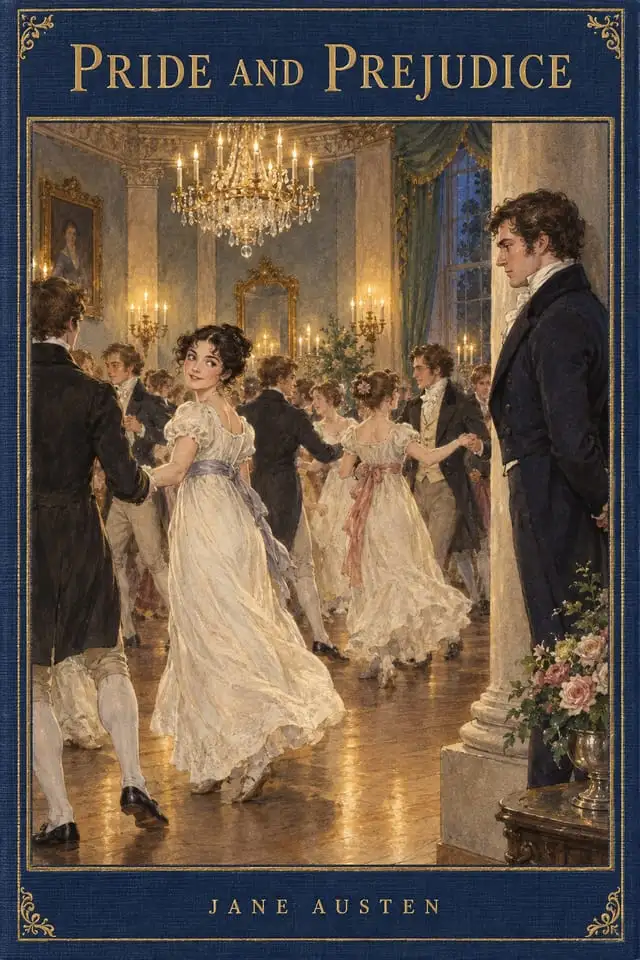
Pride and Prejudice Study Guide
GCSE set textAQA GCSEEdexcel GCSEOCR GCSEEduqas GCSE
Notes cover the whole book.
Characters
- Mr BennetMissing Elizabeth greatly after her marriage, he visits Pemberley often and refuses to let Kitty stay with Lydia.First appears: Chapter 1
- Mrs BennetNews of Elizabeth's engagement turns her dislike of Darcy into delight at his wealth and standing, though awe keeps her manner towards him restrained.First appears: Chapter 1
- Charles BingleyAfter a year at Netherfield with Jane, he buys an estate in a neighbouring county to Derbyshire, putting more distance between them and her Meryton relations.First appears: Chapter 1
- Elizabeth DarcyMarried to Darcy and living at Pemberley, she becomes close to Georgiana, helps Lydia financially and encourages reconciliation with Lady Catherine.First appears: Chapter 1
- Jane BingleyMarried to Bingley, she leaves Netherfield after a year and settles within thirty miles of Elizabeth.First appears: Chapter 1
- Lydia WickhamStill extravagant and often seeking help from her sisters, she leads an unsettled life with Wickham as their affection declines and sometimes visits Pemberley without him.First appears: Chapter 1
- Mrs LongThe acquaintance who tells Mrs Bennet that a wealthy single man named Bingley has taken Netherfield Park.First appears: Chapter 1
- Sir William LucasA former Meryton tradesman and mayor who takes great pleasure in his knighthood but remains friendly and obliging.First appears: Chapter 1
- Lady LucasSir William's wife, a kind neighbour of Mrs Bennet and the mother of Elizabeth's friend Charlotte.First appears: Chapter 1
- Catherine BennetSpending most of her time with Jane and Elizabeth, away from Lydia's example, she becomes less irritable and better informed under their guidance.First appears: Chapter 2
- Mary BennetThe only daughter remaining at home, she spends less time on accomplishments because her mother needs company, though she continues to moralise about their visitors.First appears: Chapter 2
- Fitzwilliam DarcyMarried to Elizabeth, he welcomes her closeness with Georgiana, helps Wickham professionally while refusing to receive him at Pemberley and eventually seeks reconciliation with his aunt.First appears: Chapter 3
- Caroline BingleyDarcy's marriage wounds her pride, but she becomes civil to Elizabeth to preserve her access to Pemberley.First appears: Chapter 3
- Louisa HurstLouisa Hurst joins her sister in mocking Elizabeth's muddy clothes and questioning Jane's marriage prospects because of her family.First appears: Chapter 3
- Mr HurstAn idle man interested chiefly in eating, drinking and cards, who has little to say to Elizabeth and resents conversation interrupting the game.First appears: Chapter 3
- Charlotte CollinsGenuinely pleased by Elizabeth's engagement, she comes with Collins to Lucas Lodge to escape Lady Catherine's anger for a time.First appears: Chapter 3
- Mary KingLydia reports that Mary King has gone to stay with her uncle in Liverpool, ending the immediate prospect of her marrying Wickham.First appears: Chapter 3
- Maria LucasShe excitedly calls Elizabeth downstairs to see Miss de Bourgh and Mrs Jenkinson at the parsonage gate.First appears: Chapter 3
- Colonel ForsterAccording to Jane, he has traced Lydia and Wickham as far as Clapham, warned the Bennets of his fears and is to accompany Mr Bennet to London to search for them.First appears: Chapter 6
- Mrs PhilipsMrs Bennet's sister in Meryton, whose news about the officers delights Catherine and Lydia.First appears: Chapter 7
- Mr PhilipsMrs Bennet's brother-in-law, who took over her father's legal business and whose visits to the officers help his nieces meet them.First appears: Chapter 7
- Captain CarterAn officer whom Lydia admires and hopes to see before he leaves for London.First appears: Chapter 7
- Mr JonesThe apothecary called to see Jane at Netherfield, who advises bed rest and medicine for her cold.First appears: Chapter 7
- Mr GardinerHis wife's letter reveals that he wanted to fund the marriage arrangements himself but yielded to Darcy's insistence, partly because they believed Darcy had a personal interest in helping Elizabeth's family.First appears: Chapter 7
- Mr CollinsHaving told Lady Catherine the rumour about Elizabeth and Darcy, he warns against the match and condemns Mr Bennet for receiving Lydia and Wickham.First appears: Chapter 7
- Georgiana DarcyLiving at Pemberley, she becomes devoted to Elizabeth and learns from her playful treatment of Darcy that marriage allows a familiarity she has not known as his younger sister.First appears: Chapter 8
- Mrs GardinerHer letter explains Darcy's secret assistance, praises his character and reveals that she and her husband believed Elizabeth shared an understanding with him.First appears: Chapter 9
- Lady Catherine de BourghAfter her abuse of Elizabeth causes an estrangement from Darcy, she eventually accepts his attempt at reconciliation and visits them at Pemberley.First appears: Chapter 13
- Anne de BourghLady Catherine calls her Anne and insists that she would have been a fine musician if her health had allowed her to learn, while Elizabeth can see no sign that Darcy loves her.First appears: Chapter 14
- Mr DennyAn officer acquainted with the Bennet sisters, who introduces his friend Mr Wickham as a new member of their corps.First appears: Chapter 14
- George WickhamHis affection for Lydia soon becomes indifference, and although Darcy helps his career further, he is never received at Pemberley.First appears: Chapter 15
- Mrs JenkinsonCollins mentions her arranging Miss de Bourgh's footstool while Lady Catherine advised him to marry.First appears: Chapter 19
- Colonel FitzwilliamA joint guardian of Georgiana Darcy, he says money restricts his marriage choices and reports Darcy's claim to have saved a friend from an imprudent marriage.First appears: Chapter 30
- Mrs YoungeNow letting lodgings in London, she eventually gave Darcy the information he needed to find Wickham and Lydia, according to Mrs Gardiner's letter.First appears: Chapter 35
- Mrs ForsterThe colonel's very young, recently married wife invites Lydia to accompany her to Brighton after a short but close friendship.First appears: Chapter 39
- Mrs ReynoldsPemberley's housekeeper, who has known Darcy since he was four and praises his generosity as a brother, landlord and master.First appears: Chapter 43
- Mrs AnnesleyThe woman with whom Georgiana lives in London, who helps the conversation at Pemberley and discreetly reminds her of her duties as hostess.First appears: Chapter 45
Themes
- Marriage, love and money
- Class, wealth and social standing
- First impressions and judgement
- Pride and vanity
- Family affection and responsibility
- Women's choices and accomplishments
Context
- Four or five thousand a year
- The amount describes Bingley's annual income, rather than the total value of everything he owns; Mrs Bennet treats it as a reason to seek a marriage. Chapter 1
- Forms of introduction
- A formal introduction establishes an acquaintance; the family debates who will be able to introduce Bingley to them at the ball. Chapter 2
- Trade and an estate
- The family's money comes from business, but the sisters want Bingley to buy a landed estate; the distinction shows that wealth and social standing are not treated as the same thing. Chapter 4
- The entail
- The restriction on this estate sends it to a distant relation if there is no male heir; the daughters' exclusion is a condition attached to this property. Chapter 7
- Playing high
- The phrase means gambling for large stakes; Elizabeth's suspicion that the card game is costly makes her decline the invitation. Chapter 8
- Patronage and the rectory
- A patron could help appoint a clergyman to a parish position carrying an income; Lady Catherine's role in Collins's appointment helps explain his gratitude and deference. Chapter 13
- Circulating library
- A library that lent books to subscribers for a fee; the borrowed volume offered to Collins is a novel, which he refuses to read. Chapter 14
- A lieutenant's commission
- A commission appoints someone as a military officer; Wickham's expected rank is lieutenant in the corps with which Denny serves. Chapter 15
- A living and its presentation
- A living is a church position carrying an income; the right of presentation allows a patron to nominate someone to fill it when it becomes vacant. Chapter 16
- Introductions and rank
- Elizabeth treats formal introduction as a matter governed by social rank: she says that Darcy, as the more important person, should initiate any acquaintance with Collins. Chapter 18
- The four percents
- The phrase refers to investments paying four per cent interest; Collins describes Elizabeth's expected inheritance as money invested in this form. Chapter 19
- The parsonage
- The house provided for a parish clergyman; Collins's home stands close to the estate of his patroness, Lady Catherine. Chapter 28
- Being out
- A young woman who is out takes part in adult social occasions; Lady Catherine expects younger sisters to wait until their elders are married. Chapter 29
- A governess and masters
- A governess taught children in their home, while masters gave lessons in particular subjects or skills; Lady Catherine distinguishes this steady supervision from the lessons the Bennets received. Chapter 29
- Taking orders
- Becoming an ordained clergyman; Darcy says his father's wish to provide Wickham with a living depended on Wickham entering the Church. Chapter 35
- Travelling post
- Travelling with hired horses that could be changed along the route; Lady Catherine asks where the young women will change horses and insists on a servant accompanying them. Chapter 37
- Chaperon
- A chaperon accompanied young women in society; Lydia imagines that marrying before her sisters would allow her to escort them to balls. Chapter 39
- Debts of honour
- Gambling debts were called debts of honour because payment was treated as a matter of personal honour; here they are distinguished from Wickham's debts to tradespeople. Chapter 48
- Marriage settlement
- A legal arrangement specifying money or property for a marriage; the proposed settlement fixes Lydia's share of the family funds separately from her father's annual allowance. Chapter 49
- A married woman's precedence
- Marriage could give a woman precedence over an unmarried woman in social arrangements; Lydia invokes this distinction when she claims her elder sister's place at dinner. Chapter 51
- Purchasing a commission
- An officer's appointment in the army could be bought; purchasing Wickham's commission is one of the costs Darcy agrees to meet in arranging the marriage. Chapter 52
Chapter summaries
Chapter 1
The narrator opens with a supposed universal truth that a wealthy single man needs a wife, then shows how eagerly neighbouring families claim him for their daughters. Mrs Bennet announces that Bingley has taken Netherfield and immediately treats his wealth and single status as good news for her girls. She insists that Mr Bennet must visit him before the rest of the family can make his acquaintance. Mr Bennet answers her urgency with jokes, including an offer to recommend his favourite daughter, Lizzy. Their disagreement exposes different ways of treating their daughters' prospects: his detached amusement and her determined matchmaking. The narrator's closing account makes Mrs Bennet's inability to understand her husband part of the comedy.
Chapter 2
The reader learns at once that Mr Bennet has already visited Bingley and always intended to do so. He keeps his family ignorant while prompting another anxious discussion of introductions. Mrs Bennet distrusts Mrs Long because she has nieces of her own, showing how matchmaking turns acquaintances into rivals. The father's jokes also fall on Kitty's coughing and Mary's inability to produce the sensible answer expected of her. When he finally reveals his visit, Mrs Bennet claims she knew he would go and praises his care for the girls. The scene shows his pleasure in controlling a conversation through knowledge that the others lack.
Chapter 3
Reports about Bingley's expected party change repeatedly before five people arrive at the assembly. Bingley's easy manners and willingness to dance make him popular, while Darcy's wealth and looks first attract admiration. Darcy soon loses that approval by refusing introductions and keeping to his own party. Elizabeth hears him dismiss her as an unsuitable partner, dislikes him for it, and turns the slight into an amusing story. Jane quietly enjoys Bingley's attention, while Mrs Bennet reads his repeated choice of her daughter as a great success. The room's swift change of opinion about Darcy shows how public judgements combine money, appearance and behaviour.
Chapter 4
Jane praises Bingley's character and manners, while Elizabeth affectionately mocks her habit of seeing good in everyone. Their disagreement over his sisters sets Jane's generosity beside Elizabeth's more critical observation. The narrator describes the sisters as proud and selective in their friendliness, despite the importance they attach to their own family. Their wealth comes from trade, and they want their brother to own an estate rather than rent Netherfield. Bingley's close friendship with Darcy rests partly on his trust in Darcy's judgement, although their manners are very different. Their opposite accounts of the assembly show how the same company can produce sharply different impressions.
Chapter 5
Sir William Lucas is introduced as a former tradesman whose knighthood has increased his sense of importance without destroying his friendliness. His daughter Charlotte, Elizabeth's close friend, joins the Bennets in reviewing the assembly. Her report of Bingley's words confirms his preference for Jane. Jane offers a defence of Darcy's reserve, while Mrs Bennet treats his silence as evidence of pride and social disdain. Charlotte thinks his advantages excuse his pride, but Elizabeth admits that her own hurt feelings make forgiveness difficult. Mary's definition of pride and vanity turns the conversation into a general discussion, which a young Lucas soon redirects towards wine and wealth.
Chapter 6
As visits between Longbourn and Netherfield continue, Elizabeth sees Jane's affection for Bingley growing beneath her composed manner. Charlotte warns that Bingley may miss it and argues for securing a husband before worrying about deeper knowledge or happiness. Elizabeth insists that Jane's feelings are sincere and that she has not known Bingley long enough to judge his character. Meanwhile, the narrator reveals Darcy's growing admiration for Elizabeth, which she interprets as critical scrutiny. At Sir William's party, Elizabeth's easy musical performance pleases more than Mary's more practised but self-important display. Elizabeth refuses Darcy's offer to dance, and his subsequent admission about her eyes exposes how far Miss Bingley's assumption of shared contempt for the company is mistaken.
Chapter 7
The Bennet estate is entailed on a distant relation in the absence of a male heir, and their mother's fortune cannot make up for the daughters' exclusion. Catherine and Lydia find their chief excitement in visiting Meryton and gathering news of the militia officers. When Miss Bingley invites Jane to dine, Mrs Bennet encourages her to ride because rain may force her to remain overnight. Jane is soaked and becomes ill, yet her mother continues to welcome the extended stay. Elizabeth's anxiety takes a more practical form as she walks across muddy fields to reach her sister. Bingley receives her kindly, Darcy admires her complexion while questioning the propriety of her solitary walk, and Jane's wish for her company leads to an invitation to stay.
Chapter 8
At Netherfield, Bingley's anxious concern for Jane contrasts with his sisters' ability to forget her illness when she is out of sight. In Elizabeth's absence, the sisters mock her appearance and independence, while Bingley praises her affection and Darcy maintains his admiration of her eyes. Their discussion of the Bennets' relatives makes social connections a test of marriage prospects, a judgement Darcy explicitly supports. Elizabeth later declines cards because she suspects the stakes are high and chooses a book instead. A conversation about accomplishments develops into a demanding list of skills and manners, to which Darcy adds extensive reading and which Elizabeth openly questions. When Jane worsens, Bingley's practical instructions for her care contrast with his sisters' declarations of misery and their subsequent musical entertainment.
Chapter 9
Jane is improving, but Mrs Bennet is pleased that her illness still provides a reason to remain at Netherfield. During the visit, Elizabeth's interest in character leads Darcy to comment on the limited variety of country society. Mrs Bennet takes offence, mistakes his meaning and claims a victory that leaves Elizabeth embarrassed. Her praise of Jane's beauty and criticism of the Lucas daughters turn conversation into a comparison of families. Bingley remains considerate, both in restraining his amusement for Elizabeth's sake and in answering Lydia's demand for a ball. After the visitors leave, Darcy refuses to join the sisters in criticising Elizabeth.
Chapter 10
Miss Bingley's attempts to flatter Darcy meet with brief answers and silence, amusing Elizabeth. Bingley's joking account of his careless letters prompts Darcy to question whether apparent modesty can conceal self-satisfaction. Their disagreement over Bingley's readiness to change his plans becomes a debate about reason and affection, with Elizabeth defending the claims of friendship. Later, Elizabeth assumes Darcy's repeated looks mean that he finds fault with her, and expects his suggestion of a reel to be another opportunity for contempt. The narrator instead reveals his strong attraction and his belief that her inferior connections protect him from its consequences. Miss Bingley's jealous mockery fails to secure his agreement, and Darcy recognises the sisters' rudeness when they leave Elizabeth without room on the path.
Chapter 11
Elizabeth enjoys seeing Bingley care for Jane's comfort and devote most of his conversation to her. Miss Bingley follows Darcy's choice of reading but grows bored, exposing the gap between her praise of books and her actual interest. Bingley confirms that the ball will go ahead despite his sister's objections. Miss Bingley finally catches Darcy's attention by inviting Elizabeth to walk about the room with her. The resulting conversation tests whether laughter can fairly expose faults, while Darcy distinguishes vanity from pride and admits that his resentment can be lasting. Elizabeth says she cannot laugh at this failing, and their exchange ends with mutual accusations about how they judge others.
Chapter 12
Mrs Bennet tries to prolong the visit by withholding the carriage, while Elizabeth fears that staying longer will make them unwelcome guests. The sisters seek to borrow Bingley's carriage, then agree to postpone their departure by a day. Bingley's concern for Jane is sincere, but Miss Bingley regrets having encouraged a delay that keeps Elizabeth in the house. Darcy welcomes the departure because Elizabeth attracts him too strongly, and he spends their last full day avoiding any sign of admiration. His concern that she might hope to influence his happiness gives no evidence that Elizabeth actually entertains such hopes. At Longbourn, Mr Bennet's quiet pleasure and the account of the family's diminished conversation show how much Jane and Elizabeth have been missed.
Chapter 13
The expected visitor revives Mrs Bennet's anger that her daughters cannot inherit Longbourn. Mr Collins's letter combines an offer of peace with praise of his own good intentions and elaborate gratitude to Lady Catherine de Bourgh for his rectory. Jane credits his wish to make amends, while Elizabeth questions the sense of his apologies and his reverence for his patroness. Mr Bennet anticipates enjoying a guest whose submissiveness to rank accompanies a high opinion of himself. Collins's praise of the house and furniture fails to please Mrs Bennet because she suspects that he is viewing them as his future property. His assumption that a daughter cooked the meal then offends her wish to establish that the family employs a cook.
Chapter 14
Mr Bennet deliberately raises Lady Catherine as a subject on which his cousin will speak at length. Collins treats ordinary invitations, advice and even a suggestion about shelves as evidence of exceptional generosity from a person of rank. His account introduces her daughter as a wealthy heiress whose health has restricted her accomplishments. Asked about his compliments, he admits that he sometimes prepares them while trying to make them sound spontaneous. His refusal to read novels and choice of sermons extend his concern with proper behaviour to the young women before him. Lydia's interruption is rude, but his sweeping complaint about young ladies' resistance to instruction also exposes his self-important response.
Chapter 15
The narrator explains how Collins's upbringing, limited education and new prosperity have combined deference with self-importance. His proposed amends consist of marrying a Bennet daughter, a plan he considers remarkably generous. Mrs Bennet's hint about Jane makes him transfer his preference to Elizabeth almost at once, exposing how little his choice depends on individual attachment. In Meryton, Mr Denny introduces Wickham, whose appearance and ease of conversation immediately please the sisters. Darcy and Bingley's arrival interrupts the agreeable meeting, as Darcy and Wickham visibly change colour and exchange only a strained greeting. Elizabeth and Jane can find no explanation for what she has seen. Mrs Philips arranges an evening gathering and promises to seek Wickham's company too, while Collins is delighted by her attention to him.
Chapter 16
Collins impresses Mrs Philips with accounts of Rosings, while Wickham's looks and conversation attract the young women's attention. Seated beside Elizabeth, Wickham raises the subject of Darcy and learns how strongly she already dislikes him. He says that Darcy's father intended him for a valuable church living, but that the son gave it to another man. He attributes this treatment to Darcy's jealousy of the elder Darcy's affection for Wickham, while professing reluctance to expose Darcy out of respect for that father. Elizabeth accepts his account and treats his appearance as further evidence of his good character. Wickham also describes Darcy's pride as a source of generosity, identifies Lady Catherine as Darcy's aunt and reports an expected marriage between Darcy and Miss de Bourgh. Elizabeth leaves absorbed in Wickham and his story.
Chapter 17
Elizabeth tells Jane what Wickham has said, but Jane cannot reconcile the accusation with Bingley's regard for Darcy. Jane imagines misunderstandings that would leave both men innocent, while Elizabeth mocks her determination to think well of everyone. Elizabeth points to the detail in Wickham's story and the apparent honesty of his looks as reasons to believe him. The women of the family welcome the invitation to the Netherfield ball for different reasons, with Elizabeth particularly eager to dance with Wickham. Collins unexpectedly asks her for the first two dances, and she accepts reluctantly. His growing attentions reveal his intention to marry her, which her mother welcomes, but Elizabeth postpones any argument until he actually proposes. Rain then prevents the sisters from visiting Meryton before the ball.
Chapter 18
Disappointed by Wickham's absence, Elizabeth blames Darcy after Denny suggests that Wickham wished to avoid him. She endures Collins's awkward dancing and then unexpectedly accepts Darcy as her partner. Their strained conversation turns to Wickham and the dangers of fixed judgements, while Sir William's hint about Jane and Bingley draws Darcy's serious attention. Miss Bingley challenges Wickham's account but offers no particulars and attacks his family background, while Jane reports Bingley's trust in Darcy without a full explanation of the disputed living. Elizabeth rejects these assurances, yet takes pleasure in Jane's growing hope of Bingley's affection. Collins ignores her advice against introducing himself to Darcy, Mrs Bennet talks loudly of Jane's expected marriage, and Mary's singing prompts a public rebuke from her father. Elizabeth's distress contrasts with her mother's certainty that both Jane and Elizabeth will soon be married.
Chapter 19
Mrs Bennet insists that Elizabeth remain alone to hear Collins's proposal despite her effort to escape. Collins presents marriage as a clerical example, a means to his own happiness and an answer to Lady Catherine's advice. He explains his choice of a Bennet daughter as compensation for his future inheritance of Longbourn, then discusses Elizabeth's small fortune while claiming indifference to money. Elizabeth refuses plainly and argues that neither could make the other happy. Collins interprets every refusal through his belief that women disguise acceptance, reinforced by his confidence in the advantages he offers. Elizabeth asks to be treated as a rational person speaking sincerely, but Collins expects parental authority to settle the matter. She withdraws, determined to ask her father for a decisive refusal if Collins persists.
Chapter 20
Mrs Bennet congratulates Collins before discovering that Elizabeth has refused him, then promises to make her daughter accept. Her description of Elizabeth as headstrong makes Collins question whether such a wife could make him happy. Mrs Bennet appeals to her husband, but his solemn questioning ends in a joke that supports Elizabeth's refusal. Neither her mother's continued pressure nor her warning about future financial support changes Elizabeth's decision, and Jane declines to intervene against her. The narrator explains that Collins's pride has suffered, but that his supposed affection was imaginary. Charlotte arrives amid the dispute and remains nearby when Collins tells Mrs Bennet that he is withdrawing his suit. His account of dutiful resignation preserves his sense of generosity while reducing the value of the marriage he has been denied.
Chapter 21
Collins responds to Elizabeth's refusal with resentful silence and transfers his attentions to Charlotte. Wickham explains that he chose to avoid the ball, and Elizabeth welcomes both his explanation and his attention on their walk home. Caroline's letter interrupts this pleasure with news of the Netherfield party's departure. Jane reads its praise of Georgiana Darcy as a kindly warning that Bingley does not love her. Elizabeth instead sees an effort to secure a richer marriage for Bingley and rejects the possibility that Caroline can keep him away. Their contrasting readings show how trust and suspicion shape the meaning each gives to the same words. Elizabeth's confidence restores some of Jane's hope, though Bingley's own intentions remain unconfirmed.
Chapter 22
Elizabeth thanks Charlotte for entertaining Collins without recognising that her friend hopes to attract his proposal. Collins secretly sets out for Lucas Lodge, and Charlotte meets him in the lane and accepts his offer. Her parents welcome his income and prospects, while Charlotte calmly acknowledges that she finds his company tiresome and his affection imaginary. For her, marriage offers protection from poverty rather than the fulfilment of romantic feeling. She values Elizabeth's friendship and therefore tells her personally, expecting disapproval. Elizabeth's involuntary protest gives way to outward congratulations, but she privately judges the decision as a sacrifice of feeling to advantage. The movement between Charlotte's reasoning and Elizabeth's response lets the reader compare their different measures of a good marriage.
Chapter 23
Sir William's courteous announcement meets rude disbelief from Mrs Bennet and Lydia, so Elizabeth intervenes to confirm the news. Mrs Bennet blames Elizabeth and imagines herself injured, while Lady Lucas enjoys having a daughter well provided for. Elizabeth feels a new restraint with Charlotte and turns more closely to Jane. Collins's letter reports Lady Catherine's approval and his wish for an early wedding, and his return allows him to spend his days with Charlotte. Meanwhile, the lack of news from Bingley begins to weaken Elizabeth's confidence that his friends cannot keep him away. Jane conceals her anxiety, but her mother's constant remarks make it harder to bear. Mrs Bennet's jealousy of Charlotte is bound up with the real prospect of losing her home, which Mr Bennet answers with jokes.
Chapter 24
Caroline's second letter ends Jane's hope of Bingley's return and again promotes Georgiana Darcy as a possible wife for him. Elizabeth remains convinced of his affection for Jane but condemns his readiness to yield to others. Jane tries to treat her disappointment as her own mistake rather than an injury deliberately inflicted. Their disagreement extends to Charlotte, whose financial circumstances Jane asks Elizabeth to consider. Elizabeth argues that people can cause misery through weakness without intending harm, while Jane asks not to be distressed by accusations against Bingley and his sisters. Mrs Bennet's repeated complaints and Mr Bennet's joking response offer Jane little relief. Wickham's accusations are now openly discussed, and the neighbourhood's existing dislike of Darcy encourages a sweeping condemnation which Jane resists.
Chapter 25
Collins leaves to prepare for his marriage, and the Gardiners arrive for Christmas. The narrator praises Mr Gardiner's manners and intelligence despite the prejudice the Netherfield ladies would attach to his trade. Mrs Gardiner listens to Mrs Bennet's complaints but changes the subject to spare her nieces. Alone with Elizabeth, she questions the evidence for Bingley's strong attachment and proposes a London visit to help Jane recover. Jane accepts while hoping to see Caroline without encountering her brother, whereas Elizabeth privately retains some hope that Bingley's affection could revive. Mrs Gardiner observes Elizabeth and Wickham closely and sees enough mutual preference to plan a warning about money. Their shared Derbyshire connections also lead her to search her memories for an account of Darcy that fits Wickham's accusations.
Chapter 26
Mrs Gardiner warns Elizabeth that affection for Wickham could lead to a marriage neither can afford. Elizabeth acknowledges the danger and promises caution, though she questions whether resisting affection must always be wise. Charlotte marries Collins and writes cheerful letters from Hunsford, but Elizabeth feels that their former openness has gone. Jane initially excuses Caroline's silence in London before a delayed and formal visit forces her to recognise the lack of real friendship. Even while admitting that Elizabeth judged Caroline correctly, Jane continues to seek a generous explanation for her behaviour. Wickham's attentions then shift to Miss King after her acquisition of ten thousand pounds, leaving Elizabeth able to recognise how lightly her own heart was engaged. The narrator compares Elizabeth's indulgence towards Wickham's financial motives with her condemnation of Charlotte's marriage, exposing the influence of personal preference on her judgement.
Chapter 27
As March approaches, Elizabeth looks forward increasingly to seeing Charlotte and breaking the routine of home. She parts warmly from Wickham, still convinced of his agreeable character despite his pursuit of Miss King. In London, the Gardiners welcome her affectionately, and Jane looks well, though Mrs Gardiner explains that she still has periods of sadness. Their discussion of Wickham tests Elizabeth's defence of financial prudence against her aunt's concern about greed and his haste after Miss King's inheritance. Elizabeth answers with jokes but gives little account of Miss King's character beyond knowing no harm of her. The Gardiners' proposed summer tour offers a fresh source of pleasure beyond these troubled attachments. Elizabeth's delighted promise to observe and remember the scenery accurately contrasts with the uncertainties of her judgements about people.
Chapter 28
Charlotte's affectionate welcome makes Elizabeth glad she has come, while Collins displays his house and garden with elaborate pride. Elizabeth imagines that his praise is intended to make her regret refusing him, but she feels no such regret. Charlotte largely ignores his foolish remarks and encourages his gardening, and Elizabeth credits her with the comfort of the house. Collins's repeated praise of Lady Catherine makes the neighbouring Rosings estate the centre of his social world. Reflecting alone, Elizabeth acknowledges Charlotte's skill in guiding and bearing with her husband. Maria excitedly draws Elizabeth's attention to Miss de Bourgh and Mrs Jenkinson outside, while Sir William repeatedly bows whenever Miss de Bourgh looks towards him. Elizabeth thinks Miss de Bourgh looks sickly and cross, connects that impression with the reported match to Darcy, and then learns of the invitation to Rosings.
Chapter 29
Collins treats the dinner invitation as an exceptional honour and prepares his guests to be overwhelmed by Rosings. Maria and Sir William are intimidated, but Elizabeth sees no reason to fear wealth and rank alone. Lady Catherine enjoys the men's elaborate praise and controls the conversation with instructions and personal questions. Her enquiries about the Bennet daughters turn education and social participation into tests of proper upbringing. Elizabeth acknowledges the limits of their supervision but defends younger sisters' right to go into society before their elders marry. Her calm answers and playful evasion about her age challenge Lady Catherine's expectation of unquestioned authority. For Charlotte's sake, Elizabeth later gives Collins a more favourable account of the visit than she really feels.
Chapter 30
Elizabeth discovers that Charlotte's choice of sitting room helps keep Collins occupied in his own room rather than with the women. Frequent visits to Rosings sustain the Collinses' relationship with their patroness, while Lady Catherine inspects and criticises their domestic arrangements. Her interference extends to the village, where she treats poverty and disagreement as faults to be corrected by scolding. Elizabeth nevertheless finds pleasure in Charlotte's conversation and in a sheltered walk beyond Lady Catherine's curiosity. Darcy's arrival offers a change to their small social circle, and his cousin Fitzwilliam makes an immediately agreeable impression. Charlotte attributes their prompt visit to Elizabeth, who disclaims the compliment. Elizabeth then asks Darcy about Jane's stay in London to test his awareness of the Bingleys' conduct and thinks that he looks confused.
Chapter 31
The Hunsford party receives less attention from Lady Catherine now that her nephews are staying at Rosings. Fitzwilliam's lively conversation with Elizabeth attracts both Lady Catherine's demands to be included and Darcy's repeated looks. Lady Catherine claims natural musical distinction for herself and Anne despite neither having learnt to play. At the piano, Elizabeth turns Darcy's presence into an opportunity for teasing about how little he danced at the assembly despite the shortage of partners. Darcy explains that easy conversation does not come naturally to him, while Fitzwilliam blames a lack of effort. Elizabeth compares this difficulty with her own failure to practise the piano, suggesting that ability must be exercised. Darcy responds warmly, and Elizabeth's later scrutiny of his behaviour towards Anne yields no evidence of love.
Chapter 32
Darcy unexpectedly finds Elizabeth alone and explains that he thought all the ladies were at home. Her questions about Bingley reveal no firm intention of a return to Netherfield. Discussing Charlotte's marriage, Elizabeth now recognises its practical advantages while retaining doubts about the wisdom of choosing Collins. Their disagreement about whether fifty miles is a short distance makes Elizabeth explain how income affects the ability to visit family. Darcy moves his chair towards her and then withdraws, leaving the conversation restrained again. Charlotte suspects love, but Darcy's silence and ambiguous looks make that interpretation difficult to establish despite his repeated visits. Her plans for Elizabeth also weigh the two cousins' prospects, including Darcy's church patronage and Fitzwilliam's lack of it.
Chapter 33
Elizabeth finds Darcy's repeated appearances on her walk puzzling and interprets his questions about future visits as possible references to Fitzwilliam. Meeting Fitzwilliam instead, she hears him acknowledge that his expensive habits and position as a younger son restrict whom he can marry. She wonders whether this is a warning against expecting his attentions to lead to marriage. He also reveals that he shares guardianship of Georgiana with Darcy. In discussing Bingley, he reports Darcy's claim to have saved a friend from an imprudent marriage, while stressing that his identification of that friend as Bingley is only a guess. Elizabeth privately treats the report as decisive evidence that Darcy directed Jane's separation from Bingley. Her certainty about his motives combines loyalty to Jane with her existing judgement of his pride, and the resulting distress makes her withdraw from the evening visit.
Chapter 34
Alone at Hunsford, Elizabeth rereads Jane's letters with heightened attention to signs of unhappiness. Darcy arrives, declares his love and proposes, but his account of overcoming her supposed inferiority turns her initial pity into anger. His confidence of acceptance makes her angrier, and she refuses to thank him for a good opinion she never sought and which he has given unwillingly. She accuses him of destroying Jane's happiness, and he openly acknowledges his efforts to separate the couple. Her further charge about Wickham receives no detailed explanation, only Darcy's contemptuous response and protest at her judgement of him. Darcy attributes her accusations to wounded pride, but she says that no manner of proposal could have persuaded her to accept. After he leaves, she briefly recognises the strength of his attachment before anger at his conduct again overcomes pity.
Chapter 35
Darcy's letter asks Elizabeth to hear a defence of his character rather than a renewed proposal. He says he discouraged Bingley because he believed Jane indifferent and objected especially to the behaviour of her family. While allowing that he may have misread Jane, he still defends his intervention and identifies concealing her London visit as the one part he views with dissatisfaction. Turning to Wickham, he says that Wickham received a legacy of one thousand pounds and accepted a further three thousand pounds in exchange for giving up claims to church assistance. He describes refusing Wickham's later demand for the living after that agreement. He then entrusts Elizabeth with an account of Wickham's plan to elope with fifteen-year-old Georgiana, helped by Mrs Younge, a plan stopped after Georgiana confessed it to her brother. The letter offers Fitzwilliam's testimony, but the chapter ends without showing Elizabeth's judgement of this competing account.
Chapter 36
Elizabeth first reads Darcy's letter with anger and refuses to credit his account of Wickham. Repeated reading makes her compare the two accounts carefully and recognise how little evidence supports her admiration of Wickham. His avoidance of Darcy and later public accusations contradict his earlier claims of courage and restraint. Remembering Bingley's defence of Darcy and Darcy's conduct towards his own connections, she finds further reasons to reconsider. Her painful admission of vanity turns judgement of others into an examination of herself. She also acknowledges that Jane's affection was difficult to detect and that her family's conduct helped damage Jane's prospects.
Chapter 37
Lady Catherine interprets Darcy's low spirits as evidence of his increasing attachment to Rosings. Knowing about the rejected proposal, Elizabeth can privately recognise the limits of that interpretation. She resists Lady Catherine's efforts to alter her departure date, though the journey and even Maria's packing remain subjects of instruction. In solitude, Elizabeth repeatedly studies Darcy's letter and moves between anger at his manner and shame at her own accusations. Gratitude and respect do not make her regret rejecting him or wish to see him again. Her recognition of her parents' failure to restrain the younger girls deepens her distress over Jane's lost happiness.
Chapter 38
Collins's farewell presents his household as humble while repeatedly claiming distinction through its connection with Rosings. He describes complete agreement between himself and Charlotte, but Elizabeth answers without directly confirming that claim. She still pities Charlotte's company while recognising that her friend knowingly chose this life and continues to enjoy its practical concerns. Maria measures the visit by invitations to Rosings, whereas Elizabeth thinks of experiences she must conceal. In London, Jane looks well, but their aunt's arrangements leave little opportunity for a private assessment of her feelings. Elizabeth wants to reveal Darcy's proposal, partly from lingering vanity, yet postpones the conversation because she fears being drawn into the painful subject of Bingley.
Chapter 39
Kitty and Lydia offer their sisters a meal but have spent their money on shopping and need the elder girls to pay. Lydia reports the regiment's approaching move to Brighton as a calamity, while Elizabeth welcomes its departure. Her account of Mary King's removal to Liverpool prompts contemptuous remarks that remind Elizabeth painfully of her own former attitudes. Lydia's long conversation treats flirting and marriage as amusements and overlooks the feelings of her listeners. The warm welcome at Longbourn brings genuine comfort, but Elizabeth refuses an immediate walk to Meryton both to protect the sisters' reputation and to avoid Wickham. She sees that her father will not take the family to Brighton, though his evasive answers allow her mother to keep hoping.
Chapter 40
Jane feels compassion for Darcy without blaming Elizabeth for refusing him. Hearing his account of Wickham, she tries to preserve a favourable view of both men, but Elizabeth insists that their conflicting stories cannot both be accepted. Elizabeth can now joke about her misplaced confidence, while admitting how unhappy its discovery made her. The sisters decide against exposing Wickham, with Elizabeth citing Georgiana's privacy, public prejudice against Darcy and the regiment's imminent departure. Jane adds the hope that Wickham may repent and the fear that exposure would ruin him. Elizabeth still withholds Darcy's account of Bingley, believing that only an understanding between Jane and Bingley could justify disclosing it. Her mother's continuing complaints about Jane and suspicions of the Collinses contrast with the sisters' more careful discussion of what to say.
Chapter 41
Lydia's excitement at Mrs Forster's invitation sharply contrasts with Kitty's envy and Elizabeth's concern. Elizabeth privately asks her father to refuse permission, arguing that Lydia needs restraint and that her behaviour affects all the sisters. Mr Bennet offers affectionate reassurance but puts household peace and his trust in Colonel Forster above her objections. Lydia knows nothing of this discussion and imagines Brighton as a place of constant admiration from officers. Meanwhile, Elizabeth now finds Wickham's familiar gentleness artificial and resents his assumption that she will welcome renewed attention. Her account of seeing Darcy and Fitzwilliam at Rosings alarms him, and she makes clear that better knowledge has changed her opinion of Darcy. Their civil farewell ends his attempts to single her out, while Lydia's noisy departure overwhelms her elder sisters' quieter goodbyes.
Chapter 42
The account of the Bennets' marriage traces Mr Bennet's early attraction to beauty and apparent good humour into lost affection and habitual amusement at his wife. Elizabeth recognises that his treatment of her damages the children's respect and that his abilities could have been used to guide his daughters. The regiment's departure brings less immediate relief than she expected, although Kitty and Mrs Bennet gradually recover their spirits. Lydia's brief letters offer little detail beyond officers, purchases and outings. Elizabeth's hoped-for tour to the Lakes becomes a shorter Derbyshire journey because of her uncle's business, but the travellers' affection and intelligence promise enjoyment despite changes of plan. Near Lambton, Mrs Gardiner proposes revisiting Pemberley, and Elizabeth conceals her fear of meeting Darcy behind complaints about visiting grand houses. A chambermaid's assurance that the family is absent allows curiosity to overcome her objections.
Chapter 43
Pemberley's landscape and restrained furnishings delight Elizabeth, briefly making her imagine the life she refused. She checks that feeling by assuming that marriage to Darcy would have cut her off from the Gardiners. Mrs Reynolds's account supplies evidence of Darcy's conduct towards people whose happiness depends on him, and Elizabeth studies his portrait with growing warmth and gratitude. His unexpected appearance embarrasses them both, but his civility differs sharply from what she remembers. He seeks an introduction to the Gardiners and continues his attentions after learning their relationship to her, challenging her expectation that he will withdraw. His wish to introduce Georgiana particularly pleases Elizabeth, although she remains uncertain how to explain his behaviour. Afterwards, she corrects the Gardiners' understanding of his dealings with Wickham without identifying her source.
Chapter 44
Darcy brings his sister to the inn sooner than Elizabeth expects, and her embarrassment helps the Gardiners recognise his attachment. Direct acquaintance quickly replaces what Elizabeth has heard of Georgiana's pride with an understanding of her shyness. Bingley's exact memory of the Netherfield ball and questions about the Bennet sisters encourage Elizabeth to hope that he still thinks tenderly of Jane, while she sees no special attachment between him and Georgiana. Darcy's continued attention to the Gardiners makes his changed manner harder to dismiss as a single moment of civility. The Gardiners respect Elizabeth's privacy, and local information strengthens their favourable view of Darcy while discrediting Wickham. Alone, Elizabeth distinguishes respect, gratitude and an interest in Darcy's happiness, but cannot yet decide whether she wants his proposal renewed. A dinner invitation is accepted, and she and her aunt plan to return Georgiana's visit the following morning.
Chapter 45
Georgiana receives Elizabeth and Mrs Gardiner with shy civility, while Mrs Annesley does more to sustain conversation than either of Bingley's sisters. When Darcy arrives, he encourages the two young women to talk, provoking Miss Bingley's jealousy. Her reference to the militia is meant to recall Elizabeth's liking for Wickham and her family's foolish behaviour, but she does not know how painfully it also touches Georgiana. The narrator confirms that Darcy had hoped Bingley would marry Georgiana and suggests that this hope may have reinforced his opposition to Jane. Elizabeth's composure reassures Darcy, and the attack fails to diminish his attention to her. After Elizabeth leaves, Georgiana refuses to join Miss Bingley's criticism, and Darcy eventually answers it with open praise of Elizabeth's beauty. On the journey back, Elizabeth and her aunt discuss everything around Darcy while both avoid speaking directly about the man who most interests them.
Chapter 46
Jane's first letter reports Lydia's departure with Wickham as an intended journey to Scotland, but the second raises fears that he never meant to marry her. Colonel Forster has traced them as far as Clapham, where they changed carriages and continued towards London, and Jane begs Elizabeth and the Gardiners to return. Darcy arrives as Elizabeth tries to find her uncle, and she tells him the news and blames herself for not warning her family about Wickham. She interprets his troubled silence as the end of his attachment and recognises how much she now wishes for it, although he does not explain his thoughts. The narrator defends affection grounded in gratitude and esteem by comparing it with Elizabeth's earlier attraction to Wickham. Elizabeth also recognises the harm of neglecting and indulging Lydia, and her wish to support Jane soon outweighs her private disappointment. The Gardiners promise assistance and leave with her for Longbourn, while Lydia's whereabouts and marriage remain uncertain.
Chapter 47
During the journey, the Gardiners argue that Wickham's own interests give reason to hope for a marriage, but Elizabeth fears that Lydia's ignorance and their father's neglect have left her exposed. She admits that neither she nor Jane warned Lydia about Wickham and continues to blame herself for their silence. At Longbourn, Jane has been caring for their mother, who blames others while moving between fears of a duel and plans for wedding clothes. Mary's general lesson about a woman's ruined reputation offers Elizabeth no comfort. Jane reports that Kitty knew of Lydia's attachment and that Colonel Forster now thinks less well of Wickham. Lydia's laughing farewell letter shows Elizabeth that her sister meant to marry, but does not establish that Wickham shared her intention. Jane describes what she believes their father planned to do to trace the coach that took the couple from Clapham towards London.
Chapter 48
Waiting for letters becomes the centre of life at Longbourn, and Mr Gardiner supplies the information that Mr Bennet neglects to send. Meryton's former admiration for Wickham becomes sweeping condemnation, although Elizabeth and Jane doubt much of the gossip. Collins's letter calls itself consolation while declaring death preferable to Lydia's conduct and celebrating his own escape from the family connection. Further enquiries yield no useful acquaintances through whom to trace Wickham, but reveal large gambling debts that help explain his concealment. Mr Bennet returns defeated, leaving Mr Gardiner to continue the search. He accepts responsibility and admits that Elizabeth's advice was justified, but also predicts that his remorse will fade. His renewed jokes and exaggerated restrictions on Kitty complicate the apparent seriousness of his change.
Chapter 49
An express letter brings news that Mr Gardiner has found the couple, but Jane's immediate assumption that they are married is corrected as Elizabeth reads on. The proposed settlement guarantees Lydia an equal share of the five thousand pounds due to the children after both parents' deaths, as well as one hundred pounds a year during her father's life. Mr Bennet accepts the terms and assumes that Mr Gardiner has paid a much larger sum to secure Wickham's consent, although the letter does not disclose such a payment. Elizabeth shares this belief and feels deeply grateful for her aunt and uncle's protection of Lydia. Jane hopes the agreement proves Wickham's affection and will lead to a steadier life, while Elizabeth sees little prospect of happiness. Mrs Bennet responds with unrestrained delight and plans for clothes, treating her brother's supposed financial help as something naturally due. Elizabeth recognises the relief the marriage offers without confusing it with confidence in the match.
Chapter 50
Mr Bennet regrets spending his whole income rather than saving for his family, whose expected son never arrived to help remove the entail. He approves Lydia's settlement while recognising how little the allowance will add to his existing expenses, and soon returns to his wish to avoid trouble. Mrs Bennet imagines grand houses for the couple without considering their means, while her husband's refusal to buy wedding clothes seems to her a greater disgrace than the elopement. Elizabeth now understands that she and Darcy could have benefited one another in marriage, but assumes that a relationship with Wickham has closed that possibility. Her hopes of a marriage based on compatible minds contrast with her doubts about a union driven by passion. Mr Gardiner reports Wickham's intended move to the regular army in the North and his own promises to satisfy the creditors. Although Mr Bennet initially refuses to receive the couple, Jane and Elizabeth persuade him that acknowledging their sister's marriage will protect her feelings and social position.
Chapter 51
The newly married couple's confident arrival defeats Jane's expectation that Lydia will be distressed by facing her family. Mrs Bennet welcomes them delightedly, while Mr Bennet remains grave and the elder sisters blush at conduct that causes the couple no embarrassment. Lydia displays her ring, claims Jane's place because she is married and imagines finding husbands for her sisters. Wickham's agreeable manner persists despite what the family knows of him, and Elizabeth judges his affection weaker than Lydia's devotion. Describing the wedding, Lydia complains of the Gardiners' restrictions and accidentally reveals that Darcy was there. Jane refuses to pursue information that was meant to remain secret, but Elizabeth cannot settle on an explanation for his presence. She writes to her aunt, formally accepting the possibility of continued secrecy while privately admitting how determined she is to learn the truth.
Chapter 52
Mrs Gardiner explains that Darcy followed the travellers to London and traced Wickham through Mrs Younge. He blamed his own secrecy about Wickham and first tried to persuade Lydia to leave him and return to her friends. Lydia refused, while Wickham admitted that he had never intended marriage and still hoped to find a richer wife elsewhere. Darcy negotiated the financial arrangements and insisted on meeting the costs himself, leaving Mr Gardiner to receive the credit. Mrs Gardiner's praise and playful hints reveal her belief that Elizabeth and Darcy share an understanding. Elizabeth admires his willingness to overcome pride and deal with people he dislikes, but checks her hope that love for her explains everything. Her subsequent conversation with Wickham shows how much her judgement has changed, as she exposes gaps in his story while preserving civility for Lydia's sake.
Chapter 53
Wickham leaves with affectionate manners that prompt Mr Bennet's ironic praise, while Lydia treats her sisters as having little to occupy them. Mrs Bennet's distress at the departure gives way to renewed matchmaking when Bingley's return is announced. Jane sincerely claims indifference, but her disturbed spirits and distress at public speculation complicate that claim. Bingley brings Darcy to Longbourn, briefly encouraging Elizabeth to hope that Darcy's affection remains unchanged. His silence then disappoints her, while her mother's warmth to Bingley and coldness to Darcy make Elizabeth's knowledge of the family's debt especially painful. Mrs Bennet's proud account of Lydia's marriage deepens her embarrassment, but Bingley's increasing admiration of Jane restores some hope before the visitors accept an invitation to dine.
Chapter 54
Elizabeth cannot reconcile Darcy's return with his reserved behaviour, while Jane claims that their first meeting has proved her own indifference to Bingley. At the dinner, Jane's smile encourages Bingley to sit beside her, and Elizabeth reads his attentions as grounds for hope. Darcy sits far away beside Mrs Bennet, whose coldness makes Elizabeth long to acknowledge his help to the family. After dinner, the women crowded round the tea table and a young woman's whispers obstruct Elizabeth's hopes of speaking with him. She manages a few questions about Georgiana when Darcy returns his cup, but neither sustains the conversation before he walks away and is drawn into a card game. Elizabeth's shifts between hope and self-reproach reveal her attachment, while Darcy's feelings remain uncertain. Mrs Bennet measures success through the food, praise and marriage prospects, while Jane's renewed claims of indifference amuse her sister.
Chapter 55
Bingley calls alone after Darcy's departure and readily accepts another invitation, while Mrs Bennet repeatedly tries to leave him alone with Jane. Jane is distressed by her mother's transparent plans, and Elizabeth initially helps her resist them. On a later evening, Elizabeth returns to find the couple together and soon learns of their engagement. She regards their hopes of happiness as reasonable because of Jane's character and their shared feelings and tastes. Mr Bennet's affectionate congratulations include jokes about excessive generosity, while Mrs Bennet's delight makes Jane displace Lydia as her favourite. Jane discovers that Bingley had loved her when he left but thought her indifferent and knew nothing of her London visit, while Elizabeth is glad that Darcy's part remains undisclosed. The neighbours' swift change from predicting disaster to declaring the Bennets fortunate makes public judgement look as changeable as ever.
Chapter 56
Lady Catherine arrives unexpectedly and criticises Longbourn before taking Elizabeth aside. She reports a rumour of marriage to Darcy and insists on answers while assuming that her family position entitles her to them. Her claim that Darcy is engaged to Anne becomes an account of a union planned by their mothers during infancy. Elizabeth distinguishes those wishes from the choice of the people who would marry and argues that her father's standing gives her a claim to social equality with Darcy. She admits that she is not engaged but refuses to surrender her future freedom by promising never to accept him. Lady Catherine's appeals to honour become threats of exclusion and insults about Lydia and Wickham, which lead Elizabeth to end the discussion. The visitor leaves without ordinary courtesies, while Mrs Bennet's flattering account of her visit shows how little she knows of what has happened.
Chapter 57
Elizabeth tries to explain how the rumour of her engagement arose and suspects that the Lucases passed it through the Collinses to Lady Catherine. She fears that Darcy may find his aunt's objections more persuasive than she does, but does not know how he will act. Collins's letter confirms that he has discussed the supposed match with his patroness and warns the Bennets against proceeding without her approval. His further demand that they forgive Lydia while excluding her from their lives makes his religious language sound harsh and contradictory. Mr Bennet enjoys both the letter and the supposed impossibility of mutual attraction between Elizabeth and Darcy. His confident misunderstanding leaves Elizabeth unable to share his amusement and uncertain whether he has missed Darcy's interest or she has imagined too much.
Chapter 58
Darcy returns with Bingley, and a walk gives Elizabeth the opportunity to thank him for his help to Lydia. He acknowledges that the wish to make Elizabeth happy helped motivate him, then asks whether her feelings remain unchanged and offers to accept a refusal. Her assurance that they have changed brings them mutual happiness. Lady Catherine's report of her conversation with Elizabeth has encouraged Darcy by showing that Elizabeth did not declare herself permanently opposed to him. Their discussion of the proposal and letter makes each confront past errors, while Darcy distinguishes learning good principles from correcting a selfish and overbearing temper. His explanation of his conduct at Pemberley and his decision to search for Lydia supplies motives Elizabeth had previously been unable to see. He has also admitted his interference to Bingley, whose renewed confidence in Jane still depends heavily on Darcy's judgement.
Chapter 59
Elizabeth's happiness is initially clouded by her fear that her family will dislike her choice. Jane's disbelief gives way to delight only after serious assurances of Elizabeth's affection, and Elizabeth finally tells her about Darcy's part in Lydia's marriage. Mrs Bennet unknowingly helps the couple spend time alone because she still regards Darcy as an unwelcome distraction from Bingley. When Darcy asks for consent, Mr Bennet worries that his daughter's lively intelligence will make a marriage without respect especially unhappy. Elizabeth's account of her changed judgement and Darcy's enduring affection reconciles him to the match, while news of Darcy's help to Lydia pleases him partly because he expects to escape repayment. Mrs Bennet's response centres instead on money, possessions and social distinction, making Darcy suddenly admirable to her. Her awe limits the embarrassment Elizabeth expects, while her father's efforts to become acquainted with Darcy bring more substantial reassurance.
Chapter 60
Elizabeth's renewed playfulness lets the couple examine their courtship without the uncertainty that previously frustrated them. Darcy praises her lively mind and care for Jane, while Elizabeth suggests that her refusal to flatter made her interesting to him. Their explanation of mutual embarrassment shows how silence had concealed strong feeling rather than indifference. Letters carry the news through their families, contrasting Elizabeth's exuberance, Mr Bennet's joke about patronage, Georgiana's sincere delight and Caroline's insincere congratulations on Bingley's engagement. Lady Catherine's anger brings Charlotte and Collins to Lucas Lodge, where Elizabeth welcomes her friend's genuine pleasure despite her husband's excessive deference to Darcy. Darcy's patience with Collins, Sir William and Mrs Philips shows restraint under social pressure, but Elizabeth still feels the strain of their company. Her anticipation of Pemberley joins affection with a desire for a more comfortable domestic circle.
Chapter 61
The narrator extends the account beyond the weddings to show how the marriages reshape the whole family's daily life. Mrs Bennet retains her foolishness, while Mr Bennet's affection draws him to Pemberley and Jane and Bingley move farther from the Meryton relations. Kitty improves through attention and better company, whereas Mary remains at home and is drawn into more social life by her mother's need for companionship. Lydia and Wickham's affection fades, while their continued overspending brings repeated requests for money, which Elizabeth supplies by reducing her own expenses. Georgiana's loving friendship with Elizabeth introduces her to a playful marital intimacy very different from her own deferential relationship with her brother. Caroline's strategic civility and Lady Catherine's eventual visit show continued social negotiation rather than universal changes of heart. The closing tribute to the Gardiners gives lasting value to affection and gratitude across the distinctions of status that had troubled the courtship.
Key quotes
It is a truth universally acknowledged, that a single man in possession of a good fortune, must be in want of a wife.
The grand claim speaks for everyone, although the next paragraph admits that the man's own feelings may be unknown. The irony exposes the wishes of the surrounding families.
Marriage, love and moneyFirst impressions and judgement
The business of her life was to get her daughters married; its solace was visiting and news.
Calling marriage her life's business makes Mrs Bennet's matchmaking sound like an occupation. The sentence links her family ambitions with her appetite for social news.
Marriage, love and moneyFamily affection and responsibility
He had always intended to visit him, though to the last always assuring his wife that he should not go;
The narrator gives the reader information Mrs Bennet lacks. Her complaints become comic because we know her husband's refusal is a performance.
Family affection and responsibilityFirst impressions and judgement
Mary wished to say something very sensible, but knew not how.
The brief sentence undercuts Mr Bennet's description of Mary as deeply reflective. Wanting to appear sensible is separated from having something useful to say.
Pride and vanityWomen's choices and accomplishments
She is tolerable; but not handsome enough to tempt me;
Darcy's measured dismissal makes dancing sound like a favour granted according to his taste. Elizabeth hears the judgement herself, giving her dislike a personal cause.
Pride and vanityFirst impressions and judgementWomen's choices and accomplishments
His character was decided.
The abrupt sentence presents the company's judgement as complete within a single evening. Its certainty draws attention to how quickly a reputation is formed.
First impressions and judgementPride and vanity
I would wish not to be hasty in censuring anyone; but I always speak what I think.
Jane explains that her praise is sincere rather than merely polite. Her reluctance to condemn people shapes her disagreement with Elizabeth about Bingley's sisters.
First impressions and judgement
their brother’s fortune and their own had been acquired by trade.
The narrator supplies the family history the sisters prefer to overlook. Their wish to associate with rank is set beside the commercial source of their money.
Class, wealth and social standingPride and vanity
Bingley was sure of being liked wherever he appeared, Darcy was continually giving offence.
The balanced contrast summarises the friends through their effect on others. Darcy's greater cleverness does not give him Bingley's social ease.
First impressions and judgementPride and vanity
I could easily forgive his pride, if he had not mortified mine.
Elizabeth's joke admits that her judgement has a personal source. Applying pride to both of them complicates a simple accusation against Darcy.
Pride and vanityFirst impressions and judgement
Pride relates more to our opinion of ourselves, vanity to what we would have others think of us.
Mary separates self-esteem from the desire for public approval. Her distinction gives precise terms for analysing the competing concerns in the conversation.
Pride and vanityFirst impressions and judgement
Happiness in marriage is entirely a matter of chance.
Charlotte separates securing a marriage from predicting its happiness. Her certainty challenges Elizabeth's argument that Jane has not yet spent enough time with Bingley to understand his character.
Marriage, love and moneyFirst impressions and judgementWomen's choices and accomplishments
Of this she was perfectly unaware;
The narrator has just explained Darcy's admiration, but Elizabeth has no access to it. Giving the reader this advantage exposes the gap between his feelings and her interpretation of him.
First impressions and judgementPride and vanity
No, my dear, you had better go on horseback, because it seems likely to rain; and then you must stay all night.
Mrs Bennet turns the risk of bad weather into a matchmaking opportunity. The word because exposes how deliberately she engineers Jane's longer stay.
Marriage, love and moneyFamily affection and responsibility
I shall be very fit to see Jane
Elizabeth answers her mother's concern about muddy clothes by making Jane her only measure of fitness. The reply puts care for her sister ahead of being presentable to others.
Family affection and responsibilityWomen's choices and accomplishments
It shows an affection for her sister that is very pleasing,
Bingley judges Elizabeth's walk by its purpose, while his sisters judge its appearance and propriety. His reply gives family affection a value their criticism overlooks.
Family affection and responsibilityFirst impressions and judgementWomen's choices and accomplishments
But it must very materially lessen their chance of marrying men of any consideration in the world,
Darcy treats the Bennets' relatives as a real disadvantage in marriage. His response shows that personal agreeableness and social standing carry different weight in this conversation.
Class, wealth and social standingMarriage, love and money
I am no longer surprised at your knowing only six accomplished women. I rather wonder now at your knowing any.
Elizabeth's reversal challenges the scale of Darcy and Miss Bingley's expectations. Her joke questions whether their ideal describes a woman anyone could actually meet.
Women's choices and accomplishmentsFirst impressions and judgementPride and vanity
But people themselves alter so much, that there is something new to be observed in them forever.
Elizabeth defends the interest of studying people even within a small society. Her claim stresses change rather than treating a character as something that can be settled once and for all.
First impressions and judgement
I know we dine with four and twenty families.
Mrs Bennet answers a discussion about variety with a count of her acquaintances. The precise number makes her defence of the neighbourhood sound like a display of her own social importance.
Class, wealth and social standingPride and vanityFirst impressions and judgement
To yield without conviction is no compliment to the understanding of either.
Darcy makes reasoned agreement the measure of a sound decision. Elizabeth's reply asks him to recognise affection as a reason to oblige someone without first demanding an argument.
First impressions and judgementPride and vanity
He really believed, that were it not for the inferiority of her connections, he should be in some danger.
Darcy treats attraction as a danger and social difference as protection. The narrator gives readers knowledge of his feelings that Elizabeth lacks.
Class, wealth and social standingMarriage, love and moneyFirst impressions and judgementPride and vanity
I declare after all there is no enjoyment like reading!
Miss Bingley makes this declaration after struggling to enjoy a book chosen to match Darcy's. Her yawning and quick abandonment of it make the claim a comic attempt to impress him.
Pride and vanityFirst impressions and judgement
My good opinion once lost is lost forever.
The repetition of lost makes Darcy's judgement sound final. He presents this constancy while admitting a resentful temper, and Elizabeth recognises its seriousness.
Pride and vanityFirst impressions and judgement
She attracted him more than he liked
The short statement separates Darcy's attraction from his wish to control it. It explains why his deliberate coldness cannot be read simply as indifference.
Pride and vanityMarriage, love and moneyFirst impressions and judgement
The evening conversation, when they were all assembled, had lost much of its animation, and almost all its sense, by the absence of Jane and Elizabeth.
The narrator measures the sisters' value by the effect of their absence. The praise also makes a pointed judgement on the conversation of those left at home.
Family affection and responsibilityFirst impressions and judgement
who, when I am dead, may turn you all out of this house as soon as he pleases.
Mr Bennet introduces Collins through the threat his inheritance poses to the household. His teasing manner sits beside a serious problem for his wife and daughters.
Family affection and responsibilityWomen's choices and accomplishmentsClass, wealth and social standing
There is a mixture of servility and self-importance in his letter, which promises well.
Mr Bennet's idea of a promising guest is someone he expects to find ridiculous. The paired qualities explain how Collins can defer to a great lady while congratulating himself.
Pride and vanityClass, wealth and social standingFirst impressions and judgement
I always wish to give them as unstudied an air as possible.
Collins openly describes making prepared compliments appear spontaneous. His failure to notice how this admission sounds lets his own words expose the calculation behind his politeness.
Pride and vanityClass, wealth and social standingFirst impressions and judgement
I have often observed how little young ladies are interested by books of a serious stamp, though written solely for their benefit.
Collins turns Lydia's interruption into a judgement about young women generally. He assumes that serious instruction must benefit them without considering the appeal of his delivery or choice of book.
Women's choices and accomplishmentsPride and vanityFirst impressions and judgement
Elizabeth, equally next to Jane in birth and beauty, succeeded her of course.
The language of succession makes choosing a wife sound like filling a vacancy. The phrase of course exposes Collins's assumption that the next daughter will suit his plan equally well.
Marriage, love and moneyWomen's choices and accomplishmentsFirst impressions and judgement
Both changed colour, one looked white, the other red.
Elizabeth sees a striking physical reaction without learning its cause. The sentence does not assign either colour to a named man, keeping the observation precise but its meaning uncertain.
First impressions and judgement
Elizabeth honoured him for such feelings, and thought him handsomer than ever as he expressed them.
Elizabeth's moral approval increases her sense of Wickham's physical attractiveness. The sentence shows how readily admiration of his character and pleasure in his appearance reinforce each other.
First impressions and judgementMarriage, love and money
It has connected him nearer with virtue than any other feeling.
Wickham allows that Darcy's pride can produce good conduct. His account separates the generosity of an action from the motive he assigns to it.
Pride and vanityFirst impressions and judgementClass, wealth and social standing
Besides, there was truth in his looks.
Elizabeth presents appearance as evidence for the truth of Wickham's account. The confident addition exposes how much her certainty depends on the impression he makes.
First impressions and judgement
Mr. Collins might never make the offer, and till he did, it was useless to quarrel about him.
Elizabeth recognises the likely disagreement with her mother but chooses to delay it. Her reasoning distinguishes her mother's approval of a match from her own willingness to accept it.
Marriage, love and moneyWomen's choices and accomplishmentsFamily affection and responsibility
It is particularly incumbent on those who never change their opinion, to be secure of judging properly at first.
Elizabeth challenges Darcy's lasting resentments while herself remaining firmly committed to Wickham's account. The warning invites scrutiny of the speaker's judgement as well as her partner's.
First impressions and judgementPride and vanity
His guilt and his descent appear by your account to be the same
Elizabeth identifies the class prejudice in Miss Bingley's warning. Linking guilt with descent exposes how a person's origins can be substituted for evidence about their conduct.
Class, wealth and social standingFirst impressions and judgement
You have delighted us long enough. Let the other young ladies have time to exhibit.
Mr Bennet discourages Mary from singing again in the language of praise, but his public remark disconcerts her. Elizabeth's regret shows how trying to restrain a family member's display can cause further embarrassment.
Family affection and responsibilityWomen's choices and accomplishmentsPride and vanity
You must give me leave to judge for myself, and pay me the compliment of believing what I say.
Elizabeth defines respect as allowing her independent judgement and accepting her words. Collins's elaborate politeness fails this basic test while he continues to explain away her refusal.
Women's choices and accomplishmentsFirst impressions and judgementMarriage, love and money
Do not consider me now as an elegant female intending to plague you, but as a rational creature speaking the truth from her heart.
Elizabeth opposes Collins's ready-made idea of female behaviour with her claim to reason and sincerity. Her refusal rests on both thought and feeling, neither of which he is willing to recognise.
Women's choices and accomplishmentsMarriage, love and moneyFirst impressions and judgement
Though her manner varied however, her determination never did.
Elizabeth answers her mother with both seriousness and humour without changing her decision. The contrast distinguishes flexibility of manner from surrender of judgement.
Women's choices and accomplishmentsFamily affection and responsibilityMarriage, love and money
His regard for her was quite imaginary;
The narrator separates Collins's injured pride from real affection. This direct judgement undercuts the language of love and resignation with which he explains his conduct.
Pride and vanityMarriage, love and moneyFirst impressions and judgement
It is only evident that Miss Bingley does not mean he should.
Elizabeth distinguishes Caroline's wishes from Bingley's intentions. Her sharp reply challenges Jane's reading without supplying direct evidence from Bingley himself.
First impressions and judgementMarriage, love and money
We are not rich enough, or grand enough for them;
Elizabeth identifies wealth and rank as the reasons for Caroline's opposition. The pairing makes social ambition central to her interpretation of the letter.
Class, wealth and social standingMarriage, love and moneyFirst impressions and judgement
I am not romantic you know. I never was. I ask only a comfortable home;
Charlotte states the limited but practical purpose of her choice. The word only makes security sound modest, although gaining it requires accepting a husband she does not admire.
Marriage, love and moneyWomen's choices and accomplishments
it was the only honourable provision for well-educated young women of small fortune,
The account of Charlotte's reflections presents marriage as a response to restricted opportunities. Her choice depends on her financial position as well as her view of affection.
Women's choices and accomplishmentsMarriage, love and moneyClass, wealth and social standing
As her successor in that house, she regarded her with jealous abhorrence.
Mrs Bennet sees Charlotte through the inheritance of Longbourn. The strength of her jealousy shows how competition over marriage is also competition over future security.
Family affection and responsibilityWomen's choices and accomplishmentsMarriage, love and money
Let us flatter ourselves that I may be the survivor.
Mr Bennet turns his wife's fear of displacement into a joke about outliving her. His wit avoids offering practical comfort about the inheritance that troubles her.
Family affection and responsibilityWomen's choices and accomplishments
You do not make allowance enough for difference of situation and temper.
Jane asks Elizabeth to judge Charlotte in relation to her circumstances and disposition. Generosity here becomes a challenge to applying one's own expectations to everyone else.
First impressions and judgementWomen's choices and accomplishmentsMarriage, love and money
but without scheming to do wrong, or to make others unhappy, there may be error, and there may be misery.
Elizabeth separates harmful consequences from deliberate cruelty. Her argument makes firmness and attention to other people's feelings moral responsibilities.
First impressions and judgementFamily affection and responsibilityMarriage, love and money
The Netherfield ladies would have had difficulty in believing that a man who lived by trade, and within view of his own warehouses, could have been so well bred and agreeable.
The narrator's praise of Gardiner exposes the limits of judging manners by occupation. His warehouses become evidence of a prejudice in the imagined observers rather than a defect in him.
Class, wealth and social standingFirst impressions and judgement
Is not general incivility the very essence of love?
Elizabeth jokingly treats Bingley's inattention to everyone but Jane as proof of attachment. Her aunt's questioning makes the reader examine what such behaviour can actually establish.
First impressions and judgementMarriage, love and money
a wonderful instance of advice being given on such a point, without being resented.
The narrator marks the unusual success of Mrs Gardiner's tact. Elizabeth can accept a warning about marriage when it is offered with kindness and respect for her sense.
Family affection and responsibilityWomen's choices and accomplishmentsMarriage, love and money
but she could no longer be blind to Miss Bingley’s inattention.
The language of sight makes Jane's change a recognition forced by conduct. Her earlier trust no longer explains Caroline's repeated neglect.
First impressions and judgement
Elizabeth, less clear-sighted perhaps in his case than in Charlotte’s, did not quarrel with him for his wish of independence.
The narrator directly compares Elizabeth's standards for two people seeking financial security. Her favourable view of Wickham softens a judgement she made severely against Charlotte.
First impressions and judgementMarriage, love and moneyPride and vanity
Where does discretion end, and avarice begin?
Elizabeth's question identifies how hard it can be to separate prudent provision from greed. Her defence of Wickham also invites comparison with her condemnation of Charlotte's choice.
Marriage, love and moneyFirst impressions and judgement
What are men to rocks and mountains?
Elizabeth's delighted question turns from disappointing relationships towards travel. The pleasure she expects from landscape and her aunt's company gives her a different source of happiness.
Women's choices and accomplishmentsFamily affection and responsibilityMarriage, love and money
but in general Charlotte wisely did not hear.
Charlotte's apparent failure to hear becomes a practical response to her husband's embarrassing remarks. The word wisely recognises judgement in a form Elizabeth had not valued when condemning the marriage.
Marriage, love and moneyWomen's choices and accomplishmentsFirst impressions and judgement
When Mr. Collins could be forgotten, there was really a great air of comfort throughout,
The condition preserves the difficulty of living with Collins while acknowledging the home Charlotte has gained. Elizabeth's visit gives a more qualified picture than her earlier certainty of unhappiness.
Marriage, love and moneyWomen's choices and accomplishmentsFirst impressions and judgement
She likes to have the distinction of rank preserved.
Collins presents Lady Catherine's preference as reassurance about simple dress. The reassurance depends on keeping the visitors visibly below their hostess.
Class, wealth and social standingPride and vanity
The last born has as good a right to the pleasures of youth, as the first.
Elizabeth answers a rule about family order with a claim to equal enjoyment. She also argues that excluding younger sisters would damage affection within the family.
Women's choices and accomplishmentsFamily affection and responsibilityMarriage, love and money
scold them into harmony and plenty.
The narrator makes Lady Catherine's intervention sound absurd by treating an authoritative rebuke as a cure for poverty. Her power to command is exposed as different from the power to help.
Class, wealth and social standingPride and vanity
I may thank you, Eliza, for this piece of civility.
Charlotte reads Darcy's early visit as attention to Elizabeth. Elizabeth immediately rejects the suggestion, keeping the meaning of his behaviour uncertain between them.
First impressions and judgementMarriage, love and money
If I had ever learnt, I should have been a great proficient.
Lady Catherine claims the distinction of achievement without having done the work. Her confidence makes her repeated instructions about practice comic.
Pride and vanityWomen's choices and accomplishmentsFirst impressions and judgement
We neither of us perform to strangers.
Darcy joins social conversation and music under the same verb, finding common ground in Elizabeth's comparison. His warm response differs from her attempt to expose his failure to make an effort.
First impressions and judgementPride and vanityMarriage, love and money
The far and the near must be relative, and depend on many varying circumstances.
Elizabeth refuses to measure distance by miles alone. Her explanation makes financial means part of a married woman's ability to remain close to her family.
Class, wealth and social standingFamily affection and responsibilityWomen's choices and accomplishmentsMarriage, love and money
but the expression of that look was disputable.
The narrator separates an observable action from the meaning Charlotte hopes to find in it. Frequent looking is evidence, but its interpretation remains uncertain.
First impressions and judgementMarriage, love and money
Younger sons cannot marry where they like.
Fitzwilliam qualifies the freedom associated with aristocratic rank by invoking money. Elizabeth's response questions how far his accustomed spending creates that dependence.
Class, wealth and social standingMarriage, love and money
Why was he to be the judge?
Elizabeth challenges Darcy's right to decide another person's happiness. Her question gives emotional force to the difference between advising a friend and directing his life.
First impressions and judgementPride and vanityMarriage, love and moneyFamily affection and responsibility
he was not more eloquent on the subject of tenderness than of pride.
The balanced comparison makes the problem part of Darcy's declaration itself. Love and his sense of social superiority compete for equal space in a speech intended to win acceptance.
Pride and vanityClass, wealth and social standingMarriage, love and money
He spoke of apprehension and anxiety, but his countenance expressed real security.
The narrator exposes a gap between Darcy's words and his visible confidence. Elizabeth reads that confidence as an assumption that her acceptance is assured.
Pride and vanityFirst impressions and judgementMarriage, love and money
You could not have made me the offer of your hand in any possible way that would have tempted me to accept it.
Elizabeth separates her rejection from the offensive manner of the proposal. She asserts a settled choice that Darcy's account of his own advantages has failed to recognise.
Women's choices and accomplishmentsMarriage, love and moneyFirst impressions and judgement
your feelings, I know, will bestow it unwillingly, but I demand it of your justice.
Darcy asks Elizabeth to distinguish her dislike of him from the fair consideration of evidence. The appeal changes their exchange from a dispute over marriage to a contest over character and truth.
First impressions and judgementPride and vanity
That I was desirous of believing her indifferent is certain
Darcy acknowledges a wish that favoured his conclusion about Jane, even while insisting that he judged impartially. The admission invites examination of the confidence he places in his own observation.
First impressions and judgementPride and vanityMarriage, love and money
Regard for my sister’s credit and feelings prevented any public exposure
Darcy presents silence about Wickham as protection of Georgiana. His explanation supplies a family responsibility behind information previously withheld from Elizabeth.
Family affection and responsibilityWomen's choices and accomplishmentsFirst impressions and judgement
His countenance, voice, and manner, had established him at once in the possession of every virtue.
The list exposes the superficial grounds of Elizabeth's confidence in Wickham. The sweeping phrase every virtue measures how far her judgement exceeded her evidence.
First impressions and judgement
Till this moment, I never knew myself.
Elizabeth's discovery concerns her own motives as well as the two men. Her former pride in discernment gives way to recognition of how vanity has directed it.
First impressions and judgementPride and vanity
She felt that Jane’s feelings, though fervent, were little displayed,
Elizabeth separates what she knows of her sister's affection from what another observer could see. This distinction lets her reconsider Darcy's interpretation without denying Jane's feelings.
First impressions and judgementFamily affection and responsibilityMarriage, love and money
His attachment to Rosings certainly increases.
Lady Catherine confidently makes Darcy's sadness a compliment to her home. The reader's knowledge of Elizabeth's refusal exposes the uncertainty behind certainly.
First impressions and judgementPride and vanity
His attachment excited gratitude, his general character respect; but she could not approve him;
The balanced clauses distinguish several feelings that might otherwise be confused. Elizabeth's revised judgement does not amount to approval of Darcy as a husband.
First impressions and judgementMarriage, love and money
Her father, contented with laughing at them, would never exert himself to restrain the wild giddiness of his youngest daughters;
Elizabeth now measures her father's wit against the work he avoids. His amusement becomes part of her account of failed parental responsibility.
Family affection and responsibilityFirst impressions and judgement
Elizabeth tried to unite civility and truth in a few short sentences.
Her problem is to answer Collins's self-satisfaction politely without endorsing it. The contrast between her short replies and his extended speeches makes that effort comic.
First impressions and judgementPride and vanityClass, wealth and social standing
But she had chosen it with her eyes open;
Elizabeth's pity is qualified by an acknowledgement of Charlotte's informed choice. The phrase grants Charlotte judgement even where the friends' ideas of marriage differ.
Marriage, love and moneyWomen's choices and accomplishmentsFirst impressions and judgement
And how much I shall have to conceal.
Elizabeth's private addition answers Maria's excitement about having much to tell. The same visit has produced public stories for one traveller and difficult secrets for the other.
Family affection and responsibilityFirst impressions and judgement
And we mean to treat you all,
Lydia's claim to generosity is immediately followed by a request to borrow the money. The gap exposes her failure to connect an enjoyable gesture with its cost to others.
Family affection and responsibilityFirst impressions and judgement
the coarseness of the sentiment was little other than her own breast had formerly harboured and fancied liberal!
Elizabeth hears a version of her own former prejudice beneath Lydia's cruder words. Her self-criticism goes beyond good manners to question the feeling concealed by polite expression.
First impressions and judgementPride and vanity
One has got all the goodness, and the other all the appearance of it.
Elizabeth's sharp division reverses her earlier confidence in Wickham's appearance. It is her comic formulation of a changed judgement, rather than an independent account of every quality in either man.
First impressions and judgement
Wickham will soon be gone; and therefore it will not signify to anybody here what he really is.
Elizabeth makes departure a reason for silence alongside her concerns about confidentiality and public prejudice. The sentence shows the limits she places on the practical need to correct others' beliefs.
First impressions and judgementFamily affection and responsibility
We shall have no peace at Longbourn if Lydia does not go to Brighton. Let her go then.
Mr Bennet makes avoiding present disturbance an explicit reason for permission. This answer exposes the difference between Elizabeth's demand for active guidance and his preference for an easier household.
Family affection and responsibilityFirst impressions and judgement
She saw herself the object of attention, to tens and to scores of them at present unknown.
Lydia's imagined Brighton centres on being admired rather than knowing particular people. The accumulating numbers make the scale of her appetite for attention comic.
Pride and vanityMarriage, love and moneyWomen's choices and accomplishments
but that from knowing him better, his disposition was better understood.
Elizabeth locates the change in her understanding rather than in Darcy himself. The distinction challenges Wickham's attempt to explain her praise as a response to an improved appearance of civility.
First impressions and judgement
Respect, esteem, and confidence, had vanished forever; and all his views of domestic happiness were overthrown.
The list measures Mr Bennet's disappointment through his loss of respect and trust in his wife. His later amusement is presented against this serious account of their marriage.
Marriage, love and moneyFamily affection and responsibilityFirst impressions and judgement
One enjoyment was certain—that of suitableness as companions;
The narrator identifies compatible companions as the reliable pleasure of the journey. After the account of the Bennets' marriage, the Gardiners and Elizabeth offer a different picture of affection and intelligence shared in daily life.
Family affection and responsibilityFirst impressions and judgement
her alarms being now removed, she was at leisure to feel a great deal of curiosity to see the house herself;
Elizabeth's curiosity appears once she believes Darcy is away. The change exposes the personal anxiety behind her earlier claim to be tired of grand houses.
First impressions and judgementPride and vanity
Its banks were neither formal, nor falsely adorned.
The paired negatives present the grounds as free from stiff formality and showy decoration. Elizabeth's delight makes Pemberley attractive as a possible home before the housekeeper's account deepens her respect for its owner.
Class, wealth and social standingFirst impressions and judgement
What praise is more valuable than the praise of an intelligent servant?
The question directs attention to testimony from someone who knows Darcy within his household. Elizabeth now measures him by his treatment of those under his authority as well as by his behaviour towards herself.
Class, wealth and social standingFirst impressions and judgementFamily affection and responsibility
she could hardly suppress a smile, at his being now seeking the acquaintance of some of those very people, against whom his pride had revolted, in his offer to herself.
Elizabeth compares a present action with the objections in Darcy's proposal. His courtesy towards her relatives makes the change observable rather than merely a matter of polite words to her.
Pride and vanityClass, wealth and social standingFamily affection and responsibilityMarriage, love and money
she was only exceedingly shy.
Elizabeth's observation gives a different cause for Georgiana's reserved behaviour from the pride attributed to her by others. The distinction shows why an outward manner needs careful interpretation.
First impressions and judgementPride and vanity
She respected, she esteemed, she was grateful to him, she felt a real interest in his welfare;
The accumulating clauses record several feelings without settling them into a declaration of love. Elizabeth's wish to understand herself is as important here as her revised understanding of Darcy.
First impressions and judgementMarriage, love and money
Had Miss Bingley known what pain she was then giving her beloved friend, she undoubtedly would have refrained from the hint;
The narrator separates Miss Bingley's intended attack from its unintended effect on Georgiana. Unequal knowledge makes the attempt to embarrass Elizabeth injure someone the speaker wishes to please.
First impressions and judgementFamily affection and responsibilityPride and vanity
for it is many months since I have considered her as one of the handsomest women of my acquaintance.
Darcy answers the reminder of his early dismissal by making the duration of his changed judgement explicit. Miss Bingley's attempt to force agreement instead forces him to contradict her.
First impressions and judgementMarriage, love and moneyPride and vanity
Had I but explained some part of it only—some part of what I learnt, to my own family!
Elizabeth's interrupted repetition expresses regret over her decision to remain silent about Wickham. It is her anguished judgement of what she might have prevented, rather than proof that she alone caused Lydia's danger.
Family affection and responsibilityFirst impressions and judgement
never had she so honestly felt that she could have loved him, as now, when all love must be vain.
Elizabeth's clearest recognition of possible love comes when she believes it has become impossible. The final clause expresses her reading of the situation, while Darcy's thoughts remain unspoken.
Marriage, love and moneyFamily affection and responsibilityFirst impressions and judgement
If gratitude and esteem are good foundations of affection, Elizabeth’s change of sentiment will be neither improbable nor faulty.
The narrator steps back from Elizabeth's distress to defend the grounds of her altered feelings. The following comparison with Wickham questions the appeal of an attachment formed on first sight.
Marriage, love and moneyFirst impressions and judgement
she has never been taught to think on serious subjects;
Elizabeth connects Lydia's conduct with a failure of education and guidance. Her argument makes parental responsibility part of the crisis rather than treating it only as an individual fault.
Family affection and responsibilityWomen's choices and accomplishmentsFirst impressions and judgement
her reputation is no less brittle than it is beautiful
Mary's comparison makes a woman's reputation sound both decorative and easily destroyed. The narrator's account of her consoling herself exposes the distance between this polished lesson and the comfort Elizabeth needs.
Women's choices and accomplishmentsFamily affection and responsibilityFirst impressions and judgement
What a good joke it will be! I can hardly write for laughing.
Lydia imagines her family's surprise as entertainment while the reader has seen their anguish. The contrast exposes how little she understands the consequences of leaving home in this way.
Family affection and responsibilityFirst impressions and judgementMarriage, love and money
everybody began to find out, that they had always distrusted the appearance of his goodness.
The contradiction between a new discovery and a claim to have always known makes the neighbours' certainty comic. Their reversal exposes a wish to appear discerning rather than a careful account of evidence.
First impressions and judgementPride and vanity
The death of your daughter would have been a blessing in comparison of this.
Collins places reputation above Lydia's life while claiming to comfort her father. The extreme comparison exposes the cruelty concealed by his formal language of sympathy.
Women's choices and accomplishmentsFamily affection and responsibilityFirst impressions and judgement
It will pass away soon enough.
Mr Bennet predicts the fading of his own sense of blame. His self-knowledge makes the admission of parental failure less reassuring than an unqualified promise to change.
Family affection and responsibilityFirst impressions and judgement
That they should marry, small as is their chance of happiness, and wretched as is his character, we are forced to rejoice!
Elizabeth's qualifications separate the social relief of marriage from a good choice of husband. The phrase forced to rejoice captures the narrowness of the alternatives as she sees them.
Marriage, love and moneyWomen's choices and accomplishmentsFamily affection and responsibilityFirst impressions and judgement
She was disturbed by no fear for her felicity, nor humbled by any remembrance of her misconduct.
The narrator defines Mrs Bennet's joy by what it excludes. Her satisfaction that a daughter will marry leaves no room for reflection on either Lydia's conduct or her future welfare.
Marriage, love and moneyFamily affection and responsibilityFirst impressions and judgementPride and vanity
for his chief wish at present was to have as little trouble in the business as possible.
The narrator qualifies Mr Bennet's regret by returning to his desire for ease. Accepting a financial obligation does not by itself establish a lasting change in his habits as a father.
Family affection and responsibilityFirst impressions and judgement
She began now to comprehend that he was exactly the man, who, in disposition and talents, would most suit her.
Elizabeth now values Darcy through compatibility of character and intelligence. The recognition gains force from its placement beside the hasty marriage she expects to offer Lydia little lasting happiness.
Marriage, love and moneyFirst impressions and judgement
Lydia was Lydia still; untamed, unabashed, wild, noisy, and fearless.
The repeated name and list stress how little Lydia's behaviour has changed. Her lack of shame contrasts with the embarrassment Jane imagined she would feel on returning.
First impressions and judgementFamily affection and responsibilityMarriage, love and money
Ah! Jane, I take your place now, and you must go lower, because I am a married woman.
The command to go lower turns a family meal into a display of rank. Lydia treats being married as proof of superiority, despite the distress her conduct has caused.
Marriage, love and moneyWomen's choices and accomplishmentsPride and vanityFamily affection and responsibility
It was to be such a secret!
Lydia announces the need for silence only after naming Darcy. The exclamation makes her inability to keep a confidence the source of information that Elizabeth urgently wants but cannot yet explain.
First impressions and judgementFamily affection and responsibility
He called it, therefore, his duty to step forward, and endeavour to remedy an evil which had been brought on by himself.
Mrs Gardiner reports Darcy's stated reason for acting: responsibility for the consequences of his silence. She also questions whether he can fairly be blamed and suspects an additional personal motive.
Family affection and responsibilityFirst impressions and judgementPride and vanity
Wickham still cherished the hope of more effectually making his fortune by marriage, in some other country.
Wickham's financial ambition contrasts with Lydia's certainty that he will marry her. The letter makes his eventual agreement the result of negotiation rather than proof of devoted affection.
Marriage, love and moneyFirst impressions and judgement
For herself she was humbled; but she was proud of him.
The balanced clauses bring shame at Elizabeth's former conduct together with admiration of Darcy. Pride here expresses esteem for another person's good actions rather than a claim to superiority.
Pride and vanityFirst impressions and judgementMarriage, love and money
Not that I care about it, though.
Mrs Bennet's denial sits among eager questions about Bingley's return and remarks about what might happen. Her own speech exposes the interest she claims not to feel.
Marriage, love and moneyFirst impressions and judgement
Let me first see how he behaves
Elizabeth tries to base expectation on observation rather than immediately trusting a hopeful interpretation of Darcy's visit. His subsequent reserve shows how difficult his behaviour remains for her to interpret.
First impressions and judgementMarriage, love and money
to dwell without interruption on those subjects that must deaden them more.
The narrator corrects the claim that Elizabeth goes walking to recover her spirits. Her solitude instead gives her room to continue the thoughts that make her unhappy.
First impressions and judgementMarriage, love and money
The men shan’t come and part us, I am determined. We want none of them; do we?
The young woman assumes Elizabeth shares her wish to keep the men away, while the reader knows Elizabeth is waiting for Darcy. The whisper makes the gap between outward companionship and private desire comic.
Women's choices and accomplishmentsMarriage, love and moneyFirst impressions and judgement
Oh! why is not everybody as happy?
Jane's first response to her own joy includes a wish for others to share it. Her generosity gives emotional substance to Elizabeth's belief that the marriage has good foundations.
Marriage, love and moneyFamily affection and responsibility
a general similarity of feeling and taste between her and himself.
Elizabeth judges the match through compatible dispositions as well as present excitement. This supplies a reason for expecting happiness beyond wealth or the mere fact of an engagement.
Marriage, love and moneyFirst impressions and judgement
The Bennets were speedily pronounced to be the luckiest family in the world,
The narrator follows this sweeping verdict with a reminder that the neighbours recently predicted misfortune. Public certainty changes with the latest news rather than resting on steady knowledge of the family.
First impressions and judgementFamily affection and responsibilityMarriage, love and money
You may ask questions, which I shall not choose to answer.
Elizabeth separates Lady Catherine's freedom to ask from any entitlement to a reply. The formal wording asserts a personal boundary against the older woman's assumption of authority.
Women's choices and accomplishmentsClass, wealth and social standingPride and vanity
He is a gentleman; I am a gentleman’s daughter; so far we are equal.
Elizabeth uses the language of social standing to challenge Lady Catherine's claim that the marriage would take her outside her sphere. The qualification so far makes her claim specific rather than a denial of every difference in their circumstances.
Class, wealth and social standingMarriage, love and moneyWomen's choices and accomplishments
I will make no promise of the kind.
Elizabeth's brief refusal preserves a choice without claiming that Darcy has proposed again or that she is engaged. Lady Catherine cannot turn knowledge of the present into control of her future.
Women's choices and accomplishmentsMarriage, love and moneyPride and vanity
For what do we live but to make sport for our neighbours, and laugh at them in our turn?
Mr Bennet treats mutual ridicule as an ordinary purpose of social life. Elizabeth's concealed distress exposes the limits of a joke whose teller does not understand its subject.
Family affection and responsibilityFirst impressions and judgement
It was necessary to laugh, when she would rather have cried.
The opposed responses separate Elizabeth's outward behaviour from her feelings. Her father mistakes the rumour for shared entertainment because he still assumes her old dislike of Darcy.
Family affection and responsibilityFirst impressions and judgementMarriage, love and money
My affections and wishes are unchanged, but one word from you will silence me on this subject forever.
Darcy states his continued love while giving Elizabeth control over whether the conversation proceeds. The promise to accept her answer replaces his former confidence that she would welcome his proposal.
Marriage, love and moneyWomen's choices and accomplishmentsPride and vanity
I was given good principles, but left to follow them in pride and conceit.
Darcy distinguishes moral instruction from the habits through which it is practised. His account makes self-correction necessary even for someone taught to recognise what is right.
Pride and vanityFirst impressions and judgementFamily affection and responsibility
Elizabeth could not help smiling at his easy manner of directing his friend.
The narrator qualifies Darcy's account of putting matters right by preserving Elizabeth's amused scrutiny of his influence. Bingley's reliance on him remains visible even when his advice now favours Jane.
First impressions and judgementPride and vanityMarriage, love and money
Oh, Lizzy! do anything rather than marry without affection.
Jane places affection above the fact of securing a marriage. Her concern tests Elizabeth's happiness rather than assuming that Darcy's advantages are sufficient.
Marriage, love and moneyFamily affection and responsibilityWomen's choices and accomplishments
My child, let me not have the grief of seeing you unable to respect your partner in life.
Mr Bennet's warning makes respect central to a lasting marriage. His serious appeal differs from his earlier jokes about the rumour and requires Elizabeth to explain her choice.
Marriage, love and moneyFamily affection and responsibilityFirst impressions and judgement
What pin-money, what jewels, what carriages you will have!
Mrs Bennet's accumulating list measures the match by its material rewards. Its priorities contrast with Jane's concern for affection and Mr Bennet's concern for respect.
Marriage, love and moneyClass, wealth and social standingFamily affection and responsibility
I was in the middle before I knew that I had begun.
Darcy cannot supply the precise beginning Elizabeth asks for. The image of finding himself already within the experience presents love as a gradual change recognised after it has taken hold.
Marriage, love and moneyFirst impressions and judgement
But, if I were you, I would stand by the nephew. He has more to give.
Mr Bennet's advice mocks Collins's dependence on powerful patrons by reducing allegiance to likely rewards. The joke makes material advantage the language in which Collins is expected to understand the engagement.
Class, wealth and social standingPride and vanityMarriage, love and money
They were always moving from place to place in quest of a cheap situation, and always spending more than they ought.
The repeated always makes instability and overspending persistent habits in Lydia and Wickham's marriage. Becoming married has not supplied the judgement needed to manage their life together.
Marriage, love and moneyFirst impressions and judgementFamily affection and responsibility
They were able to love each other, even as well as they intended.
The narrator distinguishes Elizabeth and Georgiana's good intentions from the successful affection they achieve. Their relationship makes the new household a source of companionship as well as marriage.
Family affection and responsibilityMarriage, love and moneyWomen's choices and accomplishments
Darcy, as well as Elizabeth, really loved them; and they were both ever sensible of the warmest gratitude towards the persons who, by bringing her into Derbyshire, had been the means of uniting them.
The final sentence joins Darcy and Elizabeth in love and gratitude towards the Gardiners for bringing her to Derbyshire. Their lasting intimacy gives these city relations a valued place in the family despite Lady Catherine's continuing disdain.
Family affection and responsibilityClass, wealth and social standingFirst impressions and judgementPride and vanity