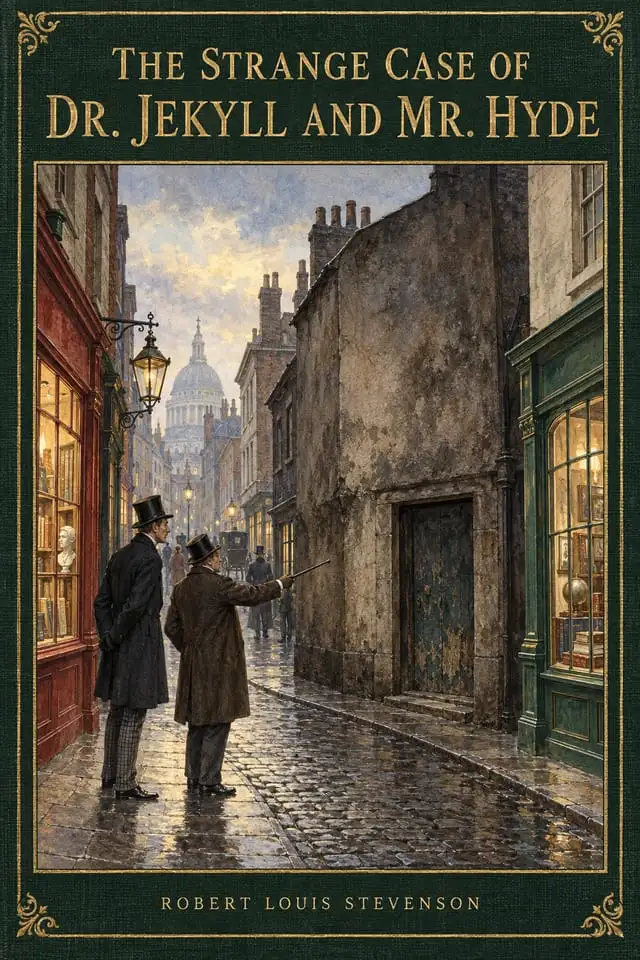
The Strange Case of Dr. Jekyll and Mr. Hyde Study Guide
GCSE set textAQA GCSEEdexcel GCSEOCR GCSEEduqas GCSE
Notes cover the whole book.
Characters
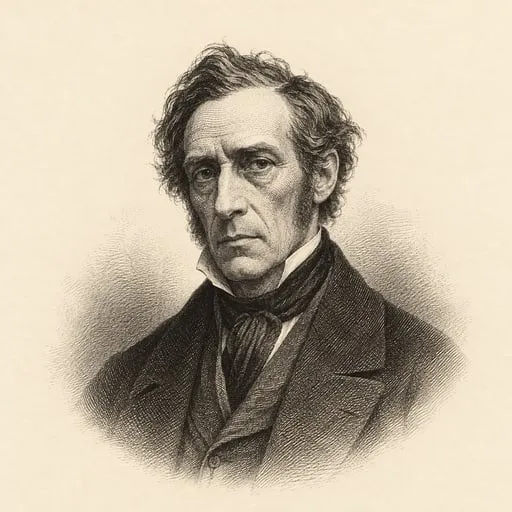
- Gabriel John UttersonGabriel John Utterson, Jekyll's lawyer and friend, who breaks into the cabinet with Poole and finds a new will naming him in place of Hyde.First appears: Story of the Door
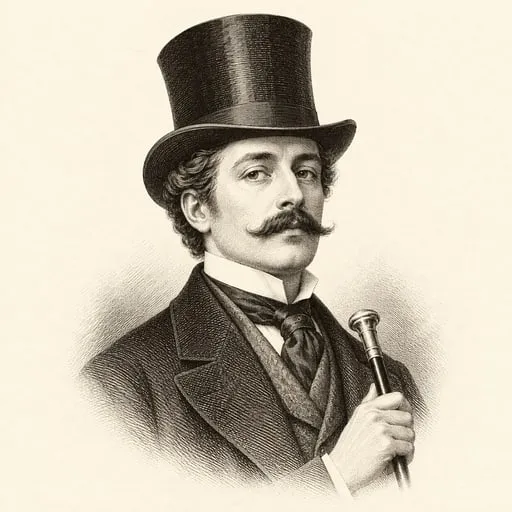
- Mr Richard EnfieldUtterson's cousin, who has found out that the door is a back way into Jekyll's house, and who shares the horrified glimpse of Jekyll at his window.First appears: Story of the Door
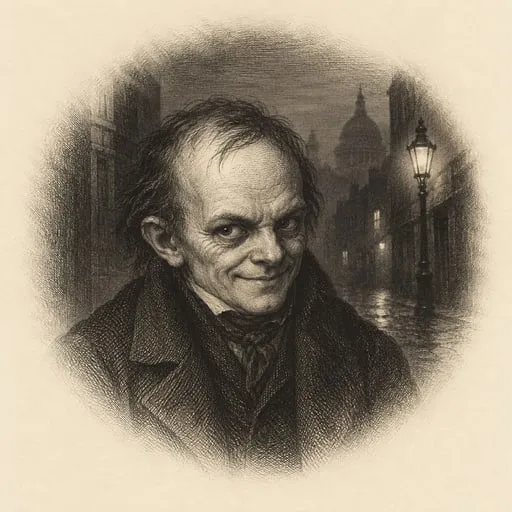
- Edward HydeThe evil side of Jekyll's nature, given its own smaller, younger body by Jekyll's drug, and in the end impossible to keep down.First appears: Story of the Door
- The girlA child of eight or ten whom Hyde tramples in the street at night; she is more frightened than hurt.First appears: Story of the Door
- The Edinburgh doctorThe dry, unemotional doctor the girl had been sent to fetch, who turns sick and white with the desire to kill Hyde.First appears: Story of the Door
- Dr Henry JekyllIn his own statement, a proud man who hid his pleasures behind a respectable face, created Hyde with his drug, and lost control until his own self was slipping away for good.First appears: Search for Mr. Hyde
- Dr Hastie LanyonDr Hastie Lanyon, whose written account reveals the shock that broke him: he watched Hyde turn into Jekyll.First appears: Search for Mr. Hyde
- PooleJekyll's butler of twenty years, frightened enough to fetch Utterson at night and brave enough to break down the cabinet door with an axe.First appears: Search for Mr. Hyde
- The maidA maid servant who, from her moonlit window, sees Hyde beat an old gentleman to death, recognises him as a man who once visited her master, and faints.First appears: The Carew Murder Case
- Sir Danvers CarewA Member of Parliament and a client of Utterson's, whose murder stirs up great public feeling.First appears: The Carew Murder Case
- Inspector NewcomenThe Scotland Yard officer on the Carew case, eager for the credit, who is sure he will catch Hyde at the bank.First appears: The Carew Murder Case
- The old womanAn ivory-faced, silver-haired old woman with an evil face and excellent manners, who answers the door at Hyde's house in Soho and is openly glad he is in trouble.First appears: The Carew Murder Case
- Mr GuestUtterson's head clerk and trusted confidant, an expert in handwriting, who notices that Hyde's letter and a note from Jekyll are in almost the same hand.First appears: Incident of the Letter
- BradshawJekyll's nervous footman, sent with a boy to guard the laboratory door while Utterson and Poole break in.First appears: The Last Night
Themes
- Duality and the divided self
- Science and the supernatural
- Reputation and respectability
- Secrecy and silence
- Violence and evil
- London and the city at night
Context
- Cain's heresy
- In the Bible, Cain kills his brother Abel and then asks God, "Am I my brother's keeper?" Utterson jokingly takes Cain's side: he lets other people go their own way rather than judge them. Story of the Door
- Coutts's
- Coutts, an old private bank in London used by the rich and well connected. A cheque drawn on it points to a wealthy, respectable signer. Story of the Door
- M.D., D.C.L., LL.D., F.R.S.
- The letters after Jekyll's name: Doctor of Medicine, Doctor of Civil Law, Doctor of Laws, and Fellow of the Royal Society, Britain's leading scientific society. Together they mark him as a highly distinguished man. Search for Mr. Hyde
- Dr Fell
- From an old rhyme: "I do not like thee, Doctor Fell; the reason why I cannot tell." Utterson wonders whether his loathing of Hyde has no reason at all. Search for Mr. Hyde
- Soho
- A crowded district of central London, poor and shabby at this time, full of cheap eating houses and people from many countries. Hyde's rooms there are a world away from Jekyll's comfortable house. The Carew Murder Case
- Scotland Yard
- The headquarters of London's Metropolitan Police, and a common name for its detectives. The Carew Murder Case
- The dissecting rooms
- Jekyll bought the house from the heirs of a famous surgeon, who dissected bodies in the theatre while rows of students watched. Jekyll, more interested in chemistry, uses it as his laboratory. Incident of the Letter
- M.P.
- Member of Parliament. Carew's murder is a public scandal as well as a private crime. Incident of the Letter
- The chief of sinners
- In the New Testament, St Paul calls himself the chief of sinners. Jekyll borrows the phrase to confess great guilt without saying what he has done. Remarkable Incident of Dr. Lanyon
- The smell of kernels
- Prussic acid, a deadly, fast-acting poison, smells of bitter almonds or fruit kernels. The smell tells Utterson at once that Hyde has taken poison. The Last Night
- The seal of our profession
- Doctors are bound to keep secret what they learn from their patients. Hyde uses this to hold Lanyon to silence. Dr. Lanyon’s Narrative
- Hansom
- A two-wheeled, horse-drawn cab, the usual way to hire a ride across Victorian London. Dr. Lanyon’s Narrative
- The captives of Philippi
- In the Bible, Paul and Silas are jailed at Philippi until an earthquake shakes the prison doors open. Jekyll uses the story to say his drug only opened the doors; what came out was what was already inside. Henry Jekyll’s Full Statement of the Case
- The Babylonian finger on the wall
- In the Book of Daniel, a hand appears at King Belshazzar's feast and writes a message on the wall foretelling his downfall. It is where the phrase "the writing on the wall" comes from. Henry Jekyll’s Full Statement of the Case
Chapter summaries
Story of the Door
Utterson is dry, serious and hard on himself, yet slow to judge others and loyal to old friends such as his relative Enfield, whose company he enjoys on silent Sunday walks. Enfield points out a neglected door, out of place in a bright, prosperous street, and tells how a small man calmly trampled a young girl in an empty street in the dead of night. Everyone who saw the man loathed him, even a calm Edinburgh doctor, and together they forced him to pay the girl's family a hundred pounds. The money came from behind the door, partly as a cheque signed by a famous and respectable man, and Enfield suspects blackmail. The man's name is Hyde, and Enfield cannot say quite what is wrong with his looks, only that he seems deformed. Utterson reveals that he already knows the name on the cheque, and the two men agree never to mention the story again.
Search for Mr. Hyde
Enfield's story sends Utterson to his safe and to the will of his friend Dr Henry Jekyll, which leaves everything to Edward Hyde and hands Hyde Jekyll's place if Jekyll disappears for more than three months. Now that Hyde's name is linked to Enfield's story, Utterson fears the will points not to madness but to disgrace. Dr Lanyon has never heard of Hyde, and his scorn for Jekyll's "unscientific balderdash" shows that Jekyll's ideas have gone far beyond what his old colleague can accept. Kept awake by nightmares of Hyde crushing children and standing over his sleeping friend's bed, Utterson haunts the door until Hyde comes, and the meeting fills him with a disgust he cannot explain. Poole confirms that Hyde has a key and comes and goes by the laboratory. Utterson decides that Jekyll must be paying for some sin of his wild youth, and fears that Hyde may grow impatient to inherit.
Dr. Jekyll Was Quite at Ease
Jekyll is first seen in person as a large, handsome, kindly man of fifty, at ease among his reputable friends. He laughs off the will and dismisses Lanyon as a "hidebound pedant" who objected to his "scientific heresies". At the name of Hyde, though, he grows pale, his manner turns incoherent, and he calls his position "very strange" and something that "cannot be mended by talking". He turns down Utterson's offer of help, says he can be rid of Hyde whenever he likes, and begs him to let the matter sleep. Then he asks Utterson to promise to help Hyde and get him his rights if Jekyll is gone, and Utterson reluctantly agrees. The short scene shows two gentlemen who prefer silence to scandal, and a respected man under some pressure he will not explain.
The Carew Murder Case
The murder is told through a maid who watches from her window by moonlight: a gentle, courteous old man stops to speak to Hyde, and Hyde, for no reason she can see, flies into a rage and batters him to death with "apelike fury". The victim is Sir Danvers Carew, a man of high position, and the crime startles all London. Utterson knows the murder weapon, a cane he once gave Jekyll, and leads Inspector Newcomen through a thick brown fog to Hyde's house in Soho. Among squalid streets, Hyde's rooms turn out to be furnished with luxury and taste, but they have been ransacked, papers have been burned, and the other half of the cane is behind the door. The inspector is sure of catching Hyde at the bank, yet Hyde has no traceable family, has never been photographed, and those who saw him agree only on a haunting sense of deformity.
Incident of the Letter
For the first time Utterson is taken through the old dissecting theatre, now cluttered with chemical apparatus, to Jekyll's private cabinet, where his friend sits by the fire looking deathly sick. Jekyll swears he will never see Hyde again and insists Hyde is safe and will never be heard of, though he will not say how he can be so sure. When Utterson asks whether Hyde dictated the will's clause about disappearance, Jekyll nods, and he seems more worried about his own good name than about Hyde. Utterson is relieved by Hyde's letter until Poole tells him that no letter was handed in that day, so it may have come by the laboratory door or even been written in the cabinet. Over a bottle of old wine, with fog smothering the city outside, Guest, an expert in handwriting, notices that the letter and a dinner invitation from Jekyll are written in almost the same hand. Utterson locks the note away, horrified at the thought that his friend has forged a letter to shield a murderer.
Remarkable Incident of Dr. Lanyon
Despite large rewards, Hyde has disappeared, though stories of his cruelty and vile life come out, and Jekyll leaves his seclusion: he entertains his friends, does good works and becomes known for religion. On 8 January Utterson and Lanyon dine with him as in the old days, but within days Jekyll's door is shut to all visitors. Lanyon, suddenly aged and terrified, says he has had a shock he will not survive and regards Jekyll as dead. Jekyll writes that he has brought on himself "a punishment and a danger that I cannot name" and asks Utterson to respect his silence. Lanyon dies within weeks, leaving a sealed document that links Jekyll's name with disappearance, just as the will did. Bound by professional honour, Utterson locks it away unread, and calls less and less often on the friend who now lives shut up in his cabinet.
Incident at the Window
The shortest chapter returns to the door and the Sunday walk where the story began. Enfield now knows the door belongs to Jekyll's house, and Utterson, uneasy about his friend, steps into the court to look up at the windows. Jekyll sits at one of them "like some disconsolate prisoner", saying he is very low and dare not come out. Moments later his smile is replaced by "abject terror and despair" and the window is thrust down. The two men leave in silence, and all Utterson can say is "God forgive us". Stevenson tells us only what the men felt, and neither of them puts it into words.
The Last Night
On a wild March night Poole brings Utterson to Jekyll's house, where the frightened servants huddle together in the hall. Poole's evidence mounts up: a voice that is not his master's, notes demanding a pure sample of some drug, and a glimpse of a small masked figure "like a monkey" among the crates. Utterson first tries to explain it all as an illness that deforms Jekyll, but at last agrees that Hyde must have killed Jekyll and be hiding in the cabinet. When the voice begs for mercy, they break in and find a quiet, cosy room with tea laid out and Hyde's body still twitching on the floor. They search the whole building but find no trace of Jekyll, alive or dead, and the door to the bystreet is locked, its key broken and rusty. In the cabinet they find a pious book scrawled with blasphemies in Jekyll's hand, a new will naming Utterson in place of Hyde, and a note, dated that day, directing Utterson to Lanyon's narrative and Jekyll's own confession.
Dr. Lanyon’s Narrative
The story switches to the sealed account Lanyon left for Utterson. A desperate letter from Jekyll asked him to break into the cabinet, take a certain drawer, and give it at midnight to a man sent in Jekyll's name. Lanyon, sure his colleague was insane, obeyed, examined the white salt, the blood-red liquid and the notebook of experiments, and loaded a revolver. The small, repulsive visitor, in clothes far too large, mixed the drug and offered Lanyon a choice: let him leave, or witness something to "stagger the unbelief of Satan". Lanyon chose to see, and watched the man turn into Henry Jekyll. What Jekyll told him afterwards so horrified Lanyon that he will not write it down, except that the visitor was Hyde, the murderer of Carew. Hyde taunts Lanyon's material view of science, but Lanyon describes both the transformation and Jekyll's confessed moral corruption as sources of his horror.
Henry Jekyll’s Full Statement of the Case
Jekyll's statement explains the mystery from the inside. A proud man with an "impatient gaiety of disposition", he hid his undignified pleasures behind a grave public face and came to believe that "man is not truly one, but truly two". He describes Hyde as "pure evil" and theorises that this body is smaller, slighter and younger because his evil side had been less exercised. Jekyll's good name kept him safe while Hyde's pleasures turned monstrous, from cruelty to a child to the savage murder of Carew. The change had already once come on its own in his sleep; after the murder Jekyll swore off Hyde, but it came again unbidden on a bench in Regent's Park, and then whenever he dozed. His salt ran out, new supplies failed because, he believes, the first had held some unknown impurity, and he wrote this statement under the last of the old powders. He ends unsure whether Hyde will die on the scaffold or find the courage to release himself, saying that what follows concerns "another than myself".
Key quotes
It wasn't like a man; it was like some damned Juggernaut.
Enfield's first picture of Hyde makes him less than human: a machine that crushes a child without feeling.
Violence and evil
He must be deformed somewhere; he gives a strong feeling of deformity, although I couldn't specify the point.
No one can say exactly what is wrong with Hyde. The horror is felt rather than seen, which makes him harder to picture and more unsettling.
Violence and evil
I make it a rule of mine: the more it looks like Queer Street, the less I ask.
"Queer Street" means trouble or shady dealings. Enfield's rule sums up the gentlemen of the novel, who would rather not ask questions than risk a scandal.
Secrecy and silenceReputation and respectability
"I thought it was madness," he said, as he replaced the obnoxious paper in the safe, "and now I begin to fear it is disgrace."
Utterson's worry shifts from his friend's sanity to his good name. For a Victorian gentleman, disgrace is the worse fate.
Reputation and respectability
"If he be Mr. Hyde," he had thought, "I shall be Mr. Seek."
A pun on hide-and-seek turns the lawyer into a detective. His search for the truth drives the story forward.
Secrecy and silence
if ever I read Satan's signature upon a face, it is on that of your new friend.
Utterson, a sober lawyer, ends up explaining his disgust in religious terms: Hyde's evil seems to show through his face.
Violence and evil
a large, well-made, smooth-faced man of fifty, with something of a slyish cast perhaps, but every mark of capacity and kindness
Our first sight of Jekyll shows an able, kindly and respected man, the model of a Victorian gentleman, though the narrator slips in the word "slyish".
Reputation and respectability
the moment I choose, I can be rid of Mr. Hyde.
Jekyll insists that he is in control. Utterson has no way to test the claim and must take his friend's word for it.
Secrecy and silence
this is a private matter, and I beg of you to let it sleep.
Jekyll uses friendship and privacy to close the subject, and Utterson, who values discretion above almost everything, lets it rest.
Secrecy and silenceReputation and respectability
it seemed to breathe such an innocent and old-world kindness of disposition, yet with something high too, as of a well-founded self-content.
The maid sees Carew as gentle and courteous, which makes the attack that follows all the more shocking.
Violence and evil
And next moment, with apelike fury, he was trampling his victim under foot and hailing down a storm of blows, under which the bones were audibly shattered and the body jumped upon the roadway.
Hyde attacks like a wild animal. The sound of bones "audibly shattered" shows a violence far beyond any provocation.
Violence and evil
like a district of some city in a nightmare.
The fog turns London into a place of shifting half-light, and Soho into a nightmare. The city itself seems to share the darkness of the crime.
London and the city at night
I swear to God I will never set eyes on him again. I bind my honour to you that I am done with him in this world.
Jekyll's oath is solemn and feverish. He is certain Hyde is gone for good, but says he has grounds for certainty that he cannot share with anyone.
Secrecy and silence
I was thinking of my own character, which this hateful business has rather exposed.
"Character" here means reputation. Even after a murder, Jekyll's first worry is his own good name, and Utterson is surprised at his selfishness.
Reputation and respectability
Henry Jekyll forge for a murderer!
Utterson draws this conclusion from Guest's comparison: his respectable friend has forged a letter to protect a killer. The thought turns his blood cold.
Reputation and respectabilitySecrecy and silence
I am quite done with that person; and I beg that you will spare me any allusion to one whom I regard as dead.
Lanyon cuts off an old friend completely and will not say why. Like Jekyll, he chooses silence over explanation.
Secrecy and silence
I have brought on myself a punishment and a danger that I cannot name. If I am the chief of sinners, I am the chief of sufferers also.
Jekyll admits to guilt and suffering but names neither. His letter deepens the mystery instead of solving it.
Secrecy and silence
not to be opened till the death or disappearance of Dr. Henry Jekyll.
Utterson notices the same odd pairing of death and disappearance as in Jekyll's will. Professional honour forbids him to open it, so the secret stays sealed.
Secrecy and silenceReputation and respectability
taking the air with an infinite sadness of mien, like some disconsolate prisoner
Jekyll is shut up in his own house like a captive, though he will not say what keeps him there.
Secrecy and silence
the smile was struck out of his face and succeeded by an expression of such abject terror and despair, as froze the very blood of the two gentlemen below.
The men see only a face and a window thrust down. Stevenson gives no explanation, which makes the moment more frightening.
Secrecy and silence
God forgive us, God forgive us
Utterson can respond only with a prayer, and Enfield only with silence. Faced with something they cannot explain, these rational gentlemen fall back on religion.
Secrecy and silence
Have I been twenty years in this man's house, to be deceived about his voice?
Poole's long service gives his fear authority. Where Utterson reaches for reasonable explanations, the servant trusts what he has heard.
Secrecy and silence
"For God's sake," he had added, "find me some of the old."
The calm, formal note to the chemists breaks into desperation. Whoever is in the cabinet needs this particular drug badly, and no new supply will do.
Science and the supernatural
when that masked thing like a monkey jumped from among the chemicals and whipped into the cabinet, it went down my spine like ice.
Like Enfield and Utterson before him, Poole cannot describe Hyde clearly. He reaches for an animal image and a physical shudder instead.
Violence and evil
you who have so long been bound to the most narrow and material views, you who have denied the virtue of transcendental medicine, you who have derided your superiors—behold!
Hyde turns the moment into a taunt at Lanyon's narrow science. Lanyon's curiosity wins over his caution, and he pays for it.
Science and the supernatural
for there before my eyes—pale and shaken, and half fainting, and groping before him with his hands, like a man restored from death—there stood Henry Jekyll!
The central secret is revealed through the horrified eyes of a rational scientist. The long, broken sentence holds back the name until the very end.
Duality and the divided selfScience and the supernatural
I feel that my days are numbered, and that I must die; and yet I shall die incredulous.
Lanyon cannot reconcile his eyewitness experience with belief, while the moral corruption Jekyll confesses also horrifies him.
Science and the supernatural
man is not truly one, but truly two.
Jekyll's central idea, and the book's. He presents it as a truth he reached through both his science and his own moral struggle.
Duality and the divided selfScience and the supernatural
I was the first that could thus plod in the public eye with a load of genial respectability, and in a moment, like a schoolboy, strip off these lendings and spring headlong into the sea of liberty.
Hyde lets Jekyll keep his reputation while escaping it. Respectability is a "load" he is glad to put down.
Reputation and respectabilityDuality and the divided self
With a transport of glee, I mauled the unresisting body, tasting delight from every blow
Jekyll tells Carew's murder in the first person. The pleasure Hyde takes in violence is what makes him so frightening.
Violence and evilDuality and the divided self