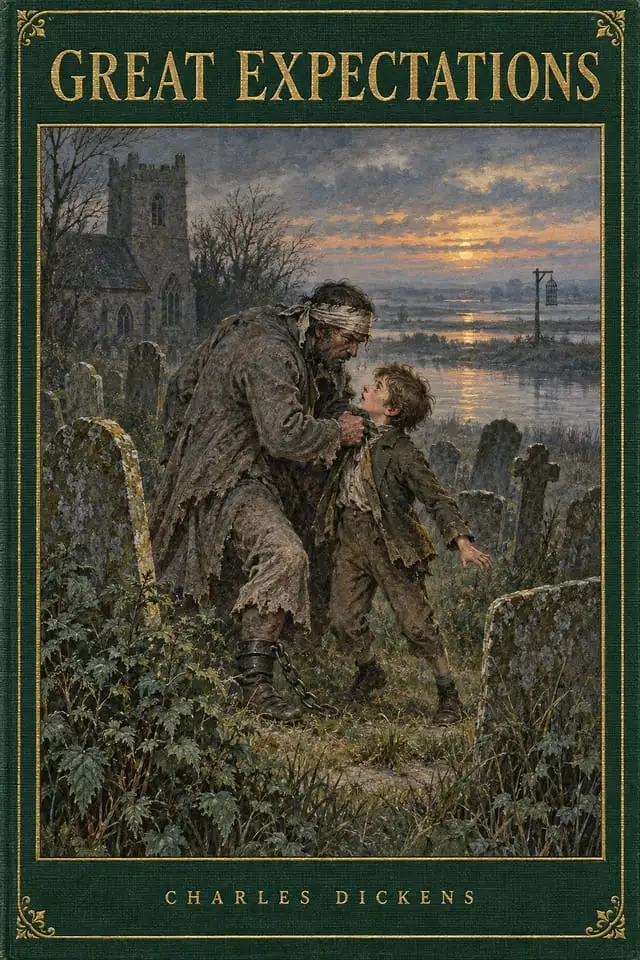
Characters
- PipArriving on Joe and Biddy's wedding day, he asks their forgiveness, then goes abroad to work for Clarriker's, pays his debts and in time becomes a partner in the firm.First appears: Chapter 1
- Abel MagwitchSentenced to death, he dies in the prison infirmary holding Pip's hand, after Pip tells him that his lost child is alive, a beautiful lady, and loved by Pip.First appears: Chapter 1
- Mrs Joe GargeryShe never recovered from the attack; Biddy says that at the end she asked for Joe, had Biddy put her arms round his neck, and said "Pardon" and "Pip".First appears: Chapter 1
- Joe GargeryHe has married Biddy, and forgives Pip everything, doubting there was anything to forgive.First appears: Chapter 1
- CompeysonHe sat cloaked in the pursuing galley to identify Magwitch. When Magwitch pulled off his cloak the two went overboard together, and Compeyson drowned.First appears: Chapter 3
- Mr WaldengarverNow playing small parts, he tells Pip he saw one of the two convicts from the old marsh chase sitting just behind him at the theatre.First appears: Chapter 4
- Mr and Mrs HubbleThe village wheelwright and his wife, guests at Christmas dinner.First appears: Chapter 4
- Uncle PumblechookRobbed and tied to his bedpost by Orlick and others, he still calls himself the founder of Pip's fortunes, and lectures the fallen Pip in public on his ingratitude.First appears: Chapter 4
- BiddyNow the village schoolmistress, she marries Joe on the day Pip comes home, and freely forgives Pip.First appears: Chapter 7
- Miss HavishamShe has died. She left most of her property to Estella, and four thousand pounds to Matthew Pocket because of what Pip told her of him.First appears: Chapter 7
- Mrs Bentley DrummleFreed by her cruel husband's death and changed by suffering, she meets Pip in the ruins of Satis House, and they agree that they are friends.First appears: Chapter 8
- The strangerNow a convict in irons on the coach, being taken down to the prison ships, he does not know Pip. Pip overhears that the two one-pound notes came from Pip's convict, for "that boy that had fed him".First appears: Chapter 10
- CamillaMiss Havisham's will leaves her five pounds, for rushlights to cheer her when she wakes in the night.First appears: Chapter 11
- Cousin RaymondCamilla's husband, "Mr Camilla", another of the relations who wait on Miss Havisham on her birthday.First appears: Chapter 11
- Sarah PocketMiss Havisham's will leaves her twenty-five pounds a year, to buy pills.First appears: Chapter 11
- Mr JaggersAdmitting nothing, he "puts a case" of a lawyer who saved a murder suspect's little girl by giving her to a rich lady to bring up, and took the mother into his service. Until Pip tells him, he did not know who the father was.First appears: Chapter 11
- Herbert PocketMarried to Clara, he works with Pip abroad, and learns at last from Clarriker that Pip secretly paid for his partnership.First appears: Chapter 11
- Mr Matthew PocketMiss Havisham has left him four thousand pounds, because of what Pip told her of him.First appears: Chapter 11
- OrlickHe is in the county jail, after he and others broke into Pumblechook's house, robbed him and tied him to his bedpost.First appears: Chapter 15
- Mr TrabbHis firm, Trabb & Co., runs Mrs Joe's showy funeral.First appears: Chapter 19
- Trabb's boyTrue to his habit of turning up where he has no business, he guides Herbert and Startop to the sluice-house in time to save Pip's life.First appears: Chapter 19
- John WemmickHe marries Miss Skiffins in a wedding he pretends is unplanned, with the Aged giving her away, and means to keep it from Mr Jaggers.First appears: Chapter 20
- Arthur HavishamHerbert's note reveals that Arthur, Compeyson's partner in Provis's story, was Miss Havisham's half-brother. Provis saw him die poor and terrified, raving that a mad woman in white was coming to put a shroud on him.First appears: Chapter 22
- Belinda PocketHer name is Belinda. A knight's daughter, brought up to marry a title and to be perfectly useless, she leaves her house and children to the servants.First appears: Chapter 22
- Bentley DrummleHe treated Estella with great cruelty, and has died in an accident caused by his ill-treatment of a horse.First appears: Chapter 23
- StartopA skilled oarsman, he readily agrees to help row Provis away, and goes with Herbert to rescue Pip from the sluice-house.First appears: Chapter 23
- MollyMr Jaggers's imaginary case all but confirms it: he took her child to save it, and has kept her wild, violent nature down ever since she came to him for shelter.First appears: Chapter 24
- The AgedHe gives the bride away at Wemmick's wedding, after missing his cue.First appears: Chapter 25
- The AvengerPip's boy servant, really called Pepper, taken from his washerwoman's family and dressed in a blue coat, canary waistcoat and top boots, with little to do and a great deal to eat.First appears: Chapter 27
- Clara BarleyNow Herbert's wife, with whom Pip lives happily abroad.First appears: Chapter 30
- Old Bill BarleyHis growls have fallen silent: he is at peace, and Herbert has married Clara.First appears: Chapter 30
- Mrs WemmickNow Wemmick's wife, after a quiet morning wedding that Wemmick pretends is unplanned.First appears: Chapter 37
- ClarrikerOnly when Pip becomes third in the firm does Clarriker tell Herbert that Pip secretly paid for his partnership.First appears: Chapter 37
- Young PipJoe and Biddy's little son, named after Pip, who sits on Pip's old stool by the fire and is thought to look like him.First appears: Chapter 59
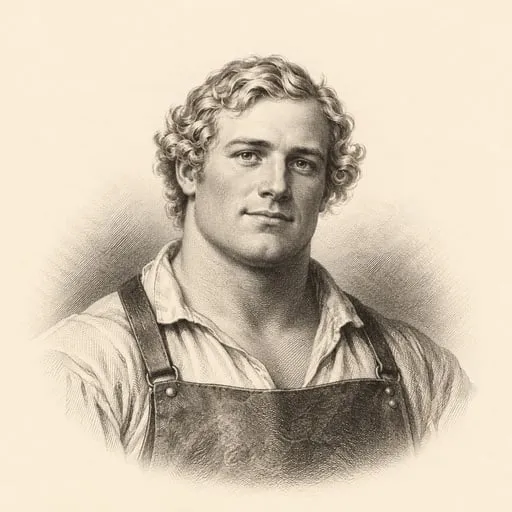

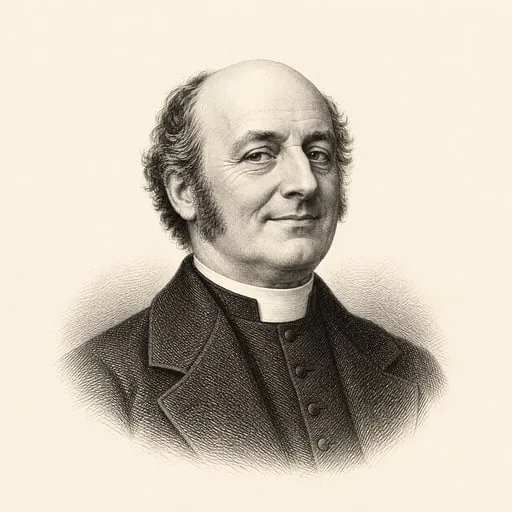
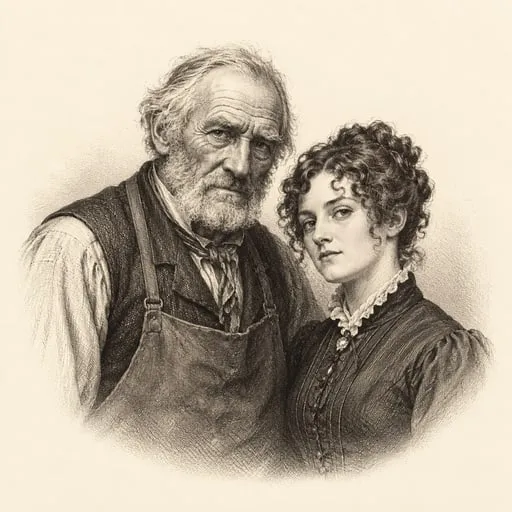
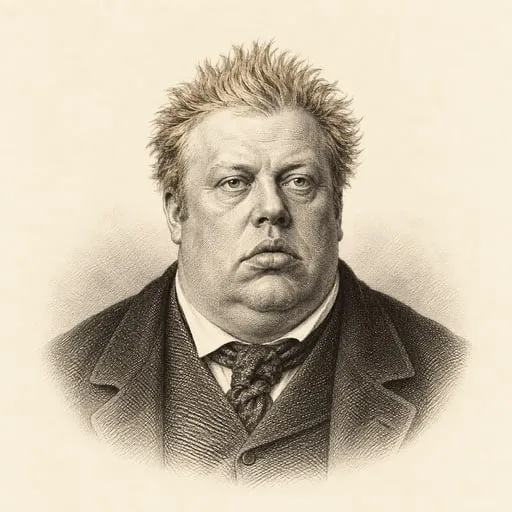

Themes
- Social class
- Ambition and self-improvement
- Guilt and conscience
- Childhood
- Kindness and loyalty
- Love and rejection
- Crime and justice
- Appearance and reality
Context
- Brought up by hand
- Fed from a bottle or spoon rather than nursed. Pip takes it to mean hit, which with his sister is also true. Chapter 2
- The hulks
- Old warships moored in the estuary and used as floating prisons, often for convicts waiting to be transported to Australia. Chapter 2
- Tar-water
- Pine tar steeped in water, drunk as a cure-all in the 1700s and 1800s. It tasted foul, which is why Pumblechook's reaction is so violent. Chapter 4
- Schooling
- England had no national system of schools until 1870. Many poor children learned at small private schools like this one, for a few pence a week. Chapter 7
- Beggar my neighbour
- A simple card game for children, in which players turn over cards in turn until one of them has won the whole pack. Chapter 8
- Pence and shillings
- Twelve pence made a shilling and twenty shillings made a pound, and a farthing (Pumblechook's "farden") was a quarter of a penny. Forty-three pence is three shillings and sevenpence, so Pip's "Yes" to seven and sixpence three farthings is wildly wrong. Chapter 9
- Chalk scores
- In village inns, what regular customers owed for drink was often chalked up on a wall or board and rubbed out when paid. Pip notices that the scores at the Jolly Bargemen never seem to be paid off. Chapter 10
- Mourning
- When a relative died, the family wore black, often trimmed with a dull crinkled cloth called crape. Camilla insists that anything less than "the deepest of trimmings" would disgrace the family, and cares more about that than about the bereaved children. Chapter 11
- Throwing up the sponge
- In prize-fighting, throwing up the sponge was the signal that a fighter gave in. The pale young gentleman, who has been acting as his own second, does it himself. Chapter 11
- Apprenticeship
- A boy learned a trade by being "bound" to a master for a fixed term of years under a legal contract called indentures. Until his "time" was out he had to work for his master and keep the rules the indentures set. Chapter 12
- Guineas
- A guinea was a gold coin worth one pound and one shilling. Joe calls the gift "five-and-twenty pound", which is near enough for him. Chapter 13
- George Barnwell
- An old tragedy about a London apprentice who is led astray by a woman, Millwood, robs his master, murders his uncle and is hanged. It was often held up as a warning to apprentices, which is why Wopsle and Pumblechook aim it at Pip. Chapter 15
- Bow Street men
- Officers from the magistrates' court in Bow Street, London, sent out to investigate serious crimes before England had modern police forces. They had gone by the time Pip was writing, which is why he calls them "extinct". Chapter 16
- Keeping company
- An everyday phrase for courting. A young man and woman who kept company were walking out together, usually with marriage in mind. Chapter 17
- Innocent until proved guilty
- A basic principle of English law: it is for the prosecution to prove a person guilty, not for the accused to prove his innocence. Mr Jaggers uses it to shame the pub for condemning a man on the strength of a newspaper report. Chapter 18
- Throwing an old shoe
- An old custom for good luck, done when someone set off on a journey or after a newly married couple. Chapter 19
- Sleeping partner
- Someone who puts money into a business and takes a share of the profits without working in it. Pumblechook hopes Pip will become his. Chapter 19
- Newgate Prison
- London's main prison, beside the central criminal court. Hangings were carried out in public in the street outside, and crowds came to watch. Chapter 20
- Smithfield
- London's livestock market, close to Mr Jaggers's office. Cattle and sheep were driven through the streets to be sold there, which left the ground filthy. Chapter 20
- Barnard's Inn
- Old London inns like this one were not hotels but groups of buildings divided into sets of rooms, called chambers, and let to lodgers, many of them single young men. Chapter 21
- Covent Garden
- London's great fruit, vegetable and flower market. Chapter 21
- The Harmonious Blacksmith
- The popular name for a piece of harpsichord music by the composer Handel. Herbert's nickname for Pip is a friendly joke about his old trade. Chapter 22
- 'Change
- The Royal Exchange in the City of London, where merchants met to do business. Chapter 22
- The Woolsack and the mitre
- The Woolsack is the Lord Chancellor's seat in the House of Lords, and a mitre is a bishop's hat. As a young man Mr Pocket expected to rise to the top of either the law or the Church. Chapter 23
- Baronets and knights
- Both are called "Sir", but a baronet's title passes to his heir, while a knight's dies with him. That is why it matters so much to Mrs Pocket that her grandpapa was never made a baronet. Chapter 23
- The Bailey
- The Old Bailey, London's central criminal court, beside Newgate Prison. Serious crimes such as murder were tried there. Chapter 24
- Britannia metal
- A cheap alloy, mostly tin, made to look like silver. Mr Jaggers uses it for his spoons so that there is nothing worth stealing. Chapter 25
- Macbeth
- Shakespeare's tragedy, in which three witches chant over a boiling cauldron and call up ghostly figures out of it. Pip has just seen the play, and the housekeeper's face reminds him of those figures. Chapter 26
- Coals of fire
- A phrase from the Bible: to repay unkindness with kindness, so that the unkind person burns with shame. Joe's goodness makes Pip's bad temper feel worse. Chapter 27
- Mentor and Telemachus
- In Homer's Odyssey, Mentor is the wise adviser of Telemachus, the son of Odysseus. The newspaper flatters Pumblechook by casting him as Pip's Mentor. Chapter 28
- Verb. Sap.
- Short for the Latin verbum sapienti, "a word to the wise": a hint that needs no more explaining. The paper uses it to point at Pumblechook without naming him. Chapter 28
- The young knight of romance
- Old tales of chivalry in which a knight rescues a princess from an enchanted castle. Pip casts himself as the hero, Satis House as the castle and Estella as the princess. Chapter 29
- Coming of age
- A young man became a legal adult at twenty-one and could then manage his own money. Herbert expects Pip may learn more about his fortune then. Chapter 30
- Hamlet
- Shakespeare's tragedy of a Danish prince who is visited by his father's ghost and agonises over revenge. Its "to be or not to be" speech is so well known that the audience can shout back at it. Chapter 31
- The gallery
- The cheapest seats, high up at the back of a theatre. Here its audience is loud and quick to mock. Chapter 31
- Newgate
- London's main prison, beside the Old Bailey criminal court. It held people awaiting trial, and condemned prisoners awaiting execution. Chapter 32
- Being introduced into society
- Young women of good family were brought out into society by an older lady, who took them to balls, dinners and calls and introduced them to the right people. Chapter 33
- Lloyd's and 'Change
- Lloyd's was a London meeting place for merchants who insured ships and their cargoes, and 'Change is the Royal Exchange, where merchants met to do business. Herbert goes to Lloyd's every afternoon, and on 'Change when he feels he must find an opening. Chapter 34
- Black-bordered letters
- Letters announcing a death were written on paper with a black border and sealed with black wax, so the news could be guessed before the letter was opened. Chapter 34
- Funeral customs
- Undertakers hired men, often called mutes, to stand solemnly at the door, and supplied black cloaks, gloves and long hatbands for the mourners. A showy funeral was a mark of respectability, which is why the neighbours approve so warmly. Chapter 35
- Coming of age
- In Pip's time a person legally became an adult at twenty-one. Only then could a young man take charge of his own money and sign for it himself. Chapter 36
- Buying a partnership
- Joining a merchant's firm as a partner usually meant bringing money into the business. Pip's secret payments do this for Herbert, who has no money of his own. Chapter 37
- Assembly balls
- Public dances held in a town's assembly rooms, where fashionable people met to dance, play cards and be seen, and where young women met possible husbands. Chapter 38
- Transportation
- Convicts could be sentenced to be transported to the Australian colonies, often for life. Coming back to England before the sentence was over was a crime that could be punished by hanging, as the convict says. Chapter 39
- The Temple
- An old area of courts and buildings between Fleet Street and the Thames in London, full of lawyers' chambers, where young gentlemen also rented rooms. Chapter 39
- The imaginary student
- Pip is thinking of Mary Shelley's novel Frankenstein (1818), in which a student builds a creature and is then pursued by it. Pip turns the story round: it is the creature who has made him. Chapter 40
- New South Wales
- The British colony in south-east Australia, around Sydney, where many transported convicts were sent. Botany Bay, which Provis mentions, lies there, and its name was often used for the convict colony as a whole. Chapter 40
- Hyde Park
- A large royal park in west London. The streets around it were among the most fashionable and expensive places to live, which is why Provis wants a house there for his gentleman. Chapter 41
- Epsom races
- Epsom Downs in Surrey, home of the Derby, holds one of England's most famous race meetings. Race crowds drew gamblers, tricksters and swindlers. Chapter 42
- Measuring heads
- Phrenology, popular in the early 1800s, claimed to read a person's character, including a criminal nature, from the shape of the skull. Provis's reply, that they had better have measured his stomach, points to hunger as the real cause of his crimes. Chapter 42
- A returned transport
- Convicts could be shipped to penal colonies in Australia, some of them for life. As Provis has told Pip, coming back before the sentence ended could be punished by hanging. Chapter 43
- The Temple
- An area of lawyers' chambers between Fleet Street and the Thames, where Pip and Herbert have rooms. Its gates were locked at night and kept by porters. Chapter 44
- Hackney chariot
- A horse-drawn carriage for hire, the taxi of its day. Chapter 45
- Purser
- The ship's officer in charge of stores and provisions, which is why Old Barley still weighs out the household's food himself. Chapter 46
- Old London Bridge
- The old bridge stood on many narrow arches that held back the tide, so the water raced through them in a steep fall. Rowing through, or "shooting" the bridge, was risky in a small boat. Chapter 46
- Christmas pantomime
- A comic stage show put on around Christmas, mixing fairy tale, song, dancing, slapstick and stage magic. Chapter 47
- The Old Bailey
- London's central criminal court, where serious crimes such as murder were tried. Chapter 48
- Over the broomstick
- An informal marriage without a church or legal ceremony, said to be made by the couple jumping over a broom together. Chapter 48
- Ivory tablets
- A small pocket notebook made of thin leaves of ivory, written on in pencil. Chapter 49
- Putting a case
- Lawyers' language for describing an imaginary situation. It lets Jaggers tell Pip the truth while admitting nothing. Chapter 51
- Newgate
- London's main prison, which stood next to the Old Bailey court. Chapter 51
- The tide
- The Thames is tidal through London. Boats heading for the sea set off as the tide began to ebb, or go out, so that the current carried them downriver. Chapter 52
- Flint, steel and tinder
- Before friction matches were in common use, a light was made by striking flint against steel so that sparks fell on tinder, dry material that smoulders easily, and then lighting a sulphur-tipped match from it. With damp tinder this could take a long time. Chapter 53
- Guinea
- A gold coin worth one pound and one shilling. Chapter 53
- Transportation
- Convicts could be sentenced to transportation: shipped to penal colonies in Australia, such as New South Wales, for a number of years or for life. Coming back to England before the sentence was over was punishable by death. Chapter 54
- Forfeited to the Crown
- The property of a person convicted of a serious crime could be taken by the Crown. This is why Pip knows Magwitch's fortune will not come to him. Chapter 54
- The Sessions
- Criminal courts sat at set times called Sessions. A prisoner committed for trial waited in prison until the next one. Chapter 55
- The Recorder's Report
- In London, a senior judge called the Recorder reported death sentences to the King and his council, who decided which would be carried out. Pip hopes Magwitch will die before the decision is made. Chapter 56
- The two men in the Temple
- A story Jesus tells in St Luke's Gospel. A proud Pharisee thanks God he is better than other men, while a tax collector prays only, "God be merciful to me a sinner". It is the humble man who is forgiven. Chapter 56
- Arrest for debt
- People who could not pay their debts could be arrested and held, first in a bailiff's house, known as a sponging-house, and then in a debtors' prison, until the debt was paid. Chapter 57
Chapter summaries
Chapter 1
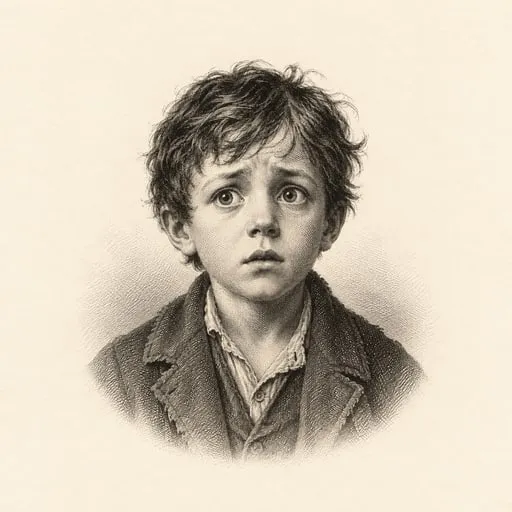
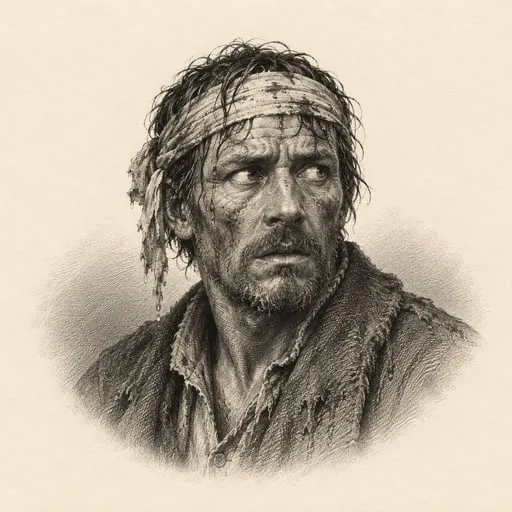
Pip, a small orphan, is alone in the bleak marsh churchyard where his parents and five little brothers are buried when a fearful man with an iron on his leg starts up from among the graves and seizes him. The man, soaked, muddy and hungry, turns him upside down, eats the bread from his pocket and learns that Pip lives with his sister, the wife of Joe Gargery the blacksmith. Tilting Pip backwards on a tombstone, he orders him to bring a file and "wittles" to the old battery early next morning and to tell no one, or a young man hiding with him will find Pip and tear him open. Pip promises and runs for home, looking back to see the man limping towards the gibbet by the river. Pip is a lonely, frightened child in a harsh landscape, and the older narrator looks back on him with humour as well as pity.
Chapter 2
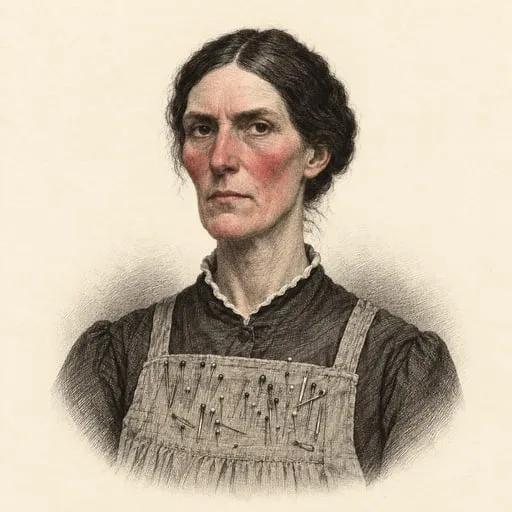
Pip lives with his sister, Mrs Joe, a harsh woman more than twenty years older than him, who hits both Pip and her husband and uses a cane called Tickler on Pip. Joe, a mild, good-natured blacksmith, treats Pip as a fellow-sufferer and shields him when he can. At tea Pip hides his bread and butter down his trouser leg for the man on the marshes, and Joe's alarm that he has bolted it whole gets them both dosed with tar-water. That evening, Christmas Eve, guns from the hulks signal that another convict has escaped, and Mrs Joe snaps that people are sent to the prison ships for murder and robbery and "always begin by asking questions". At first light Pip steals food, brandy and a pork pie from the pantry and a file from Joe's forge. Terrified of the man and the young man, and with no hope of help from his sister, Pip keeps his secret, and the older narrator reflects on "what secrecy there is in the young under terror".
Chapter 3
Pip hurries across the misty marshes with the stolen food, and his guilty conscience makes the gates, dikes and cattle seem to accuse him. Near the battery he comes upon another man in grey with an iron on his leg, who swears at him, aims a blow and runs off into the mist; Pip decides this must be the young man. His own convict is waiting, shaking with cold, and he wolfs the food like a dog, often stopping to listen for pursuers. Pip pities him and says he is glad he enjoys it, and the convict thanks him. When Pip mentions the other man and his bruised face, the convict turns fierce, vows to hunt him down and starts filing at his leg-iron like a madman. Pip slips away, and when he stops in the mist to listen, the file is still going. Pip's fear is now mixed with pity, for the convict, who calls himself a "wretched warmint", seems as hunted as he is frightening.
Chapter 4
Pip gets home to find that the robbery has not yet been discovered, and Mrs Joe is busy preparing for Christmas dinner. The guests are Mr Wopsle, the church clerk, Mr and Mrs Hubble, and Uncle Pumblechook, Joe's uncle and a well-to-do cornchandler in the nearest town. Over dinner they take turns to lecture Pip on gratitude and the wickedness of the young, while Joe quietly gives him more gravy. When Mrs Joe offers Pumblechook some brandy, he drinks it off and rushes outside choking, because Pip had filled the bottle up from the tar-water jug. Pip is saved for a while when Pumblechook waves the matter away and asks for hot gin and water, but then Mrs Joe goes to fetch the pork pie that Pumblechook had given her. Pip runs for the door in terror, straight into a party of soldiers, one of whom holds out a pair of handcuffs to him. The grown-ups' lectures are comic, but they show a boy treated at home as "a young offender", and his guilty secret makes every minute of the dinner an agony.
Chapter 5
The soldiers have not come for Pip: their sergeant needs Joe to mend some handcuffs before they close in at dusk on two escaped convicts. While Joe works at the forge the company drink Pumblechook's wine and enjoy the excitement, but Pip pities the "poor wretches" being hunted. Joe, Mr Wopsle and Pip go with the soldiers, and on the way Pip whispers that he hopes they will not find the men, while Joe says he would give a shilling if they had got away. Out on the marshes they find the two convicts fighting in a ditch, and Pip's convict insists that he has dragged the other man back rather than let him go free. When the convict sees him, Pip shakes his head to show that he did not bring the soldiers, but he cannot tell whether the man understands. In the guard hut the convict says that he stole food, drink and a pie from the blacksmith's, and Joe, full of pity, tells him he is welcome to it. Pip watches him rowed out to the black prison ship, which looks "like a wicked Noah's ark".
Chapter 6
Although the convict's confession has cleared him, Pip does not tell Joe the truth about the theft. He feels no guilt towards Mrs Joe, but he loves Joe and is afraid that Joe would think him worse than he is, and that he would lose his friend. Joe carries the sleepy Pip home on his back, while a tired and bad-tempered Mr Wopsle keeps sitting down in the damp. In the kitchen, as Joe tells the company about the convict's confession, Pumblechook decides that the man climbed on to the roofs and let himself down the kitchen chimney on a rope made of his bedding, and because he is so sure of himself everyone agrees. Mrs Joe then hauls Pip up to bed. Looking back, the older narrator judges himself harshly: he was too cowardly to tell the truth, just as he had been too cowardly to refuse to steal.
Chapter 7
Pip struggles to learn to read and write at an evening school kept by Mr Wopsle's great-aunt, who sleeps through the lessons, and he learns more from Biddy, her granddaughter, an orphan who was also brought up by hand. One winter night, about a year after the hunt on the marshes, Pip writes Joe a letter on his slate, and Joe, who can barely read, calls him a scholar. Joe explains that he never went to school because his father drank and beat both him and his mother. He tells Pip that when he courted Mrs Joe he told her to bring the poor little child with her, because there was room for him at the forge, and Pip bursts into tears and hugs him. Joe puts up with his wife's temper because he saw his own mother drudge and slave without peace, and he would rather be put out himself than fail to do right by a woman. From that night Pip looks up to Joe in his heart. Then Mrs Joe comes home from market with Uncle Pumblechook and the news that Miss Havisham, a rich, grim lady who lives shut away in the town, wants Pip to go and play at her house, and he is scrubbed and sent off with Pumblechook that night.
Chapter 8
Pip spends the night at Pumblechook's seed shop in the town, where at breakfast Pumblechook fires sums at him while eating well himself. At Miss Havisham's dismal, barred house, a proud and pretty girl leads him by candlelight to a room where Miss Havisham sits in a yellowed bridal dress with one shoe on, her watch and a clock stopped at twenty minutes to nine. She tells him her heart is broken and makes him play cards with the girl, Estella, who calls him a common labouring boy and mocks his coarse hands, his thick boots and his calling the knaves Jacks. Waiting in the courtyard, Pip looks at his hands and boots with new shame and wishes Joe had been brought up more genteelly. When Estella gives him food as if he were a dog in disgrace, he hides behind a gate in the brewery lane and cries, and later, in the empty brewery, he has a terrifying vision of Miss Havisham hanging from a beam. He walks the four miles home convinced that he is common and ignorant and "in a low-lived bad way". Estella's contempt is catching: Pip had never been ashamed of his hands before, but now he sees himself through her eyes.
Chapter 9
Pip cannot bear to describe Miss Havisham and Estella to his sister and Pumblechook, so, bullied and shoved against the wall, he makes up a story of velvet coaches, gold plates and fighting dogs. The lies catch out Pumblechook, who nods along as if he knows Miss Havisham but has to admit he has never seen her. Pip feels no guilt towards the two of them, only towards Joe, and confesses to him that night in the forge. Joe's answer is simple: lies are lies, and going crooked is no way to become "oncommon". Yet in bed Pip thinks how common Estella would find Joe, with his thick boots and coarse hands. The older narrator ends by calling this a memorable day that made great changes in him.
Chapter 10
Pip's new wish to be "uncommon" starts with learning, and he asks Biddy to share all she knows, though the village evening school is comic chaos. At the Three Jolly Bargemen a secret-looking stranger, with one eye half shut as if taking aim, draws Joe into talk of the lonely church on the marshes, runaway convicts and who Pip is. Then, so that only Pip can see, he stirs his rum with a file, and Pip knows it for Joe's file and knows that this man knows his convict. The stranger gives Pip a shilling, which turns out at home to be wrapped in two one-pound notes; Joe runs back to return them, but the man has gone. Mrs Joe hides the notes in a teapot in the parlour, where they stay, a nightmare to Pip. His old secret has come back, now mixed with his new shame at being "on secret terms of conspiracy with convicts".
Chapter 11
Satis House shows Pip more of its strangeness. Miss Havisham's relations, among them Camilla, her husband Raymond and Sarah Pocket, wait on her, flatter her and score points off one another, and Pip sees at once that they are "toadies and humbugs". In a room across the landing a wedding feast is still laid out under cobwebs, with spiders running in and out of the rotting bride-cake, and Miss Havisham says she will be laid on that table when she dies. It is her birthday, the day the cake was brought, and no one is allowed to mention it. Estella is crueller than before, slapping Pip and calling him a "little coarse monster". After Pip beats a pale young gentleman who insists on fighting him by the rules, Estella seems oddly delighted and lets him kiss her cheek, but Pip feels the kiss is handed to a common boy like a coin.
Chapter 12
Pip's guilty imagination runs wild after the fight, picturing arrest and revenge, but at Satis House nothing is said and the pale young gentleman has vanished. For at least eight or ten months Pip goes every other day to push Miss Havisham round in a garden-chair, and they sing Joe's forge song, Old Clem. She asks what he is going to be, but seems to prefer him ignorant and offers no help. She watches Estella's changing moods with "miserly relish" and seems to whisper to her to break hearts without mercy. At home Pumblechook and Mrs Joe endlessly discuss what Miss Havisham will do for Pip, while Pip confides only in Biddy. When Miss Havisham suddenly tells him to bring Joe and his indentures, Mrs Joe is furious at being left out and scrubs the house in a rage.
Chapter 13
Joe dresses up uncomfortably for Pip's sake, and at Satis House he is so overawed that he answers every question by talking to Pip. Pip is ashamed of him in front of Estella, yet Joe's dignity shows when he says he never expected a premium, and Miss Havisham seems to understand him better than Pip had thought possible. She gives twenty-five guineas and makes clear it is all Pip will get. Joe then calms his wife by inventing compliments from Miss Havisham and saying the money was meant for Mrs Joe. Pumblechook pretends he knew all along, pushes Pip to the Town Hall to be bound as if he were a criminal, and sits at the head of a celebration dinner paid for out of the guineas. Pip ends the day wretched, certain he will never like the trade he once liked.
Chapter 14
The older Pip looks back on the misery of his apprenticeship. Home was never very pleasant because of his sister's temper, but Joe had made him believe in it; within a single year everything there looks coarse and common. The forge, once "the glowing road to manhood and independence", now offers nothing but dull endurance. Pip gives all the credit for his steady work to Joe, who is faithful and industrious where Pip is restless and discontented. His worst fear is that Estella will see him black-faced at the forge and despise him, and he keeps imagining her face at the window. The whole chapter is a confession, with the narrator judging his younger self as ungrateful.
Chapter 15
Pip's learning goes on, and he tries to pass it on to Joe, though he admits the motive was to make Joe less common and less open to Estella's scorn. Orlick, Joe's slouching journeyman, dislikes Pip and demands a half-holiday too; when Mrs Joe abuses him he insults her back, and Joe knocks him down, after which the two men share a pot of beer. At Satis House, Sarah Pocket lets Pip in, and Miss Havisham, seeing him look round for Estella, taunts him that she is abroad and asks if he feels he has lost her. In town Mr Wopsle insists on taking Pip to Pumblechook's to hear the tragedy of George Barnwell, and both men treat Pip as the wicked apprentice of the play. On the foggy walk home Orlick joins them, the guns sound for escaped convicts, and Pip finds that his sister has been struck down from behind in her own kitchen.
Chapter 16
The facts of the attack are set out like evidence: nothing was taken, the candle was blown out, and a leg-iron filed through some time ago lay beside Mrs Joe. Pip believes it is the iron his convict filed off on the marshes, and wonders whether Orlick or the stranger with the file used it, though he can find little against either. He feels he provided the weapon, yet the secret has grown so much a part of him that he still cannot tell Joe, afraid that Joe would either turn from him or not believe him. The Bow Street men from London arrest the wrong people and catch no one. Mrs Joe is left with poor sight, hearing, memory and speech, but her temper becomes patient, and after Mr Wopsle's great-aunt dies, Biddy moves in to look after her. When Biddy realises that Mrs Joe's T-shaped sign stands for Orlick's hammer, and so for Orlick, Mrs Joe does not accuse him but tries eagerly to please him, which puzzles Pip.
Chapter 17
Life settles into routine, broken only by a yearly birthday visit to Miss Havisham, who gives Pip a guinea each time. Pip notices how Biddy has changed: neat, sweet-tempered and so quick that she learns everything he learns. On a summer walk by the river he confides that he wants to be a gentleman, and admits it is because the beautiful young lady at Miss Havisham's called him common. Biddy asks whether he wants to spite Estella or win her, and suggests that spite would be better shown by ignoring her, and that she is not worth winning. Pip knows Biddy would never hurt him as Estella does and wishes he could fall in love with her, but Biddy firmly says he never will. Orlick, who Biddy says "dances at" her, trails them home, and Pip is left torn between Biddy and the forge on one side and, on the other, Estella and a stray hope that Miss Havisham may make his fortune.
Chapter 18
Mr Jaggers makes a startling entrance, bullying Mr Wopsle over a newspaper murder report and reminding the whole pub that the law supposes every man innocent until he is proved guilty. At Joe's house he tells Pip he will come into a handsome property and be brought up as a gentleman, on two conditions: he must always keep the name Pip, and he must never ask who his benefactor is. Pip at once decides that Miss Havisham is making his fortune. Joe wants nothing for releasing him, and when Jaggers presses money on him as compensation, Joe squares up to fight him. The older narrator looks back on "dear good faithful tender Joe" with love and regret, while the young Pip already resents the sadness in Joe and Biddy's congratulations and wants his new clothes kept out of sight of the village. By bedtime the first night of his bright fortunes has become the loneliest of his life.
Chapter 19
With his indentures burnt, Pip begins to look down on the village, planning a dinner for everyone with "a gallon of condescension" and comforting himself that the convict he once helped is far away, perhaps dead. He hints to Joe, and then tells Biddy, that Joe's learning and manners need improving; when Biddy says Joe may be too proud to be taken out of a place he fills well, Pip accuses her of envy. In town Mr Trabb bows him into the shop the moment he hears of the fortune, and Pip's first taste of "the stupendous power of money" is seeing the cheeky Trabb's boy flattened. Pumblechook shakes his hand again and again, takes the credit for his luck and suggests he put money into the business. At Satis House Miss Havisham, whom Pip sees as his fairy godmother, takes pleasure in Sarah Pocket's jealousy, and Pip kneels to kiss her hand. He admits to himself that his wish to walk to the coach alone may come from the contrast between himself and Joe, and only after crying by the finger-post does he feel "more aware of my own ingratitude". Pip's pride and his conscience pull against each other all through his last week at home.
Chapter 20
London greets Pip with dirt and death. Mr Jaggers's office has a chair like a coffin and two casts of swollen faces on the shelf, Smithfield is "asmear with filth and fat and blood and foam", and a drunken guide at Newgate shows him where the gallows is kept and the door where four prisoners are to be hanged in two days' time. The people waiting for Jaggers fear and worship him, and he treats them all with contempt, wanting to know no more than he must, checking that they have paid Wemmick and threatening to drop their cases if they bother him. When Mike, one of his clients, brings a witness ready to swear to "anythink", Jaggers explodes at him for saying so, then judges the man by one look through the window and sends him away. His arrangements for Pip are generous but cold, and come with the warning that Pip will "go wrong somehow". Pip is impressed by his guardian's fame, but the chapter shows how close the law works to lies and crime.
Chapter 21
Wemmick is hard to read: his mouth looks as if it is smiling when it is not, and he wears mourning rings, a brooch and a watch-chain hung with seals, as if laden with remembrances of departed friends. His view of London is flat and practical: people will cheat, rob and murder you if there is anything to be got by it. Barnard's Inn is a disappointment, a dismal square that looks to him like a burying-ground, and its rotten staircase window crashes down like a guillotine. Young Mr Pocket, by contrast, is warm, apologetic and open about being poor: he earns his own bread and would not take money from his father even if there were any. The comic recognition at the end, "the prowling boy" and "the pale young gentleman", ties Pip's new life in London straight back to Satis House.
Chapter 22
Herbert is frank and cheerful, with what Pip calls "a natural incapacity to do anything secret and mean", and he corrects Pip's table manners so lightly that they both laugh. His story of Miss Havisham explains Satis House: a proud brewer's daughter, she gave her heart and great sums of money to a showy man who broke off the marriage by letter on the wedding day. Herbert's father, the only relation who warned her, believes that "no varnish can hide the grain of the wood", an idea that bears directly on Pip's attempt to become a gentleman. Herbert also says that Estella has been brought up to "wreak revenge on all the male sex", and Pip feels sure that Herbert, like him, takes Miss Havisham to be his benefactor. Herbert's grand plans to insure ships and trade in silks and spices, while he works unpaid in a countinghouse, gently mirror Pip's own expectations. At Hammersmith Mrs Pocket reads in the garden while her children tumble over her footstool, a first sign that nobody is really running the house.
Chapter 23
The Pocket household is comedy with a point. Mrs Pocket, a knight's daughter raised to marry a title, has grown up "highly ornamental, but perfectly helpless and useless", and cares more about her grandpapa's position than her children's safety. When little Jane takes the nutcrackers away from the baby, her mother scolds her for interfering, and Mr Pocket can only cry out and try to lift himself up by his own hair. Downstairs the servants rule, and the cook is found drunk with the household's butter set aside to sell. Mrs Pocket and Drummle, "next heir but one to a baronetcy", talk about titles while the house falls apart around them. Pip, meanwhile, is touchy about his past: when his rowing teacher says he has the arm of a blacksmith, he nearly gives up the lessons.
Chapter 24
Pip learns that he is not being trained for any profession, only to "hold my own" among young men with money, and Mr Pocket proves an honest and hard-working tutor. Mr Jaggers handles even a small request by making Pip name the sum himself, pushing him from fifty pounds to five to "four times five". Wemmick says this manner is "not personal; it's professional", and calls his master as deep as Australia. In the office Wemmick is chatty but hard: the rings and brooch he wears were gifts from clients who were hanged, and his motto is "Get hold of portable property." In the police court Jaggers frightens witnesses, thieves and even the magistrate, and Pip cannot make out which side he is on. The law, as Pip sees it here, runs on fear and power rather than fairness.
Chapter 25
Pip's new world has snobs of its own: Drummle is idle, proud, mean, reserved and suspicious, and the Camillas, who hate Pip for his fortune, fawn on him to his face. Pip admits he "soon contracted expensive habits", though he sticks to his books. The heart of the chapter is Wemmick's double life. At Walworth he is proud of his little castle, with its drawbridge, flag, gun and fountain, and tender towards his deaf father, the Aged, whom he loves to please. He keeps the two worlds strictly apart: Mr Jaggers has never seen the house or heard of the Aged, because "the office is one thing, and private life is another". On the walk back to Little Britain, Pip watches him grow dry and hard again until his mouth is a post office once more, a clear picture of how a public face can hide a private warmth.
Chapter 26
Jaggers washes his hands after every client, as if washing the client off, and even at home he keeps everything under his own hand. At dinner he quietly draws out the worst in each guest: Pip finds himself bragging about his prospects and patronising Herbert, and Drummle grows openly insulting. Jaggers makes his housekeeper, Molly, show her wrists, one of them deeply scarred, and she obeys though she begs him not to, which shows the hold he has over the people around him. He takes an odd liking to Drummle, "the Spider", yet tells Pip to keep clear of him. When Drummle raises a glass to throw at Startop, Jaggers catches it and ends the party. The last picture of him "washing his hands of us" sums up how he keeps himself apart from everyone he deals with.
Chapter 27
Pip admits he would have paid money to keep Joe away, and the older narrator sees that his shame comes from fearing what Drummle, a man he despises, would think. He has also taken on a boy servant, Pepper, whom he calls the Avenger, dresses in a canary waistcoat and top boots, and can barely find work for. Joe is uncomfortable in the smart rooms: he juggles his hat, drops his food and swings between calling Pip "Pip" and "sir". The narrator admits the fault was his own: "if I had been easier with Joe, Joe would have been easier with me." Joe passes on the news that Mr Wopsle has gone on the stage, and Miss Havisham's message about Estella. His farewell, comparing life to "partings welded together", shows that he understands the gap between them better, and more kindly, than Pip does.
Chapter 28
The older narrator exposes young Pip's excuses for avoiding Joe's house, counting him among the "self-swindlers". The convicts on the coach are treated like animals: a passenger rages at having to sit near them, and Pip admits that, so despised, he might have behaved just as they do. From their talk he learns that his convict asked the other man to find "that boy that had fed him and kep his secret" and give him two one-pound notes, and that his convict was later tried again for escaping and made a "Lifer". The man does not know Pip, but Pip is overcome by a fear he cannot name. At the Blue Boar, a local newspaper hints heavily that Pumblechook was Pip's first patron and the founder of his fortunes, a comic end to a tense chapter. The chapter shows that Pip's childhood secret still has power over him, however far he has risen.
Chapter 29
Pip walks to Satis House imagining himself as a knight in a romance, chosen by Miss Havisham to bring the house back to life and marry Estella. Estella has grown so elegant that Pip feels he has slipped back into "the coarse and common boy", and she does not remember the hurts of his childhood visits. She tells him plainly that she has no "softness" or "sentiment", but he refuses to believe her. Miss Havisham, drawing his head down to hers, repeats "Love her, love her, love her!" so fiercely that to Pip the word sounds more like a curse, and describes love as blind devotion and utter submission. Estella's remark that Pip's old companions would be "quite unfit company" for him now drives away any thought of visiting Joe. The older narrator's cry of "Wretched boy!" and his closing regret about Joe judge his younger self harshly.
Chapter 30
Pip enjoys being stared at in his old town until Trabb's boy performs a series of parodies, pretending to tremble at his dignity and then strutting past crying "Don't know yah!" Rather than visit Joe, Pip sends him a codfish and a barrel of oysters. With Herbert he admits that he owes everything to luck, not effort, and that all his expectations depend on the constancy of one person, whom he believes to be Miss Havisham. Herbert, cheerful but honest, points out that Estella was never named as a condition of Pip's fortune and warns that loving her "may lead to miserable things"; Pip says he cannot give her up. Herbert then shares his own secret: he means to marry Clara, whose invalid father roars and bangs on the floor upstairs, as soon as he has some capital. The chapter sets real friendship, in Herbert, against the empty show that Trabb's boy mocks.
Chapter 31
Wopsle's Hamlet turns into a comedy: the ghost coughs and loses its place, the audience shouts answers to "to be or not to be", and one actor playing several parts is pelted with nuts. Pip laughs in spite of himself but still feels for his old townsman. Backstage, Herbert whispers praise for Pip to repeat, "Massive and concrete", and Wopsle takes it as his due, blaming the jeers on a man he says the actor playing the King employs. Pip and Herbert take him home, where he talks until two in the morning about reviving the Drama. Like Pip, Wopsle has left the village to remake himself in London, and the gap between how he sees himself and how others see him is played for laughs. Pip's dream at the end brings the comedy back to his own worries about Estella and his fortune.
Chapter 32
Estella's short, cool note throws Pip into such a state that he haunts the coach office hours before her coach can arrive. Wemmick walks among the Newgate prisoners "as a gardener might walk among his plants", friendly but businesslike, and asks the condemned Colonel for a pair of his pigeons as "portable property". He explains that Jaggers keeps himself "so high" that no one dares approach him, which gives him power over everyone. Waiting alone, Pip reflects that crime has clung to him since his childhood on the marshes, "like a stain that was faded but not gone". He beats the prison dust from his clothes because he cannot bear to bring Newgate near Estella. The chapter shows how badly Pip wants to keep his gentleman's life, and his dreams of Estella, apart from crime.
Chapter 33
Estella's manner is more winning than before, and Pip suspects Miss Havisham's influence behind it. She hands him her purse and says they have no choice but to "obey our instructions", and her talk of their being under orders pains him. She laughs at the Pocket relations who try to turn Miss Havisham against Pip, then, more darkly, recalls being brought up in "that strange house from a mere baby" among their plots. Passing Newgate, she murmurs "Wretches!", and Pip would not admit his visit there for anything. She lets him kiss her cheek, calls him "Pip" for the first time and tells him Miss Havisham's jewels are nearly all hers, yet he knows he "never was happy with her, but always miserable". The chapter shows Estella as the product of Miss Havisham's plans and, for a moment, as someone marked by her own childhood.
Chapter 34
Looking back, Pip admits that his expectations have not all been good for him: he is uneasy about Joe, troubled about Biddy, and sometimes wishes he had never seen Miss Havisham's face. He also sees that his lavish habits have led Herbert, who is too proud to accept help, into debts he cannot afford. Their evenings of looking into their affairs become a comic ritual: a special dinner, plenty of stationery, neat bundles of bills and a "Margin" that only leads to more debt. Herbert goes into the City every day to "look about him" for an opening, without success. The narrator sums up their life as "a gay fiction" of pleasure over "a skeleton truth" of misery. The sudden news of Mrs Joe's death ends the chapter and summons Pip back to the village.
Chapter 35
Pip goes home for his sister's funeral, which Mr Trabb's firm runs as a grim and absurd show of black cloaks and hired mourners. Pumblechook fawns on Pip all day, and even hints that Mrs Joe would have thought the honour of Pip's presence worth dying for. Joe is stiff and awkward in the best parlour, and looks like himself again only when he half changes back into his working clothes. In the garden Biddy tells Pip that his sister died quietly with her arms round Joe's neck, saying "Joe", "Pardon" and "Pip", and that Orlick still lurks near the house. When Pip grandly promises to come down often to see Joe, Biddy's honest doubt offends him, and he spends the night brooding on the injustice she has done him. In the last lines the older Pip admits that Biddy was right.
Chapter 36
Pip and Herbert have run further into debt by the time Pip comes of age. On his twenty-first birthday Mr Jaggers gives him a banknote for five hundred pounds and tells him that he must now manage his own money, living on that sum each year until his benefactor appears. Jaggers says he thinks his instructions unwise, and will not say when the benefactor will appear, only that his own part will end when that person makes themselves known. Pip takes this to mean that Jaggers resents or disapproves of Miss Havisham's plan for him and Estella. Pip then asks Wemmick how to help a friend get started in business, and in the office Wemmick says he might as well throw the money off a bridge. His private opinion, he hints, must be asked for at Walworth. Jaggers's guarded company leaves both young men gloomy, and Herbert jokes that he feels as if he has committed a crime.
Chapter 37
Pip visits Wemmick's castle at Walworth, where the Aged, who is hard of hearing, tells him that his son took charge of him when his hearing failed. Wemmick arrives with Miss Skiffins, a regular Sunday visitor, and away from the office he gladly agrees to help Pip set Herbert up in business without Herbert knowing. The evening is warm and comic, as the Aged reads the paper aloud and Wemmick's arm keeps creeping round Miss Skiffins's waist, only to be put back on the table. Through Miss Skiffins's brother, an accountant, they find Clarriker, a young merchant who needs capital, and Pip pays half of his five hundred pounds and promises more. Herbert comes home glowing with his lucky chance, and Pip cries with happiness that his expectations have done some good to somebody. It is the most unselfish thing Pip has done with his money.
Chapter 38
Estella now lives at Richmond with Mrs Brandley, an old friend of Miss Havisham's, and Pip follows her everywhere, though she uses his closeness to tease her other admirers. When he takes her to Satis House, Miss Havisham hungrily makes Estella list the men she has fascinated, and Pip concludes that Estella has been raised to take revenge on men, and that she will not be given to him until she has done so. For the first time he sees the two women quarrel: Miss Havisham calls Estella cold and ungrateful, and Estella calmly replies that she is only what Miss Havisham has taught her to be. That night Pip sees Miss Havisham walking the house with a candle, making a low cry. In London, Bentley Drummle toasts Estella at Pip's club, and she begins to let him follow her. When Pip protests, Estella says she deceives and entraps all her admirers except him. Miss Havisham's plan hurts everyone it touches, herself included.
Chapter 39
Pip is twenty-three, living in the Temple, and still knows nothing more about his expectations. On a night of violent storm, with Herbert away in Marseilles, a rough, weather-beaten man of about sixty climbs the stairs and holds out both hands to him, and Pip realises he is the convict from the marshes. Pip coldly tries to send him off with a drink, and offers to repay the two one-pound notes the convict once sent him; the convict burns them. Then, by guessing Pip's income and his guardian's initial, he reveals that he is Pip's benefactor: he has grown rich as a sheep-farmer abroad, and has sent his money home to make Pip a gentleman. Pip is overcome with horror, and once he can think, he sees that Miss Havisham never meant Estella for him. His deepest pain is that he deserted Joe for the sake of a convict. The man was sent away for life and will be hanged if caught, so Pip must now protect him.
Chapter 40
Pip decides to tell his laundress that his uncle has come from the country, and on the dark stairs he stumbles over a crouching man who slips away; the watchman says a stranger came in with his visitor. The convict says he has taken the name Provis, that his real name is Abel Magwitch, and that Mr Jaggers defended him at his last trial. Jaggers, careful not to be told anything officially, confirms that Magwitch is Pip's benefactor, and only he: Pip's belief that it was Miss Havisham rested on "not a particle of evidence". Provis wants to watch Pip spend his money like a gentleman, while Pip is repelled by his greedy eating and his proud looks of ownership. However well Pip dresses him, he still looks like the fugitive from the marshes. Pip compares himself to the student in Frankenstein, except that here the creature has made him. After five dreadful days Herbert returns and is made to swear secrecy on Provis's greasy black book.
Chapter 41
Pip tells Herbert the whole story while Provis sits by, pleased with the gentleman he has made and promising to keep a "genteel muzzle" on. Once he has gone to his lodging, Herbert sits in Provis's chair, jumps out of it, and the two friends share their dislike of him without a word. Pip will take no more of Provis's money, though he is heavily in debt and trained for nothing, and Herbert talks him out of becoming a soldier, not knowing that Pip's money paid for his own place at Clarriker's. Herbert warns that if Pip rejects him, Provis might recklessly let himself be caught, and Pip feels he would then be something like his murderer. They agree that Pip must first get Provis safely out of England, going with him so that he will agree to leave, and only then free himself. Next morning Pip asks Provis to tell them about his life and the other convict.
Chapter 42
Provis sums up his life as "in jail and out of jail". He does not know where he was born, first remembers stealing turnips in Essex to live, and was called "hardened" while still a ragged child. More than twenty years ago he fell in with Compeyson, a smooth, educated swindler who passed as a gentleman and made Provis his tool. When both were tried for passing stolen notes, the court judged them by their looks and backgrounds: Compeyson got seven years and Provis fourteen. Provis attacked him on the prison ship, escaped, and hunted him down on the marshes, so Compeyson is the other convict Pip saw fighting in the ditch. Provis also tells of Compeyson's dying partner Arthur, who raved that a mad woman in white was coming for him with a shroud. Herbert then passes Pip a note: Miss Havisham's half-brother was named Arthur, and Compeyson is the man who claimed to love her.
Chapter 43
Pip wonders, then refuses to dwell on, how much of his shrinking from Provis comes from his feelings for Estella, and he now fears that Compeyson, if he is alive, would inform on the returned convict. Before any plan to go abroad, he decides he needs to see Estella and Miss Havisham, but finds that Estella has gone to Satis House without him. To get away for a night he pretends he has promised to visit Joe, and the older Pip calls this a "meanness". At the Blue Boar he meets Bentley Drummle, who is in town because of Estella. Their battle for the fire is comic, but Drummle's sneer about "smithies" and his remark that he will dine at "the lady's" cut Pip deeply. As Drummle leaves, a slouching man who reminds Pip of Orlick brings him a light.
Chapter 44
Pip tells Miss Havisham that he knows who his patron is, though he will not say who, and she admits she let him go on in his mistake, partly to punish her grasping relations. When he asks if that was kind, she flares up, asking who she is that she should be kind. He speaks up for Matthew and Herbert Pocket, and asks her to help Herbert without Herbert knowing. Then he tells Estella he has loved her ever since he first saw her. She answers that his words touch nothing in her, and that she will marry Drummle by her own choice, because she is tired of the life she has led. Pip's outpouring of love and forgiveness leaves Miss Havisham with her hand on her heart and a look of "pity and remorse". The scene shows the harm of her plan on both sides: Pip is heartbroken, and Estella seems unable to feel at all.
Chapter 45
The words "Don't go home" haunt Pip through a miserable night in a hotel room. At the Castle, Wemmick speaks only in his "private and personal" capacity and names no names, but makes clear that he has heard, at a place he will not name, that Pip's rooms have been watched. Answering only by nods, he confirms that Compeyson is alive and in London. Herbert has already moved Provis, whom Wemmick calls only "Tom, Jack, or Richard", to the upper floor of the house by the river where Clara lives with her bedridden father. Wemmick advises Pip to lie low and not try to get Provis abroad too soon, and, true to form, to secure Provis's "portable property". Pip spends a quiet, sleepy day by the fire with the Aged. Wemmick's help shows how different his warm Walworth self is from the guarded clerk of Little Britain.
Chapter 46
Pip meets Clara for the first time and is charmed by her gentleness, and by the patient way she serves her growling, gouty father. Provis, known in the house as Mr Campbell, seems softened, and Pip decides not to tell him about Compeyson in case he goes looking for his enemy and ruins himself. Herbert's plan is that he and Pip, both good oarsmen, should take Provis down the river themselves, so Pip starts keeping a boat at the Temple stairs until his trips become an everyday sight. Parting from Provis, Pip is surprised to find his heart heavy and anxious. The chapter marks a shift in Pip's feelings: the man he shrank from is now someone he fears for. The same river that carries Herbert's hopes towards Clara carries Pip's dread towards Magwitch.
Chapter 47
Pip refuses to take any more of his patron's money, sending back the unopened pocketbook by Herbert and selling some jewellery to get by. He avoids the newspapers so as not to see Estella's marriage confirmed, and asks the reader whether they have never clung to a hope in the same way. An evening at the theatre shows Mr Wopsle's acting career sinking into comic bit-parts. Then Wopsle's news turns the comedy to fear: Compeyson sat behind Pip "like a ghost", and Pip is sure he was there because Pip was. Wopsle's careful memory of the torchlit march across the marshes brings Pip's childhood straight back into his present danger. Pip writes to Wemmick, and he and Herbert become more cautious than ever.
Chapter 48
Jaggers's toast to "Mrs Bentley Drummle" confirms that Estella has married, and he coolly predicts that Drummle will either beat her or cringe before her. When the housekeeper's fingers move as if knitting, Pip links them with Estella's knitting at Satis House, and a string of half-noticed resemblances comes together in his mind. Away from the office, Wemmick tells her story: married very young to a tramping man, she was tried for strangling an older, stronger woman out of jealousy. Jaggers won her acquittal by dressing her to look slight and explaining the scratches on her hands as bramble marks. She was also suspected of killing her child, a girl of about three. Pip's conviction turns the proud Estella's origins upside down: the young lady raised to break hearts appears to be the daughter of a servant once tried for murder.
Chapter 49
Miss Havisham is changed: she seems almost afraid of Pip, and asks whether he can believe there is anything human in her heart. She gives him a written order on Jaggers for the money Herbert needs and asks him one day to write "I forgive her" under her name. When Pip, admitting his own life has been "blind and thankless", forgives her at once, she falls on her knees crying "What have I done!" She says she first meant only to save Estella from misery like her own, but as the girl grew she "stole her heart away, and put ice in its place". She does not know whose child Estella was: Jaggers brought her at two or three, and Estella knows only that she was an orphan who was adopted. On a last walk round, Pip fancies he sees Miss Havisham hanging from a beam in the brewery, as he once did as a boy, and minutes later finds her ablaze; the bridal dress she has worn for years burns away.
Chapter 50
Pip's left arm is badly burned and he is haunted by the glare and noise of the fire. Herbert, a gentle and patient nurse, tells him what Provis said the night before about the woman he once had "great trouble with". She was tried for killing a stronger woman in a barn, and Jaggers's defence of her first made his name known to Provis. Provis hid rather than give evidence about the child and so cause her death, and lost both mother and child; Compeyson later used this secret to keep him poorer and working harder. The dates fit: the girl would have been about Pip's age, and the boy in the churchyard brought her into Provis's mind. Pip, already sure that Jaggers's housekeeper is Estella's mother, sees that Estella's father is the convict hiding down the river.
Chapter 51
Pip cannot say why he needs to prove Estella's parentage, and wonders whether he was really glad to pass on to Provis, the man he is trying to save, some of the romantic interest that had so long surrounded his own life. Jaggers gives a slight start when Pip names Provis as her father, and Pip is sure Jaggers never knew who the father was. When Jaggers will not talk, Pip appeals to Wemmick's "gentle heart", giving away his Walworth home and his old father, and the two men eye each other with comic suspicion. Jaggers then "puts a case": a lawyer who saw children every day growing up to be hanged saved one little girl by taking her from her mother and giving her to an eccentric rich lady, and kept the mother's wild nature down ever since. Revealing the truth now, he argues, would not help the father, the mother or the daughter. Minutes later both men turn savagely on a client, Mike, for showing his feelings, as if to prove they have none.
Chapter 52
Pip completes the secret arrangement that makes Herbert a partner at Clarriker's, the only good thing, he says, that he has done since his expectations began. Herbert is to run a new branch of the firm in the East, and Pip feels his "last anchor" loosening. When Wemmick's note arrives, Pip and Herbert plan Provis's escape with care: Startop will help row, and they will take him well below Gravesend to meet a steamer bound abroad. An anonymous letter then calls Pip to the marshes, and the mention of Provis's name overrides all his doubts. At an inn of minor reputation the landlord tells him his own story as the town tells it, with Pumblechook as the founder of his fortunes and Pip as ungrateful. Pumblechook's false claims make Pip feel his ingratitude to Joe more sharply than ever.
Chapter 53
Pip is caught in a noose in the dark sluice-house and tied to a ladder, and the flare of a match shows him Orlick. Drunk and gloating, Orlick blames Pip for costing him his place and turning Biddy against him, and means to burn his body in the limekiln. He confesses that he struck down Pip's sister with the filed leg-iron and that he was the man on Pip's stairs, but insists "it was you", an accusation that echoes Pip's old guilt about the leg-iron. He also knows Provis's real name, Magwitch, and warns that Compeyson is as good a match for Magwitch as Orlick has been for Pip. Facing death, Pip fears most of all being misremembered by those he loves. He is saved by Herbert, Startop and Trabb's boy, of whom he had long thought badly, but they give up any thought of pursuing Orlick rather than risk delaying Provis's escape.
Chapter 54
The escape begins hopefully on a bright March day, and Magwitch, the least anxious of the party, enjoys his freedom on the river. His image of the tide running through his fingers shows how little anyone can control what happens next. At the lonely inn the Jack's talk of a hovering galley makes them all uneasy, and in the night Pip sees two men looking at their boat. As the steamer bears down, the officer names "Abel Magwitch, otherwise Provis", and in the struggle Magwitch uncovers Compeyson, who drowns. Pip's feelings are transformed: his repugnance melts away, and in the shackled prisoner he sees "a much better man than I had been to Joe". Knowing that Magwitch's wealth will be forfeited to the Crown, Pip realises that Magwitch need never know his hopes of making Pip rich have come to nothing.
Chapter 55
Magwitch is committed for trial once an old officer from the prison-ship identifies him, and Mr Jaggers warns that nothing can stop the case going against him. Pip has no legal claim to Magwitch's money and resolves never to try for one; notes found on Compeyson's body suggest the informer hoped to profit from its forfeiture. Herbert, about to leave for Cairo, offers Pip a clerk's place in the new branch and a home with him and Clara, and Pip asks for two or three months because of "a vague something" he does not yet explain. Wemmick, who timed the escape for when he heard Compeyson was away, thinks the clever Compeyson deceived even his own people. He still regrets the lost "portable property" more than its owner. His surprise wedding to Miss Skiffins, which he pretends is quite unplanned, brings some comedy into a dark time, and like everything at Walworth it is to be kept from Mr Jaggers.
Chapter 56
Badly injured, Magwitch grows weaker every day in the prison infirmary, humble and uncomplaining, while Pip talks and reads to him. His trial is short, since his return alone makes him guilty, and he is sentenced to death with thirty-one others before a crowded gallery that Pip calls "a large theatrical audience". The judge describes a man who has broken the law almost from infancy, but Magwitch answers him with quiet dignity. Pip writes petitions for mercy to the Home Secretary and others in authority, and visits daily, holding Magwitch's hand. When Magwitch thanks him for never deserting him, Pip stays silent, remembering that he once meant to. His last gift is the truth about Magwitch's lost child, and Magwitch dies holding Pip's hand. Pip ends with a humble prayer for mercy on "a sinner".
Chapter 57
Already feverish, Pip is arrested for a jeweller's bill but is too ill to be moved. In his delirium every face turns into Joe's, and when he wakes it really is Joe, sent by Biddy, who has nursed him for weeks. Joe brings news: Miss Havisham is dead, leaving most of her property to Estella and four thousand pounds to Matthew Pocket because of what Pip said of him, and Orlick is in jail for breaking into Pumblechook's house. Joe cares for Pip as tenderly as when he was a child, and gently stops him from going over the past. But as Pip grows stronger Joe begins to call him "sir", and Pip sees that the fault is his own. Joe leaves without warning, having paid the debt, and Pip, humbled, resolves to go home and ask Biddy to marry him.
Chapter 58
News of Pip's fall has reached the town ahead of him, and the Blue Boar, which courted him when he was rich, now treats him coolly. Satis House is to be sold as building materials and pulled down. Pumblechook, still posing as the founder of Pip's fortunes, lectures him on his ingratitude in front of the landlord and waiter, and Pip walks to the forge feeling he is leaving "arrogance and untruthfulness" behind. He arrives on Joe and Biddy's wedding day, and is thankful he never spoke to Joe of his own hope of marrying Biddy. They forgive him freely, and he promises to repay the money that kept him out of prison. Abroad, he rises from clerk to partner in Clarriker's modest but respected firm, and reflects that the lack of ability he once found in Herbert had perhaps been in himself. When Clarriker at last tells Herbert who paid for his partnership, the two friends are none the worse for it.
Chapter 59
After eleven years away, Pip returns to the forge to find Joe and Biddy with a little girl and a son named Pip, who sits on Pip's old stool by the fire. He tells Biddy he is unlikely to marry and that his "poor dream" of Estella has "all gone by", yet that evening he walks to the site of Satis House for her sake. Pip has heard that Estella led a most unhappy life, separated from a cruel husband who has since died after an accident caused by his ill-treatment of a horse. Only the garden wall is left of the old house, and Estella has come to take leave of the ground before it is built on. She has been softened by suffering, which "has been stronger than all other teaching", and asks Pip to tell her they are friends. She speaks of continuing "friends apart", but the novel's last sentence has them leaving the ruins together, her hand in his, and Pip seeing "no shadow of another parting from her".
Key quotes
the small bundle of shivers growing afraid of it all and beginning to cry, was Pip.
The adult Pip looks back at his younger self from a distance, with sympathy and some irony. This double view runs through the whole chapter.
Childhood
Keep still, you little devil, or I'll cut your throat!
The bleak churchyard scene is broken by a violent man terrifying a small child. His threats also swear Pip to keep their meeting secret.
Guilt and conscienceChildhood
she had brought me up "by hand."
A joke with a sting: the phrase means hand-fed, but Pip's sister uses her hand to beat him and Joe alike.
Childhood
the file was still going.
The chapter ends on a sound, not a sight. Pip has helped a criminal, and the file keeps working on his conscience as well as the chain.
Guilt and conscience
But he always aided and comforted me when he could, in some way of his own, and he always did so at dinnertime by giving me gravy, if there were any.
Joe's small practical kindness contrasts with the guests' repeated moral attacks on Pip.
Kindness and loyaltyChildhood
We don't know what you have done, but we wouldn't have you starved to death for it, poor miserable fellow-creatur.
Joe answers a confessed thief with pity, not anger. Earlier he whispered that he would give a shilling if the convicts had got away.
Kindness and loyalty
In a word, I was too cowardly to do what I knew to be right, as I had been too cowardly to avoid doing what I knew to be wrong.
The adult narrator judges his younger self without excuses. Pip's fear of losing Joe's good opinion keeps him silent.
Guilt and conscienceKindness and loyalty
I had a new sensation of feeling conscious that I was looking up to Joe in my heart.
Learning about Joe's childhood and generous care changes Pip's sense of his moral worth without changing their affectionate equality.
Kindness and loyaltyChildhood
He calls the knaves Jacks, this boy!
A tiny point of vocabulary becomes a mark of class. Estella turns the way Pip speaks into a reason to despise him.
Social class
I wished Joe had been rather more genteelly brought up, and then I should have been so too.
The first time Pip feels ashamed of Joe. His wish to be more genteel comes from shame, not hope.
Social classAmbition and self-improvement
If you can't get to be oncommon through going straight, you'll never get to do it through going crooked.
Joe's homely advice puts honesty above getting on in the world. His plain speech holds more wisdom than all of Pumblechook's pompous talk.
Kindness and loyaltyAmbition and self-improvement
how common Estella would consider Joe, a mere blacksmith; how thick his boots, and how coarse his hands.
Straight after Joe's kindness, Pip judges him through Estella's eyes. "Thick" and "coarse" are the very words Estella used about Pip himself.
Social class
think for a moment of the long chain of iron or gold, of thorns or flowers, that would never have bound you, but for the formation of the first link on one memorable day.
The older narrator turns to the reader and says that one day can set the course of a whole life. For Pip, that day was his first visit to Satis House.
Childhood
the best step I could take towards making myself uncommon was to get out of Biddy everything she knew.
Pip's ambition now has a plan: learning is to be his way out of being "common". It is the same wish Estella's scorn stirred up at Satis House.
Ambition and self-improvement
not with a spoon that was brought to him, but with a file.
Dickens holds back the key word until the end of the sentence, so the reader shares Pip's shock. The file ties Pip's old crime to this stranger.
Guilt and conscienceCrime and justice
the guiltily coarse and common thing it was, to be on secret terms of conspiracy with convicts
Pip's guilt has changed shape. His secret now feels not only wrong but low and common, which shows how far Satis House has changed his values.
Guilt and conscienceSocial class
they were all toadies and humbugs, but that each of them pretended not to know that the others were toadies and humbugs
Pip sees through the relations within five minutes. Dickens mocks people whose show of devotion hides rivalry and spite.
Appearance and reality
The mice have gnawed at it, and sharper teeth than teeth of mice have gnawed at me.
Miss Havisham sees herself decaying alongside the cake. The "sharper teeth" are a pain she does not name, which has been eating at her for years.
Love and rejection
the kiss was given to the coarse common boy as a piece of money might have been, and that it was worth nothing.
Pip longs for Estella's kiss, yet feels it as a tip handed to an inferior. Love and class are already tangled together for him.
Love and rejectionSocial class
Break their hearts my pride and hope, break their hearts and have no mercy!
Pip only half hears the words, but they suggest Miss Havisham is shaping Estella to hurt. Pip, who admires Estella, is the nearest heart to hand.
Love and rejection
What could I become with these surroundings? How could my character fail to be influenced by them?
The older narrator asks the reader to see how Satis House shaped him. It is partly an excuse and partly a fair point about what a child's surroundings do to him.
ChildhoodAmbition and self-improvement
I am afraid I was ashamed of the dear good fellow—I know I was ashamed of him—when I saw that Estella stood at the back of Miss Havisham's chair, and that her eyes laughed mischievously.
The older Pip corrects himself in mid-sentence, from "afraid" to "know". He will not soften his shame, and Estella's mocking eyes are its cause.
Social classGuilt and conscience
You know it to be No, Pip, and wherefore should I say it?
Joe is hurt that Pip wants him to answer whether he expected to be paid for taking Pip on. His loyalty to Pip was never about money.
Kindness and loyalty
I had liked it once, but once was not now.
A short, flat line closes the chapter. After a day of being treated like a criminal, the trade Pip once liked feels like a punishment.
Ambition and self-improvementSocial class
It is a most miserable thing to feel ashamed of home.
The chapter's first line states the feeling plainly. The older narrator admits it may be "black ingratitude" but insists on how miserable it was.
Social classGuilt and conscience
any good that intermixed itself with my apprenticeship came of plain contented Joe, and not of restlessly aspiring discontented me.
The balanced phrases set the two side by side: Joe "plain" and "contented", Pip "restlessly aspiring" and "discontented". Pip's ambition is shown as the source of his unhappiness.
Kindness and loyaltyAmbition and self-improvement
I wanted to make Joe less ignorant and common, that he might be worthier of my society and less open to Estella's reproach.
The older narrator will not let his younger self take credit for teaching Joe. The motive was snobbery, not kindness.
Social classAmbition and self-improvement
educating for a lady; far out of reach; prettier than ever; admired by all who see her. Do you feel that you have lost her?
Miss Havisham lists Estella's advantages like blows, then enjoys Pip's pain. The "malignant enjoyment" Pip sees shows she means to hurt him.
Love and rejectionSocial class
It was horrible to think that I had provided the weapon, however undesignedly, but I could hardly think otherwise.
By bringing the convict the file, Pip feels he freed the iron that struck his sister. His childhood guilt now weighs more heavily than ever.
Guilt and conscienceCrime and justice
the secret was such an old one now, had so grown into me and become a part of myself, that I could not tear it away.
Pip describes his secret as something living that has grown into him. Keeping silent has become part of who he is.
Guilt and conscience
I want to be a gentleman.
Pip states his ambition plainly, after swearing Biddy to secrecy. Her reply, "O, I wouldn't, if I was you!", is plain common sense set against his dream.
Ambition and self-improvementSocial class
Do you want to be a gentleman, to spite her or to gain her over?
Biddy's simple question exposes Pip's motive. His ambition is about Estella, not about becoming a better person.
Ambition and self-improvementLove and rejection
How could it be, then, that I did not like her much the better of the two?
Pip can list every reason Biddy is better for him than Estella, yet his feelings will not follow. Dickens shows that love does not obey reason.
Love and rejection
My dream was out; my wild fancy was surpassed by sober reality; Miss Havisham was going to make my fortune on a grand scale.
Pip's secret hope seems to come true at a stroke. Mr Jaggers names nobody, but Pip is certain that his fortune comes from Miss Havisham.
Ambition and self-improvement
O dear good Joe, whom I was so ready to leave and so unthankful to, I see you again, with your muscular blacksmith's arm before your eyes, and your broad chest heaving, and your voice dying away.
The older narrator breaks off to speak to Joe directly. His love for Joe, and his shame at his younger self, colour the way he tells the story.
Kindness and loyaltyGuilt and conscience
feeling it very sorrowful and strange that this first night of my bright fortunes should be the loneliest I had ever known.
Good fortune has already begun to cut Pip off from the people who love him. His new hopes and his loneliness arrive together.
Ambition and self-improvement
Yet a gentleman should not be unjust neither
Biddy turns Pip's new rank against him: being a gentleman should mean behaving fairly, not just having money.
Social classKindness and loyalty
my first decided experience of the stupendous power of money was, that it had morally laid upon his back Trabb's boy.
The tailor who would not come out of his parlour for Pip now bows to him, and the boy who cheeked him is crushed. It is comic, but it shows people respecting money rather than the person.
Social class
Heaven knows we need never be ashamed of our tears, for they are rain upon the blinding dust of earth, overlying our hard hearts.
The older narrator defends the tears his younger self sheds at the finger-post. Crying softens Pip and makes him see his ingratitude to Joe.
Guilt and conscienceKindness and loyalty
I think I might have had some faint doubts whether it was not rather ugly, crooked, narrow, and dirty.
The older narrator mocks the national pride that kept him from thinking so at the time. The city of Pip's dreams looks shabby close up.
Appearance and realityAmbition and self-improvement
Jaggers would do it if it was to be done.
Overheard in the street, this shows Jaggers's reputation among people in trouble with the law: if anyone can save them, he can.
Crime and justice
Of course you'll go wrong somehow, but that's no fault of mine.
Jaggers insists that any mistakes Pip makes will be Pip's own responsibility. His warning treats failure as likely even while he arranges Pip's new life.
Ambition and self-improvement
So imperfect was this realization of the first of my great expectations, that I looked in dismay at Mr. Wemmick.
The book's title phrase becomes a joke at Pip's expense. The grand London life he imagined begins in a dingy, rotting courtyard.
Ambition and self-improvementAppearance and reality
His mouth was such a post office of a mouth that he had a mechanical appearance of smiling.
Wemmick's mouth is like the slot of a letter-box. The smile is only a shape, and Pip cannot tell what the man behind it really feels.
Appearance and reality
I have my own bread to earn, and my father hasn't anything to give me, and I shouldn't be willing to take it, if he had.
Young Mr Pocket is poor but proud to earn his own living, a quiet contrast with Pip, who now lives on money he has done nothing to earn.
Social classAmbition and self-improvement
no varnish can hide the grain of the wood; and that the more varnish you put on, the more the grain will express itself.
Matthew Pocket's saying is about a false gentleman, but it asks the question at the heart of the book: can money and polish make a gentleman, or does true character always show through?
Social classAppearance and reality
That girl's hard and haughty and capricious to the last degree, and has been brought up by Miss Havisham to wreak revenge on all the male sex.
Herbert gives Pip a plain warning about Estella, and a reason for her coldness: she has been shaped by Miss Havisham's bitterness.
Love and rejection
The day came, but not the bridegroom.
Herbert's short, plain sentence at the climax of the story explains the stopped clocks, the yellowed dress and the rotting wedding cake Pip has seen at Satis House.
Love and rejection
she had grown up highly ornamental, but perfectly helpless and useless.
Mrs Pocket was brought up for rank, not for life. Her genteel upbringing has left her unable to care for her own children.
Social class
Are infants to be nut-crackered into their tombs, and is nobody to save them?
Mr Pocket's cry is comic, but the danger is real, and only little Jane, a child herself, acts to protect the baby.
Childhood
This practical authority confused me very much by saying I had the arm of a blacksmith.
Pip is now ashamed of the strength his old trade gave him, so a compliment feels like an insult.
Social classAmbition and self-improvement
it's not personal; it's professional: only professional.
Wemmick separates the man from the job, an idea that makes Mr Jaggers's hardness easier to excuse.
Appearance and reality
my guiding-star always is, 'Get hold of portable property.'
Wemmick's motto is dry and practical: take what can be carried away. It fits a world where people are valued for what they own.
Crime and justice
Which side he was on I couldn't make out, for he seemed to me to be grinding the whole place in a mill
In court Jaggers seems to serve nobody but his own power. Justice looks less like fairness than like a machine he controls.
Crime and justice
It brushes the Newgate cobwebs away, and pleases the Aged.
Wemmick's home is his escape from his work. The castle is a joke, but the need behind it, to shake off the prison and the courts, is serious.
Kindness and loyaltyCrime and justice
the office is one thing, and private life is another.
Wemmick splits himself in two. The cold clerk and the loving son are the same man, which asks how far anyone's public face shows who they really are.
Appearance and reality
By degrees, Wemmick got dryer and harder as we went along, and his mouth tightened into a post office again.
The change happens on the walk to work. Wemmick's office self is something he puts on, and Pip watches the warmth drain out of him.
Appearance and reality
he washed his clients off, as if he were a surgeon or a dentist.
Jaggers earns his living from criminal cases but treats his clients like dirt to be scrubbed away. The habit shows how he keeps himself apart from the people he works for.
Crime and justice
I found that I was expressing my tendency to lavish expenditure, and to patronize Herbert, and to boast of my great prospects, before I quite knew that I had opened my lips.
Jaggers draws out each guest's weakest side, and Pip's turns out to be vanity about his money. The older narrator does not spare himself.
Ambition and self-improvementSocial class
So, throughout life, our worst weaknesses and meannesses are usually committed for the sake of the people whom we most despise.
The older Pip sees that what he dreaded most about Joe's visit was what Drummle, whom he despised, might think.
Social classGuilt and conscience
life is made of ever so many partings welded together, as I may say, and one man's a blacksmith, and one's a whitesmith, and one's a goldsmith, and one's a coppersmith.
Joe explains their parting in the language of his own trade. He accepts the difference between them without bitterness, and takes any blame on himself.
Social classKindness and loyalty
I'm wrong in these clothes. I'm wrong out of the forge, the kitchen, or off th' meshes.
Joe knows exactly where he belongs. Unlike Pip, he does not need fine clothes to feel sure of who he is.
Appearance and realitySocial class
All other swindlers upon earth are nothing to the self-swindlers, and with such pretences did I cheat myself.
The older narrator refuses to accept young Pip's excuses. The real reason for avoiding Joe's house is shame, and Pip knows it.
Guilt and conscienceSocial class
As I really think I should have liked to do myself, if I had been in their place and so despised.
While everyone else shrinks from the convicts, the older Pip admits he might have acted just as they did if he had been treated with such contempt. It is a moment of fellow-feeling for outcasts.
Crime and justiceSocial class
it was the revival for a few minutes of the terror of childhood.
Pip's fine clothes and new life cannot protect him from the fear he felt on the marshes. His past still has a hold on him.
ChildhoodGuilt and conscience
If she favors you, love her. If she wounds you, love her. If she tears your heart to pieces—and as it gets older and stronger it will tear deeper—love her, love her, love her!
Miss Havisham expects love to wound, and orders Pip to love Estella anyway. Pip himself notes that the word could not have sounded "more like a curse".
Love and rejection
I have no softness there, no—sympathy—sentiment—nonsense.
Estella warns Pip honestly about herself. His refusal to take her at her word says more about his hopes than about her.
Love and rejectionAppearance and reality
I loved her against reason, against promise, against peace, against hope, against happiness, against all discouragement that could be.
The older narrator admits that he loved Estella against all sense and hope. The piling up of "against" shows how little his reason could do to stop him.
Love and rejection
Don't know yah, don't know yah, 'pon my soul don't know yah!
Trabb's boy's parody stings because it is accurate. Pip really has stopped knowing his old friends, as his avoidance of Joe shows.
Social classAppearance and reality
I know I have done nothing to raise myself in life, and that Fortune alone has raised me; that is being very lucky.
Pip admits that his rise owes nothing to his own effort. It leaves him feeling dependent and uncertain rather than proud.
Ambition and self-improvementSocial class
Think of her bringing-up, and think of Miss Havisham. Think of what she is herself (now I am repulsive and you abominate me). This may lead to miserable things.
Herbert risks offending his friend in order to warn him. His honesty, softened by humour, is a mark of real friendship.
Love and rejectionKindness and loyalty
My view is a little classic and thoughtful for them here; but they will improve, they will improve.
Wopsle blames the audience rather than himself. His vanity is comic, but it echoes Pip's own habit of seeing himself as grander than others do.
Appearance and realityAmbition and self-improvement
miserably dreamed that my expectations were all cancelled, and that I had to give my hand in marriage to Herbert's Clara, or play Hamlet to Miss Havisham's Ghost
After laughing at Wopsle's failure, Pip dreams of his own: his fortune gone and himself on a stage without his lines. Under the comedy lies his worry about how much depends on Miss Havisham.
Ambition and self-improvementLove and rejection
It struck me that Wemmick walked among the prisoners much as a gardener might walk among his plants.
The comic image has a chilling side. The prisoners are tended until they are ready for "coming out in full blow" at their trial, and the condemned Colonel becomes a "dead plant".
Crime and justice
starting out like a stain that was faded but not gone
Pip connects the prison with his childhood on the marshes. The image of a stain suggests a guilt he cannot wash out.
Guilt and conscienceCrime and justice
I beat the prison dust off my feet as I sauntered to and fro, and I shook it out of my dress, and I exhaled its air from my lungs.
Pip tries to scrub off Newgate before meeting Estella, much as Jaggers washes off his clients. He wants the world of crime kept far away from the refined life he dreams of.
Crime and justiceSocial class
We have no choice, you and I, but to obey our instructions. We are not free to follow our own devices, you and I.
Estella speaks of them both as people moved by others' plans. Pip hopes there is an inner meaning in her words, but she says them slightingly, though not with displeasure.
Love and rejectionAppearance and reality
For you were not brought up in that strange house from a mere baby. I was.
For once Estella speaks of her own past. Her bitterness shows what growing up at Satis House has done to her.
ChildhoodAppearance and reality
thinking how happy I should be if I lived there with her, and knowing that I never was happy with her, but always miserable.
Pip's longing and his misery sit side by side. He knows Estella makes him unhappy and loves her all the same.
Love and rejection
I should have been happier and better if I had never seen Miss Havisham's face, and had risen to manhood content to be partners with Joe in the honest old forge.
Pip admits that his great expectations have not made him a better person. He looks back with longing at the plain, honest life he gave up.
Ambition and self-improvementSocial class
There was a gay fiction among us that we were constantly enjoying ourselves, and a skeleton truth that we never did.
A neat picture of appearance and reality: the young gentlemen look as if they are having fun but are anxious and in debt. Here "gay" means cheerful.
Appearance and realityAmbition and self-improvement
I sometimes found it difficult to distinguish between this edifying business proceeding and actually paying the money.
Pip's self-deception is played for comedy: writing his debts down makes him feel as virtuous as paying them.
Appearance and reality
with a strong hand, a quiet tongue, and a gentle heart.
Biddy's summing-up of Joe. Three plain qualities, and a quiet rebuke to Pip, who has neglected him.
Kindness and loyalty
Are you quite sure, then, that you will come to see him often?
Biddy's honest question exposes Pip's promise as empty. Rather than face it, he takes offence.
Guilt and conscienceKindness and loyalty
I reflected what an unkindness, what an injury, what an injustice, Biddy had done me.
The older narrator mocks his younger self. The pile-up of grand words shows how self-pity lets Pip avoid feeling guilty.
Guilt and conscience
As I have told you before, I am the mere agent. I execute my instructions, and I am paid for doing so. I think them injudicious, but I am not paid for giving any opinion on their merits.
Jaggers insists he only carries out orders, and even says he thinks them unwise. His careful refusal to explain keeps Pip in the dark about his benefactor.
Ambition and self-improvementAppearance and reality
Walworth is one place, and this office is another. Much as the Aged is one person, and Mr. Jaggers is another.
Wemmick keeps his hard office self and his warm home self strictly apart. It is one of the clearest examples in the novel of a person being different from how they appear.
Appearance and realityKindness and loyalty
This is devilish good of you.
At home Wemmick can praise a generous act that his office self would call foolish. It is also rare praise for Pip, who is doing good in secret.
Kindness and loyalty
there are Newgate cobwebs about, and it brushes them away.
Helping Pip do good clears away some of the grime of Wemmick's daily work among criminals. Kindness is his escape from the world of crime.
Kindness and loyaltyCrime and justice
I did really cry in good earnest when I went to bed, to think that my expectations had done some good to somebody.
For once Pip's money helps someone else. The words "some good to somebody" quietly admit how little good his expectations have done so far.
Kindness and loyaltyAmbition and self-improvement
I am what you have made me. Take all the praise, take all the blame; take all the success, take all the failure; in short, take me.
Estella turns Miss Havisham's accusation back on her. Her coldness is the result of how she was brought up, and she refuses to take the blame for it.
ChildhoodLove and rejection
Did I never give her a burning love, inseparable from jealousy at all times, and from sharp pain, while she speaks thus to me!
Miss Havisham's idea of love is possessive and painful. She cannot see that she taught Estella not to love at all.
Love and rejection
Yes, and many others—all of them but you.
Estella admits she deliberately deceives her admirers. Sparing Pip is a strange kind of honesty, but it also shuts him out.
Love and rejectionAppearance and reality
Yes, Pip, dear boy, I've made a gentleman on you! It's me wot has done it!
The great reveal. The gentleman Pip has become was paid for by a convict, which overturns everything he believed about his rise.
Social classAmbition and self-improvementCrime and justice
I lived rough, that you should live smooth; I worked hard, that you should be above work.
The balanced phrases show the convict's sacrifice. Pip's easy life as a gentleman rests on another man's hard labour.
Social classKindness and loyalty
it was for the convict, guilty of I knew not what crimes, and liable to be taken out of those rooms where I sat thinking, and hanged at the Old Bailey door, that I had deserted Joe.
Pip's deepest pain is not losing Estella but knowing he abandoned Joe for this. His snobbery now looks like a betrayal.
Guilt and conscienceKindness and loyalty
Take nothing on its looks; take everything on evidence. There's no better rule.
Jaggers's advice sums up Pip's mistake: he believed Miss Havisham was his benefactor because it looked that way.
Appearance and reality
there was Convict in the very grain of the man.
No clothes can disguise what prison has made of Provis. Pip finds that a man's past and class cannot be changed as easily as his suit.
Appearance and realityCrime and justiceSocial class
The imaginary student pursued by the misshapen creature he had impiously made, was not more wretched than I, pursued by the creature who had made me
Pip reverses the Frankenstein story: instead of a maker haunted by his creature, he is a creation haunted by his maker. He feels owned by the man who paid for his rise.
Appearance and realitySocial class
Think of him! Look at him!
Pip rejects the money because of who Provis is and how he looks. His disgust is partly moral and partly snobbery.
Social class
Poor fellow! He little suspected with whose money.
Herbert suggests Pip could do well at Clarriker's, never knowing that Pip's money paid for his own place there. The irony recalls the one good use Pip has made of his fortune.
Kindness and loyalty
I had never felt before so blessedly what it is to have a friend.
Herbert's loyalty is Pip's one comfort. Friendship, not money, is what supports him now.
Kindness and loyalty
In jail and out of jail, in jail and out of jail, in jail and out of jail.
The repeated phrase sums up a life trapped in a cycle of crime and punishment from childhood.
Crime and justiceChildhood
I must put something into my stomach, mustn't I?
Provis's crimes began in hunger. Society lectured and punished a starving child instead of feeding him.
Crime and justiceChildhood
two persons as your eyes can separate wide; one, the younger, well brought up, who will be spoke to as such; one, the elder, ill brought up, who will be spoke to as such
Compeyson's lawyer asks the jury to judge the two men by their upbringing. The gentleman is treated as the lesser criminal, which shows how the law favours class and appearance.
Social classCrime and justiceAppearance and reality
the abyss between Estella in her pride and beauty, and the returned transport whom I harbored
Pip sets the woman he loves and the convict who made his fortune at opposite ends of the social scale. He half admits that his horror of Provis comes partly from Estella.
Social classLove and rejection
Next day I had the meanness to feign that I was under a binding promise to go down to Joe; but I was capable of almost any meanness towards Joe or his name.
Pip uses Joe's name as a cover story, and the older narrator judges himself harshly for it. Joe is still the measure of how badly Pip has behaved.
Guilt and conscienceKindness and loyalty
Curious little public houses—and smithies—and that.
Drummle's pointed mention of smithies seems aimed at Pip's humble past at the forge. Snobbery is his weapon in their rivalry over Estella.
Social class
who am I, for God's sake, that I should be kind?
Miss Havisham's own suffering has become her excuse for cruelty. The outburst is defiant, but by the end of the scene she looks stricken.
Kindness and loyaltyLove and rejection
It is in the nature formed within me.
Estella stresses that her coldness was formed in her, not born in her. She hints at what her upbringing has done to her.
ChildhoodLove and rejection
You are part of my existence, part of myself.
Pip's great speech of love holds nothing back. He forgives and blesses Estella even as she looks at him with "incredulous wonder".
Love and rejection
this was a case in which his Walworth sentiments only could be taken
Pip turns to the private Wemmick of the Castle, not the clerk of the office. Wemmick's two selves let him help Pip without breaking faith with his employer.
Appearance and realityKindness and loyalty
Don't break cover too soon. Lie close. Wait till things slacken, before you try the open, even for foreign air.
Wemmick talks like a huntsman advising a hunted animal. The language makes plain that Provis is now the quarry.
Crime and justice
Avail yourself of this evening to lay hold of his portable property.
Even while helping to hide a man in danger, Wemmick thinks of his money. The joke carries a grim edge: he adds that Pip does not know what may happen to him.
Crime and justiceAppearance and reality
I would not have undone the engagement between her and Herbert for all the money in the pocketbook I had never opened.
Clara's gentleness and innocence win Pip over completely. For once he values love and goodness above money, including Provis's money.
Love and rejectionKindness and loyalty
when I little supposed my heart could ever be as heavy and anxious at parting from him as it was now.
Pip's disgust at Provis is giving way to real concern. The man he once wanted rid of is now someone he is sad to leave.
Kindness and loyalty
But I thought with dread that it was flowing towards Magwitch, and that any black mark on its surface might be his pursuers, going swiftly, silently, and surely, to take him.
Pip's fear turns every dark shape on the water into a pursuer. He now thinks of the man by his real name, Magwitch.
Crime and justiceKindness and loyalty
Why did you who read this, commit that not dissimilar inconsistency of your own last year, last month, last week?
Pip turns to the reader to explain why he clings to a last hope about Estella. He invites us to see his foolishness as an ordinary human one.
Love and rejection
Then, Mr. Pip, one of those two prisoners sat behind you tonight. I saw him over your shoulder.
The past Pip thought he had left on the marshes has followed him to London. Wopsle's rambling memory turns into a real warning.
Crime and justiceGuilt and conscience
as if I had shut an avenue of a hundred doors to keep him out, and then had found him at my elbow.
The image sums up Pip's helplessness. All his caution has not kept Compeyson away.
Crime and justice
And I felt absolutely certain that this woman was Estella's mother.
Small details fall into place: the knitting movement of the fingers, the eyes, the hair. Estella, raised as a lady, seems to be the daughter of a servant.
Appearance and realitySocial class
A score or so of years ago, that woman was tried at the Old Bailey for murder, and was acquitted.
Wemmick's story ties the silent housekeeper to violence and to Jaggers. Behind the servant lies a wild past.
Crime and justice
He may cringe and growl, or cringe and not growl; but he either beats or cringes.
Jaggers weighs up Drummle's likely treatment of his new wife as coolly as a legal case. His detachment makes Pip's pain sharper.
Love and rejection
What have I done! What have I done!
Miss Havisham at last faces the harm she has caused. After the fire it is the first of three sentences she repeats over and over.
Guilt and conscience
I stole her heart away, and put ice in its place.
Miss Havisham admits she trained Estella not to feel, with praise, jewels, lessons and the sight of her own ruined figure.
ChildhoodLove and rejection
my life has been a blind and thankless one; and I want forgiveness and direction far too much, to be bitter with you.
Pip forgives because he knows he needs forgiveness himself. It shows how far his understanding of himself has come.
Guilt and conscienceKindness and loyalty
I know I am quite myself. And the man we have in hiding down the river, is Estella's Father.
The two people Pip thought furthest apart, the lady he loves and the convict he was ashamed of, are, he is sure, daughter and father.
Appearance and realitySocial class
you brought into his mind the little girl so tragically lost, who would have been about your age.
The meeting in the churchyard looks different now: the small boy reminded the convict of the daughter he believed he had lost.
ChildhoodKindness and loyalty
He was the kindest of nurses
Herbert's patient care is one of the clearest pictures of loyal friendship in the book.
Kindness and loyalty
Put the case that pretty nigh all the children he saw in his daily business life he had reason to look upon as so much spawn, to develop into the fish that were to come to his net
Jaggers's cold image shows a world where children seem born only to be prosecuted and hanged. Without admitting anything, it explains why he wanted to save one child.
ChildhoodCrime and justice
If you are saved, your child is saved too; if you are lost, your child is still saved.
The lawyer's bargain puts the child's safety first. Behind the imaginary case lies the story of how Estella came to Satis House.
ChildhoodCrime and justice
Get out of this office. I'll have no feelings here.
Minutes after showing their softer sides, Jaggers and Wemmick bully a tearful client. Feelings are banned from the office, not from the men.
Appearance and reality
It was the only good thing I had done, and the only completed thing I had done, since I was first apprised of my great expectations.
Pip judges his years as a gentleman harshly. The secret help he has given Herbert is the one thing he can be proud of.
Ambition and self-improvementKindness and loyalty
The falser he, the truer Joe; the meaner he, the nobler Joe.
Pumblechook's lies make Joe's silent goodness stand out. The balanced sentence sets the two men side by side, and Pip's guilt about Joe grows.
Kindness and loyaltyGuilt and conscience
The death close before me was terrible, but far more terrible than death was the dread of being misremembered after death.
Pip's worst fear is not dying but being thought false by Joe, Biddy, Herbert and Provis. How he will be remembered matters to him more than his life.
Guilt and conscienceAppearance and reality
It was you as did for your shrew sister.
Orlick at last confesses the attack on Mrs Joe, but twists it so that the blame falls on Pip. It echoes the guilt Pip has carried since he feared he had provided the weapon.
Crime and justiceGuilt and conscience
we can no more see to the bottom of the next few hours than we can see to the bottom of this river what I catches hold of.
Magwitch's calm, homely image carries the uncertainty of the whole escape. By the next afternoon his freedom has run through his fingers like the water.
Crime and justice
I only saw in him a much better man than I had been to Joe.
The turning point in Pip's feelings for Magwitch. He judges Magwitch kindly and himself harshly, and his measure is how he treated Joe.
Kindness and loyaltyGuilt and conscience
I'm quite content to take my chance. I've seen my boy, and he can be a gentleman without me.
Even wounded and in irons, Magwitch thinks only of Pip. Pip already sees that the money will be taken, so there will be no gentleman's fortune.
Social classKindness and loyalty
That's the difference between the property and the owner, don't you see?
Wemmick's business self speaks of the lost money, not the man, though he says he would give five pounds to save him. His two sides show in one conversation.
Crime and justiceAppearance and reality
Herbert, I shall always need you, because I shall always love you; but my need is no greater now than at another time.
Pip refuses to hold Herbert back when he needs him most. Their friendship is one of the steadiest things in the novel.
Kindness and loyalty
Here's Miss Skiffins! Let's have a wedding.
Wemmick pretends his own wedding is a happy accident. The comedy gives a moment of warmth between the capture and the trial.
Appearance and reality
My Lord, I have received my sentence of Death from the Almighty, but I bow to yours
Magwitch faces the court with calm dignity. He accepts the judge's sentence but looks beyond it to God's.
Crime and justice
You've never deserted me, dear boy.
Magwitch's thanks hurt Pip, who remembers that he once meant to desert him. Loyalty has become the test of both men.
Kindness and loyaltyGuilt and conscience
O Lord, be merciful to him a sinner!
Pip does not judge Magwitch but asks for mercy on him. The Bible story it echoes sets humility above pride.
Crime and justiceGuilt and conscience
O God bless him! O God bless this gentle Christian man!
Pip's gratitude and shame come together as the man he neglected nurses him like a child.
Kindness and loyaltyGuilt and conscience
I soon began to understand that the cause of it was in me, and that the fault of it was all mine.
Pip no longer blames anyone else. He sees that Joe's new shyness with him comes from Pip's own coldness in the past.
Guilt and conscienceSocial class
Not wishful to intrude I have departured fur you are well again dear Pip and will do better without Jo.
Joe's note is badly spelt and deeply tactful. He leaves before he can be in the way, and has paid Pip's debt without a word.
Kindness and loyaltySocial class
the Boar was exceedingly cool on the subject now that I was going out of property.
The inn's respect was for Pip's money, not for Pip. Dickens mocks the way people are valued by their wealth.
Social class
God knows as I forgive you, if I have anythink to forgive!
Joe forgives without keeping score, and doubts there is anything to forgive. It answers the whole story of Pip's neglect of him.
Kindness and loyalty
perhaps the inaptitude had never been in him at all, but had been in me.
Pip finally sees his old judgement of Herbert clearly. The weakness he saw in his friend was perhaps in himself.
Social classAppearance and reality
what I had never seen before, was the saddened, softened light of the once proud eyes; what I had never felt before was the friendly touch of the once insensible hand.
Pip notices what is new in Estella: warmth in place of pride. The repeated "once" measures how far she has changed.
Love and rejectionAppearance and reality
I have been bent and broken, but—I hope—into a better shape.
Estella, brought up by Miss Havisham to break hearts, has been changed by suffering. She sees herself as reshaped, not simply ruined.
Love and rejectionAppearance and reality
I saw no shadow of another parting from her.
The novel's final words. The rising evening mists recall the morning mists when Pip first left the forge, and the book closes with Pip and Estella leaving the ruins together.
Love and rejection