
Frankenstein Study Guide
GCSE and A-level set textAQA GCSEEdexcel GCSEEdexcel A-levelOCR A-level
Notes cover the whole book.
The reading text and these notes use the revised 1831 edition.
Characters
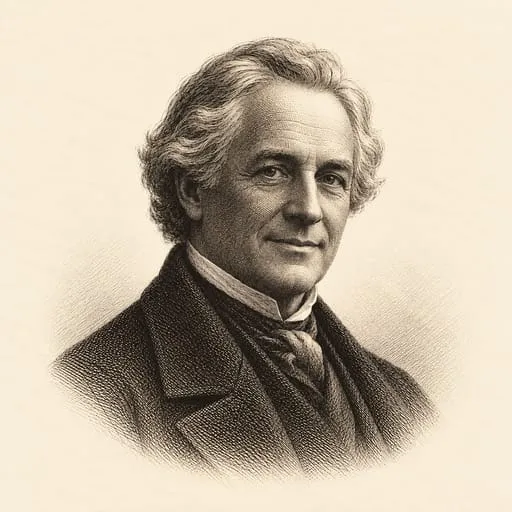
- Robert WaltonHe records Victor's death, turns his ship towards England at his crew's insistence and hears the creature's final account of remorse.First appears: Letter 1
- Margaret SavilleWalton's sister in England receives his letters and has expressed fears about his expedition.First appears: Letter 1
- The ship's masterWalton praises this experienced seaman's gentle discipline and generous treatment of a woman who loved another man.First appears: Letter 2
- The lieutenantAn English sailor whom Walton knows from a whaling voyage, he is courageous and eager for professional advancement.First appears: Letter 2
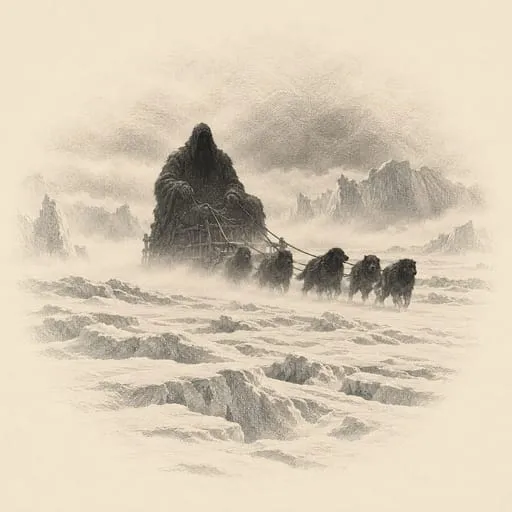
- The traveller on the iceA distant figure of apparently gigantic stature is seen driving a dog sledge north across the ice.First appears: Letter 4
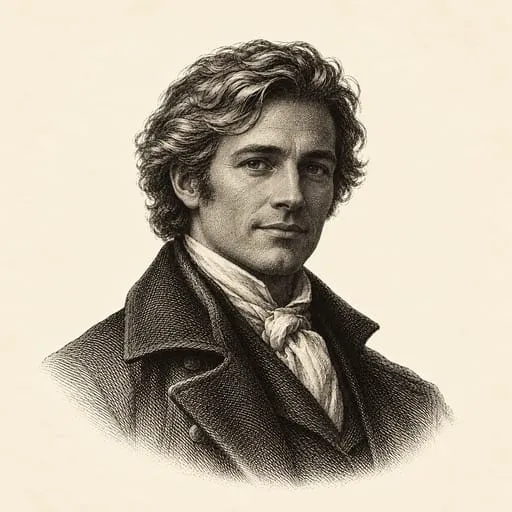
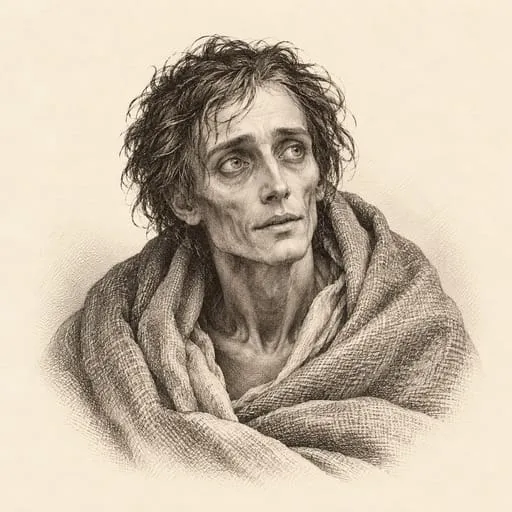
- Victor FrankensteinHis Arctic pursuit ends aboard Walton's ship, where he dies after defending his conduct and warning against ambition.First appears: Letter 4
- Alphonse FrankensteinHe dies in Victor's arms a few days after hearing of Elizabeth's murder.First appears: Chapter 1
- Caroline BeaufortShe dies after nursing Elizabeth through scarlet fever, asking Elizabeth to care for the younger children.First appears: Chapter 1
- Elizabeth LavenzaShe is strangled on her wedding night after Victor asks her to retire while he searches for the creature.First appears: Chapter 1
- Henry ClervalVictor identifies his strangled body in Ireland and mourns the loss of his friend and benefactor.First appears: Chapter 2
- Mr. KrempeA natural philosophy professor at Ingolstadt, he bluntly rejects Victor's old reading and supplies a new book list.First appears: Chapter 3
- M. WaldmanA chemistry professor whose encouraging manner attracts Victor, he recommends broad scientific study and explains his laboratory equipment.First appears: Chapter 3
- The creatureMourning Victor, he admits his murders, describes his remorse and rejection, and leaves Walton after announcing his intention to destroy himself.First appears: Chapter 5
- ErnestVictor's sixteen-year-old brother prefers outdoor activity to study and hopes for a military career abroad.First appears: Chapter 6
- Justine MoritzCondemned and executed for William's murder, she tells Elizabeth that her confession was a lie forced by religious threats.First appears: Chapter 6
- WilliamVictor's youngest brother has been found murdered after disappearing during a family walk near Geneva.First appears: Chapter 6
- De LaceyHe listens sympathetically to the creature and offers help before learning that his own family are the friends being sought.First appears: Chapter 11
- AgathaShe faints when she returns to the cottage and sees the creature beside her father.First appears: Chapter 11
- FelixHe tells the cottage's owner that the frightened family will never return to live there.First appears: Chapter 11
- SafieShe runs from the cottage when she sees the creature holding De Lacey's hand.First appears: Chapter 13
- Safie's fatherA Turkish merchant imprisoned in Paris, he receives Felix's help in escaping a death sentence.First appears: Chapter 14
- Mr. KirwinHe arranges care for the imprisoned Victor, contacts his father and gathers witnesses for his defence.First appears: Chapter 20





Themes
- Ambition and responsibility
- Isolation and friendship
- Nature and human limits
- Telling and judging stories
Chapter summaries
Letter 1
Walton opens by reassuring Margaret, but her fears remain visible through his efforts to answer them. He imagines the pole as a place of light and beauty rather than desolation; these are his expectations, not established facts. His aims combine useful discoveries with personal glory. Recollections of reading voyages, trying to become a poet and training at sea show how books and ambition have shaped his plans. His request for encouragement reveals uncertainty beneath his confident account.
Letter 2
Practical progress does not remove Walton's loneliness. He wants a friend who can understand him and correct the impatience he recognises in himself. His account of the master's generosity offers an example of kindness, although Walton still dismisses the man's lack of education. This tension exposes the narrowness of his idea of a suitable companion. He assures Margaret of his prudence while admitting that a love of the marvellous drives his voyage.
Letter 3
The brief letter reports a ship already far north. Walton minimises a leak and rough weather as ordinary events for experienced sailors. He explicitly promises Margaret that he will be prudent. Yet his final questions imply that nature must yield to a determined human will. The shift from reassurance to triumph lets readers test his claim to caution against his language.
Letter 4
Ice and fog restrict the ship's movement before the crew sees a distant traveller on a sledge. The man rescued the following morning is a separate person, and neither traveller is named here. The stranger is pursuing someone and insists on knowing the ship's destination before accepting rescue. Walton's care develops into admiration, answering his earlier longing for a friend. When Walton describes the sacrifices he would make for knowledge, the stranger responds with grief and a warning. His promised narrative will reach Margaret through Walton's written record, making Walton both a witness and an interpreter.
Chapter 1
The stranger takes over the narrative by tracing his family history. His father helps the impoverished Caroline Beaufort, who later becomes his wife. Victor recalls their care as an example of parents recognising their responsibility for a child's happiness. Caroline's sympathy with suffering also leads her to bring Elizabeth into the family from an Italian foster home. Yet the descriptions that distinguish Elizabeth from the other children favour fair looks and noble ancestry. Victor's account of treating Elizabeth as a gift combines affection with a language of possession.
Chapter 2
Victor contrasts his interest in causes with Elizabeth's enjoyment of natural beauty and Henry's interest in human actions. He presents their friendship and his parents' kindness as sources of childhood happiness. Reading Agrippa at thirteen gives his scientific curiosity a particular direction. His father's dismissive response leaves him unconvinced, and he embraces promises of power over disease and death. A lightning-struck oak and a visitor's explanation of electricity unsettle those beliefs, prompting him to turn to mathematics. The adult narrator explains these changes through images of fate and a destructive river, so recollection is already shaped by his present judgement.
Chapter 3
Caroline's death interrupts Victor's planned departure for university and makes family duty central to the opening scenes. Her dying wishes ask Elizabeth to mother the younger children and imagine her eventual marriage to Victor. Elizabeth responds to grief by caring for others, while Victor faces the unfamiliar loneliness of leaving home. Krempe correctly challenges his reading but alienates him through contempt. Waldman's kindness and praise of modern chemistry make scientific work attractive again. Although Waldman recommends a broad education, Victor's private response centres on surpassing previous discoveries, and the retrospective narrator describes the encounter as fate.
Chapter 4
Two years of concentrated study earn Victor his professors' admiration. His investigation of life leads him into anatomy, decay and burial places, where he claims to find the secret of animation. He refuses to pass that secret to Walton, turning his narrative into a warning rather than an instruction. While constructing a human being, he imagines a new species owing him exceptional gratitude. The work involves secrecy, disturbing materials and the suffering of living animals. His withdrawal from family and nature exposes the immediate costs of a pursuit he initially justifies through its imagined benefits.
Chapter 5
The moment of successful animation produces horror rather than the fulfilment Victor expected. His description contrasts individually beautiful features with his revulsion at their living combination. A nightmare transforms Elizabeth into his dead mother, joining affection with bodily decay within the dream. When the creature approaches his bed, Victor escapes without discovering what the gesture or sounds mean. Henry's arrival briefly restores the comfort of home, but Victor collapses after finding his rooms empty. Henry's patient nursing offers a practical form of care while Victor continues to fear and conceal what he has made.
Chapter 6
Elizabeth's letter reconnects Victor with a household that has been anxious about his silence. Her account introduces Ernest's ambitions, William's cheerful childhood and Justine's history of service, affection and mistreatment by her mother. Her praise of the dignity of Genevan servants is presented as her own view of social relations. Victor writes home but remains distressed by scientific reminders, even when his professors intend to praise him. Henry tactfully redirects conversations, removes apparatus and offers the companionship of shared literary study. Delays postpone Victor's journey, but a walking tour strengthens his recovery and renews his response to nature. This restored sociability remains incomplete because he cannot bring himself to tell Henry about the experiment.
Chapter 7
Alphonse's letter turns Victor's expected homecoming into a return to a bereaved household. Elizabeth blames herself because she lent William the miniature that disappeared when he was killed. During the storm near Geneva, Victor recognises his creation and immediately treats the sighting as proof of murder, although he has not witnessed the crime. He decides that his account would sound insane and that the creature could escape pursuit. Ernest then explains the evidence against Justine, while Elizabeth remains certain of her innocence. Victor reassures her that Justine will be acquitted, relying on his private conviction rather than offering the court an explanation.
Chapter 8
The court hears evidence about Justine's confused behaviour and the miniature found in her pocket. Her explanation accounts for her night outside Geneva but cannot explain the picture. Elizabeth's public defence wins admiration for Elizabeth without changing the crowd's hostility towards the accused. After the guilty verdict, Justine confesses under pressure from a confessor who threatens damnation, then tells Elizabeth that she lied. Victor repeatedly describes his own suffering as greater than Justine's, making his remorse both intense and troublingly centred on himself. Appeals fail and Justine is executed, while Victor's intended disclosure never becomes a public account of his experiment.
Chapter 9
Victor's continuing remorse separates him from relatives who share the bereavement but do not know his secret. Alphonse urges him to fulfil duties towards the living, advice that cannot address the guilt Victor conceals. Alone on the lake, Victor considers ending his life but is held back by concern for Elizabeth, his father and Ernest. Elizabeth's loss of trust in human goodness gives the family's grief a wider moral dimension. Her affection cannot dispel Victor's fear and hatred of his creation. He travels towards Chamounix, where immense natural scenes and familiar memories intermittently soothe him without ending his anguish.
Chapter 10
The Alpine landscape temporarily subdues Victor's grief, but its consoling power changes with his mood and the weather. On the glacier, his slow and cautious movement contrasts with the creature's extraordinary speed. Victor answers the encounter with insults and attempted violence, while the creature uses articulate argument to demand a hearing. His appeal combines claims of suffering and neglected obligation with threats against Victor's remaining friends. By comparing himself to Adam and the fallen angel, he describes a relationship in which creation should establish care rather than abandonment. Victor finally agrees to listen, moved by curiosity, compassion and a new awareness of his responsibilities, while still seeking evidence about William's murder.
Chapter 11
The creature begins his account with confused sensations, presenting his early life through needs he initially cannot understand or name. Observation and experiment gradually teach him about food, light and fire. Fire offers warmth but also pain, making discovery a process of learning limits as well as acquiring benefits. His encounters with people bring fear and violence instead of instruction or welcome. A hiding place attached to a cottage lets him observe an old man, a young woman and a young man without exposing himself. Their music, work and mutual care awaken feelings beyond physical need, although their speech remains unintelligible to him.
Chapter 12
Continued observation corrects the creature's first belief that the cottagers possess every comfort. Recognising their hunger leads him to change his conduct, replacing theft with practical help. He discovers that speech communicates feelings as well as facts and learns words for objects and family relationships. The old man's blindness and the care shown by Felix and Agatha reveal forms of dependence sustained by affection. Seeing his own reflection produces shame as he compares himself with the people he admires. He hopes that language and gentle conduct can overcome the barrier of his appearance, while the return of spring strengthens his optimism without resolving his exclusion.
Chapter 13
Safie's arrival transforms the household's mood and gives the creature a new opportunity to learn. Because she cannot speak the cottagers' language, he can follow lessons designed for a beginner. Felix's explanations of Volney's Ruins of Empires introduce him to history, government and religion. He is struck by the coexistence of human virtue and violence, including the suffering of America's original inhabitants. Lessons about wealth, ancestry and family affection make him examine his own lack of property and relationships. Education therefore enlarges his sympathies while intensifying the pain of exclusion, and his affectionate term 'protectors' remains a name the cottagers have never knowingly accepted.
Chapter 14
The family's history explains the poverty and sadness the creature first observed without understanding. Felix's indignation at an unjust death sentence leads him to organise the prisoner's escape, while his love for Safie gives the rescue a personal motive as well. The French authorities imprison De Lacey and Agatha, and the family's punishment eventually includes loss of fortune and exile. Safie's father encourages Felix's hopes but intends to prevent a Christian marriage. The account contrasts the independence Safie learned from her Christian Arab mother with the confinement she fears, presenting religious and cultural judgements through this narrated history. Safie resists her father's orders and undertakes the journey herself, although she depends on others' help to complete it. The creature offers copies of her letters as evidence, reminding Victor that this history reaches him through selected accounts.
Chapter 15
The creature finds Paradise Lost, Plutarch's Lives and the Sorrows of Werther, which become sources of moral examples and personal comparison. His reading is shaped by his limited experience, and he takes Paradise Lost as true history. Comparing himself with Adam and Satan helps him describe both abandonment and envy. Victor's journal supplies an account of his creation in language that makes his shame more acute. He nevertheless prepares to seek the family's friendship, choosing the blind father as someone who can hear him without judging his appearance. De Lacey responds sympathetically to his carefully incomplete account, but the return of Felix, Agatha and Safie interrupts the appeal. Felix strikes him, and the creature leaves without using his superior strength in retaliation.
Chapter 16
The creature's first rage after rejection gives way to a plan to try De Lacey again, but the family's departure destroys that hope. Burning the empty cottage turns his distress into deliberate destruction. His account of rescuing a drowning girl and being shot by the man who takes her away presents another collision between benevolent action and violent rejection. Near Geneva, he seizes a child in the hope of forcing companionship, then identifies him with his enemy when he hears the name Frankenstein. He admits killing William, celebrating the suffering this will cause Victor, and planting the miniature on a sleeping woman to transfer blame. His attempt to make that woman responsible for his deprivation exposes a destructive logic of punishment directed at someone who has done him no injury. The demand for a being of his own kind closes an account that explains his anger while also revealing choices that turn it against the innocent.
Chapter 17
Victor first refuses to create another being because he fears that two might cause greater destruction. The creature replies that rejection has produced his malice and that affection would give him a reason to live harmlessly. His proposal combines an appeal to a creator's duty with threats and a promise to withdraw to South America. Victor moves repeatedly between sympathy for the argument and revulsion at the speaker's appearance. He finally treats consent as a duty owed both to the creature and to humanity, although the creature's strength and threats also influence his calculation. The agreement depends on promises about feelings and conduct that neither speaker can demonstrate in advance. Victor returns home isolated by a task he regards as necessary to protect those he loves.
Chapter 18
Victor's reluctance to resume his work coexists with improving health and moments of pleasure outdoors. Alphonse misreads his distress as possible unwillingness to marry Elizabeth, revealing how secrecy prevents even affectionate relatives from understanding him. Victor affirms his love but decides that the promised companion must be completed before the marriage. An English journey offers access to scientific knowledge and distance from the family he wants to protect from discovery. Henry's company comforts him, although it also complicates his desire for solitude. Their contrasting responses to the Rhine show how private preoccupation can limit the ability to enjoy a shared landscape. Victor sometimes feels its calming influence, and the two eventually arrive in London with his underlying task still undisclosed.
Chapter 19
In London, Henry seeks intellectual company and support for a planned journey to India, while Victor collects information and materials for his experiment. Their tour offers brief pleasure through scenery, history and friendship, but Victor repeatedly returns to fear and guilt. His uncertainty about the creature's whereabouts makes both delayed letters and separation from Henry threatening. At Perth, he insists on travelling alone and chooses a remote Orkney island for his laboratory. The poverty of its inhabitants and the violence of its surrounding sea strip this retreat of the comfort he associates with Switzerland. Working with full awareness of the process, he feels disgust rather than his earlier scientific excitement.
Chapter 20
Victor considers whether a second creature would accept an agreement made before her existence and fears the possible consequences of their having children. Seeing the creature watching, he tears apart his work and refuses to resume it. The creature answers with claims of power and a threat concerning Victor's wedding night, which Victor interprets as a threat to his own life. Victor now regards abandoning the project as a duty to humanity, although disposing of the remains feels like committing a crime. He falls asleep in his boat and wakes to dangerous wind, thirst and uncertainty about his position. Relief at reaching land turns into alarm when the Irish crowd treats him as a suspected murderer.
Chapter 21
Witnesses describe a strangled man and a boat resembling Victor's, while his distressed reaction appears to strengthen suspicion. When shown the body, Victor recognises Henry and collapses. His feverish self-accusations express responsibility for several deaths without explaining the experiment that connects them. Mr. Kirwin provides medical care, contacts Alphonse and collects evidence for the defence. The grand jury rejects the charge after witnesses establish that Victor was in the Orkneys when Henry's body was found. Release cannot remove Victor's grief or his fear for his surviving family, and he leaves Ireland with his father still physically and mentally distressed.
Chapter 22
Alphonse tries to ease Victor's suffering but cannot understand self-accusations whose cause Victor refuses to explain. Elizabeth's letter offers to release him from their planned marriage if his affection lies elsewhere. He affirms his love and promises confidence, but sets disclosure of his experiment after the wedding. Interpreting the creature's threat as an attack on himself, he prepares weapons and agrees to marry soon. Elizabeth continues to comfort him while showing anxiety of her own. Their journey across the lake brings temporary happiness, although Victor's retrospective account repeatedly interrupts it with dread.
Chapter 23
Expecting an attack on himself, Victor asks Elizabeth to retire while he searches the inn. Her screams reveal the failure of his interpretation, and he finds her strangled. The creature appears at the window, points towards her body and escapes into the lake despite Victor's shot. Back in Geneva, Alphonse dies from grief, and Victor subsequently spends months confined as a person considered mad. After his release, he tells a magistrate his history and demands the creature's capture. The official's uncertainty about the story and the practical difficulty of pursuit leave Victor dissatisfied. Revenge becomes the purpose that allows him to endure his losses.
Chapter 24
Victor's pursuit becomes a relationship sustained by hatred, with the creature leaving taunts and even food to keep him following. Breaking ice finally separates them and brings Victor to Walton's ship. Walton resumes the letters and reports that Victor corrected his written account, making its transmission part of the story. Trapped by ice and pressed by his crew, Walton agrees to return, despite Victor's appeal to their courage and his own disappointment. Victor dies after defending his refusal to make a companion and offering a warning against ambition that he immediately qualifies. The creature then confronts Walton with grief, self-accusation and an account of the rejection and envy behind his violence. He promises his own destruction and disappears into darkness, leaving that promised act unwitnessed.
Key quotes
I preferred glory to every enticement that wealth placed in my path.
Walton presents hardship as a deliberate choice, but the reward he names is personal fame.
Ambition and responsibility
What may not be expected in a country of eternal light?
The question invites limitless hopes instead of testing them; the imagined landscape reflects the explorer's desire.
Nature and human limitsTelling and judging stories
I have no friend, Margaret:
The direct appeal makes emotional companionship a need that the expedition itself cannot satisfy.
Isolation and friendship
I am too ardent in execution, and too impatient of difficulties.
Walton can identify his faults and imagines friendship as a restraint on them.
Ambition and responsibilityIsolation and friendship
I will be cool, persevering, and prudent.
The three qualities form a carefully ordered promise of self-control to Margaret.
Ambition and responsibilityTelling and judging stories
What can stop the determined heart and resolved will of man?
The question assumes that determination can overcome every obstacle, despite the physical dangers already reported.
Nature and human limitsAmbition and responsibility
To seek one who fled from me.
The stranger gives a purpose but withholds the history behind it, leaving the pursuit unexplained.
Telling and judging stories
You seek for knowledge and wisdom, as I once did;
The stranger explicitly compares Walton's ambitions with his own experience and introduces his story as a warning.
Ambition and responsibility
according as they fulfilled their duties towards me.
Victor makes a child's happiness depend on the care given by those who bring that child into the world.
Ambition and responsibility
All praises bestowed on her, I received as made to a possession of my own.
The possessive language complicates the apparently affectionate account of childhood companionship.
Telling and judging storiesIsolation and friendship
The world was to me a secret which I desired to divine.
The metaphor presents nature as a concealed meaning that Victor feels compelled to uncover.
Nature and human limitsAmbition and responsibility
I took their word for all that they averred, and I became their disciple.
Victor's scientific curiosity coexists with an uncritical trust in the authority of his chosen writers.
Ambition and responsibilityTelling and judging stories
I must form my own friends, and be my own protector.
The repeated 'my own' makes university life a test of independence after a sheltered upbringing.
Isolation and friendship
They have acquired new and almost unlimited powers;
Waldman's praise links modern science with power, helping explain why his lecture appeals to Victor's ambition.
Ambition and responsibilityNature and human limits
No father could claim the gratitude of his child so completely as I should deserve theirs.
Victor imagines creation chiefly in terms of the gratitude he will receive, rather than the care he will owe.
Ambition and responsibility
I wished, as it were, to procrastinate all that related to my feelings of affection
The admission shows that Victor treats relationships as duties he can postpone until his experiment is finished.
Isolation and friendshipAmbition and responsibility
the beauty of the dream vanished, and breathless horror and disgust filled my heart.
The abrupt emotional reversal makes success itself the crisis, rather than a failure to complete the experiment.
Ambition and responsibility
He might have spoken, but I did not hear;
Victor acknowledges a limit to his account: his flight prevents him from knowing whether the creature is trying to communicate.
Telling and judging storiesIsolation and friendship
He meant to please, and he tormented me.
The balanced clauses expose the gap between Waldman's friendly intention and Victor's private distress.
Telling and judging storiesIsolation and friendship
A selfish pursuit had cramped and narrowed me, until your gentleness and affection warmed and opened my senses;
The opposing verbs make friendship an active remedy for the emotional confinement of Victor's work.
Isolation and friendshipAmbition and responsibility
The mere presence of the idea was an irresistible proof of the fact.
Victor's wording collapses the difference between an interpretation and evidence, exposing the haste of his judgement.
Telling and judging stories
These reflections determined me, and I resolved to remain silent.
The decision protects Victor's secret while leaving his family without the account that has convinced him.
Ambition and responsibilityIsolation and friendship
I did confess; but I confessed a lie.
The direct reversal breaks the assumed connection between confession and truth.
Telling and judging stories
The tortures of the accused did not equal mine;
Victor claims the centre of suffering even while Justine faces death, inviting scrutiny of how remorse shapes his narration.
Telling and judging storiesAmbition and responsibility
solitude was my only consolation
Victor seeks relief through withdrawal even though separation makes his private suffering harder for others to understand.
Isolation and friendship
maternal nature bade me weep no more.
The personification casts the landscape as a caring presence, though its comfort repeatedly gives way to grief.
Nature and human limitsIsolation and friendship
I was benevolent and good; misery made me a fiend.
The creature presents his conduct as shaped by experience rather than by an originally evil nature; the claim asks to be tested against his account.
Telling and judging storiesIsolation and friendship
For the first time, also, I felt what the duties of a creator towards his creature were,
Victor begins to connect the power to create life with an obligation towards the life created.
Ambition and responsibility
How strange, I thought, that the same cause should produce such opposite effects!
The response to fire shows an inexperienced mind reasoning from direct observation of pleasure and pain.
Nature and human limitsTelling and judging stories
the uncouth and inarticulate sounds which broke from me frightened me into silence again.
His wish to express sensation is frustrated by his own voice, making isolation a problem of communication as well as physical shelter.
Isolation and friendshipTelling and judging stories
when I found that in doing this I inflicted pain on the cottagers, I abstained,
His response to their hunger presents sympathy as something that changes behaviour and imposes a limit on his own wants.
Isolation and friendshipAmbition and responsibility
I imagined that they would be disgusted, until, by my gentle demeanour and conciliating words, I should first win their favour, and afterwards their love.
The imagined progression from disgust to love places hope in speech, while remaining the creature's expectation of a meeting that has not occurred.
Isolation and friendshipTelling and judging stories
sorrow only increased with knowledge.
The short statement reverses the expectation that education must improve the learner's happiness.
Telling and judging storiesIsolation and friendship
The gentle words of Agatha, and the animated smiles of the charming Arabian, were not for me.
The distinction between witnessing affection and receiving it makes his hidden position emotionally painful.
Isolation and friendship
they will prove the truth of my tale;
The offered letters give the creature a way to support his narrative with documents rather than asking Victor to trust his voice alone.
Telling and judging stories
The generous nature of Safie was outraged by this command;
Her response makes resistance to her father's authority part of the account's praise of her character.
Isolation and friendshipAmbition and responsibility
I read it, as I had read the other volumes which had fallen into my hands, as a true history.
The admission shows that reading can shape identity even when a reader misunderstands a work's kind or status.
Telling and judging stories
I am blind, and cannot judge of your countenance, but there is something in your words, which persuades me that you are sincere.
De Lacey's response briefly allows speech and feeling to carry more weight than visible appearance.
Telling and judging storiesIsolation and friendship
I, too, can create desolation; my enemy is not invulnerable;
The creature makes destruction a source of power over Victor, turning the language of creation towards suffering.
Ambition and responsibilityIsolation and friendship
The crime had its source in her: be hers the punishment!
He blames a sleeping stranger for his own act, revealing how imagined rejection becomes a justification for harming an innocent person.
Telling and judging storiesAmbition and responsibility
if I cannot inspire love, I will cause fear;
The balanced alternatives turn the desire for affection into a threat of domination.
Isolation and friendshipAmbition and responsibility
My vices are the children of a forced solitude that I abhor;
The creature makes enforced exclusion the parent of his wrongdoing, using a family metaphor to argue that changed relationships would change his conduct.
Isolation and friendshipTelling and judging stories
I clothed my desires under a guise which excited no suspicion,
The metaphor presents Victor's explanation as deliberate concealment, making the family's consent dependent on incomplete information.
Telling and judging storiesIsolation and friendship
He pointed out to me the shifting colours of the landscape, and the appearances of the sky.
Henry's active attention contrasts with Victor's inward preoccupation, giving friendship a practical role in directing perception.
Nature and human limitsIsolation and friendship
But in Clerval I saw the image of my former self;
Henry's curiosity supplies a living comparison with the openness Victor believes he has lost.
Isolation and friendship
But now I went to it in cold blood, and my heart often sickened at the work of my hands.
Victor distinguishes his present awareness from the enthusiasm that previously concealed the horror of his methods.
Ambition and responsibility
Had I right, for my own benefit, to inflict this curse upon everlasting generations?
Victor frames his choice as a conflict between personal relief and responsibility for people not yet born.
Ambition and responsibility
You are my creator, but I am your master;
The creature reverses the expected relation between maker and creation, defining power through his capacity to cause suffering.
Ambition and responsibilityIsolation and friendship
I called myself the murderer of William, of Justine, and of Clerval.
Victor's language collapses the distinction between creating the killer and personally carrying out the murders.
Ambition and responsibilityTelling and judging stories
Who could be interested in the fate of a murderer, but the hangman who would gain his fee?
The question records Victor's sense of abandonment before he learns how much Kirwin has done for him.
Isolation and friendshipTelling and judging stories
our marriage would render me eternally miserable, unless it were the dictate of your own free choice.
Elizabeth insists that affection and consent matter more than fulfilling the family's longstanding plan.
Isolation and friendship
I checked, therefore, my impatient thirst for sympathy,
The image makes Victor's longing for understanding bodily and urgent, even as he suppresses the explanation that could make it possible.
Isolation and friendshipTelling and judging stories
Nothing is so painful to the human mind as a great and sudden change.
Victor generalises from bereavement as familiar scenery becomes inseparable from Elizabeth's absence.
Nature and human limitsIsolation and friendship
My revenge is of no moment to you;
Victor exposes the gulf between his consuming private purpose and the magistrate's more distant judgement.
Telling and judging storiesIsolation and friendship
I cannot lead them unwillingly to danger, and I must return.
Walton accepts a limit imposed by his responsibility towards other people's lives, despite his continued desire for discovery.
Ambition and responsibilityNature and human limits
Am I to be thought the only criminal, when all humankind sinned against me?
The creature demands judgement of the treatment he received as well as of the crimes he admits, leaving competing accounts of responsibility before Walton.
Telling and judging storiesIsolation and friendshipAmbition and responsibility