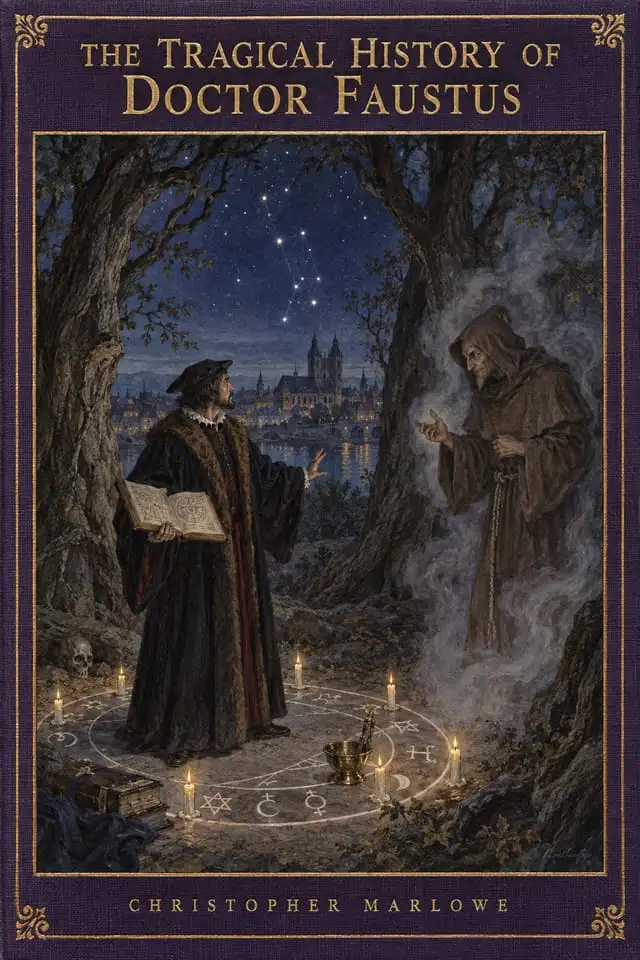
The Tragical History of Doctor Faustus Study Guide
A-level set textEdexcel A-levelOCR A-levelEduqas A-level
Notes cover the whole book.
Characters
- ChorusThe closing speaker mourns Faustus's wasted learning and warns the wise against practising beyond what heavenly power permits.First appears: Chorus
- John FaustusAfter confessing his bargain to the scholars and spending his last hour pleading for escape from eternal punishment, he is taken away by devils at midnight.First appears: Scene 1
- WagnerHaving received all his master's goods, he suspects Faustus expects to die soon but cannot reconcile that thought with the lavish feast Faustus is enjoying.First appears: Scene 1
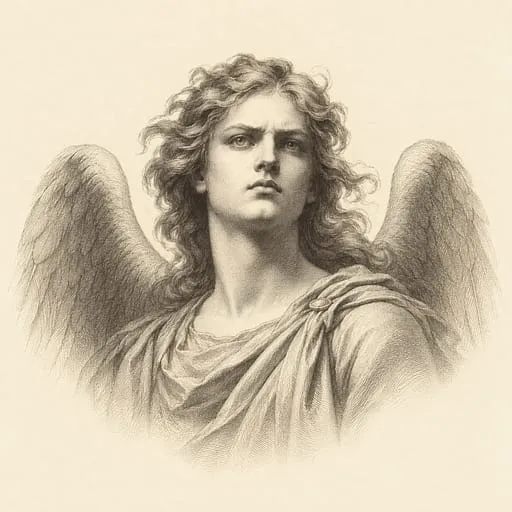
- Good AngelThe angel insists that repentance is still possible and promises that devils cannot hurt Faustus if he repents.First appears: Scene 1
- Evil AngelThe angel denies that Faustus will repent and threatens that devils will tear him apart if he does.First appears: Scene 1
- ValdesFaustus's German friend who promises that spirits will serve them and offers to teach him the basics of magic.First appears: Scene 1
- CorneliusFaustus's friend who presents magic as a source of fame and treasure and recommends learning its words before its ceremonies.First appears: Scene 1
- First ScholarAfter first proposing medical help, he asks why Faustus did not seek prayers earlier and urges the scholars to pray in the next room.First appears: Scene 2
- Second ScholarHe reminds Faustus of God's infinite mercy, urges him to pray and promises that the scholars will pray for mercy for him.First appears: Scene 2
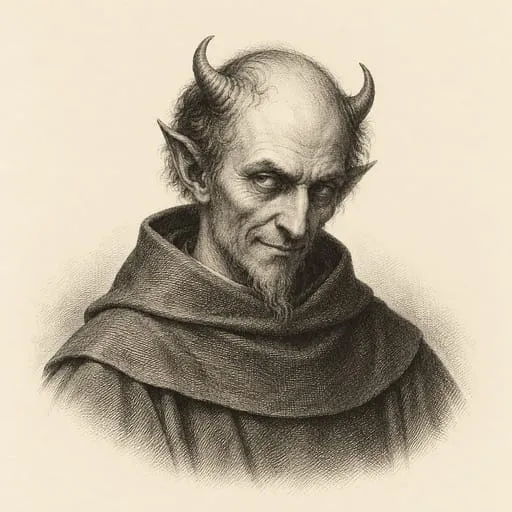
- MephistophelesHe gives Faustus a dagger, threatens him into renewing his vow and admits that the Old Man's faith protects his soul from his power.First appears: Scene 3
- ClownAn unemployed man who jokes about Wagner's offer, runs in fear from devils and agrees to serve Wagner after asking to learn magic.First appears: Scene 4
- BaliolOne of the two devils Wagner summons to frighten the Clown and then orders away.First appears: Scene 4
- BelcherOne of the two devils who appear at Wagner's call and send the Clown running and crying.First appears: Scene 4
- The dancing devilsDevils brought by Mephistopheles who give Faustus crowns and rich clothes, dance and leave.First appears: Scene 5
- The devil dressed as a womanA devil who enters dressed as a woman with fireworks when Mephistopheles promises to fetch Faustus a wife.First appears: Scene 5
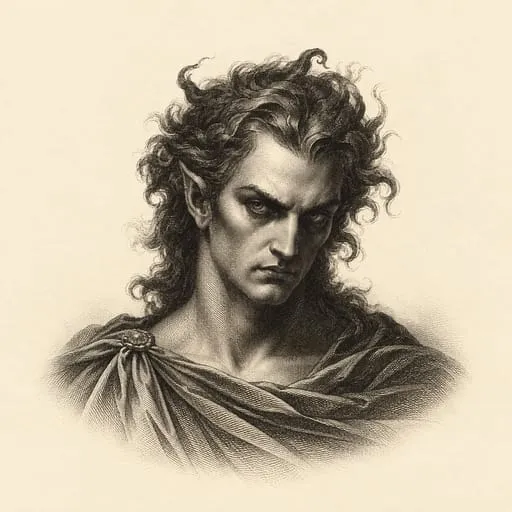
- LuciferThe ruler of hell rebukes Faustus for calling on Christ, presents the Seven Deadly Sins as entertainment and gives him a book promising transformations.First appears: Scene 6
- BelzebubLucifer's companion-prince in hell appears beside him and Mephistopheles when Faustus calls on Christ.First appears: Scene 6
- PrideOne of the Seven Deadly Sins, Pride rejects having parents and refuses to speak further without perfume and rich furnishings.First appears: Scene 6
- CovetousnessOne of the Seven Deadly Sins, Covetousness wants the house and everyone in it turned into gold to lock in a chest.First appears: Scene 6
- WrathOne of the Seven Deadly Sins, Wrath describes roaming with rapiers and wounding himself when nobody else is available to fight.First appears: Scene 6
- EnvyOne of the Seven Deadly Sins, Envy resents others' learning, food and comfort and wishes everyone else would die in a famine.First appears: Scene 6
- GluttonyOne of the Seven Deadly Sins, Gluttony describes a family made of food and drink and asks Faustus for supper.First appears: Scene 6
- SlothOne of the Seven Deadly Sins, Sloth resents being moved from a sunny bank and asks Gluttony and Lechery to carry him back.First appears: Scene 6
- LecheryThe last of the Seven Deadly Sins to answer Faustus, Lechery introduces herself through a sexual joke about food.First appears: Scene 6
- PopeThe host of the banquet loses food and drink to the invisible Faustus, orders a dirge against a supposed ghost and is struck on the ear.First appears: Scene 7
- Cardinal of LorrainThe Pope's guest suggests that the unseen intruder is a ghost from purgatory seeking a pardon.First appears: Scene 7
- First FriarA friar who reports that nobody can be seen after Faustus speaks and later calls his brethren to their devotional work.First appears: Scene 7
- The friarsThe Pope's attendants sing curses against the banquet's unseen disruptor before Faustus and Mephistopheles beat them and throw fireworks among them.First appears: Scene 7
- Robin the OstlerHe summons Mephistopheles while trying to keep a stolen goblet and welcomes the devil's sentence of transformation into an ape as a chance for fun and food.First appears: Scene 8
- RalphHe returns the stolen goblet after the devil appears and is told by Mephistopheles that he is to become a dog.First appears: Scene 8
- VintnerA wine seller who searches Robin and Ralph for a missing goblet and receives it back after Mephistopheles appears.First appears: Scene 9
- EmperorThe ruler asks to see Alexander and his paramour, accepts their spirit likenesses as real bodies and promises Faustus a reward after asking him to release the Knight.First appears: Scene 10
- KnightA gentleman who mocks Faustus's claims and is made to wear horns until Faustus orders Mephistopheles to remove them at the Emperor's request.First appears: Scene 10
- The Emperor's attendantsAttendants accompany the Emperor, and one leaves to summon the Knight at his command.First appears: Scene 10
- The spirits as Alexander and his paramourSpirits brought by Mephistopheles resemble Alexander and his lover so closely that the Emperor believes he sees their actual bodies.First appears: Scene 10
- Horse-CourserA buyer whose horse vanishes in water returns for his money but flees promising another payment after apparently pulling off Faustus's leg.First appears: Scene 11
- Duke of VanholtFaustus's noble host marvels at the grapes brought in January and invites him to receive a reward for pleasing the Duchess.First appears: Scene 12
- DuchessThe Duke's pregnant wife asks Faustus for ripe grapes in winter and promises lasting gratitude after tasting them.First appears: Scene 12
- Third ScholarHe urges Faustus to call on God and offers to stay with him before the scholars leave to pray.First appears: Scene 14
- HelenThe silent figure shown to the scholars returns at Faustus's request, and he kisses her and declares that he finds Heaven in her lips.First appears: Scene 14
- Old ManConfronted by devils, he declares that his faith will triumph and leaves on the opposite side of the stage from them.First appears: Scene 14
- The devilsDevils enter after midnight strikes and leave taking Faustus with them.First appears: Scene 15
Themes
- Ambition and pride
- Knowledge and its uses
- Choice, temptation and repentance
- Hell and damnation
- Power, bargains and service
- Appearance and deception
Context
- Deed of gift
- A formal document transferring ownership without a sale for money; Faustus uses its legal form to state the conditions under which he gives away his body and soul. Scene 5
- Horns
- Horns are a conventional sign that a man's wife has been unfaithful; the Emperor makes that joke explicit when the Knight returns. Scene 10
Chapter summaries
Chorus
The Chorus speaks directly to the audience and asks for patient judgement. By setting aside battles, courtly love and grand deeds, the speech makes a scholar's life the subject of the play. Faustus's rise from humble origins to a doctorate establishes how much learning has already given him. The language of appetite describes him as glutted with learning's gifts and indulging excessively in magic. Waxen wings rising beyond their reach and melting give his pride the shape of a destructive overreach. The final line moves the audience's attention from this account of Faustus to the man sitting in his study.
Scene 1
Faustus begins alone, addressing himself as he weighs the subjects he might pursue. His account of his medical achievements cannot satisfy him because he remains mortal and cannot restore the dead to life. He dismisses law as servile, then reads statements about sin and death as proof that everlasting death is unavoidable. Magic appeals to him through promised knowledge, riches and command beyond the powers of kings. The two Angels put opposing advice on stage, but Faustus follows their departure with fantasies of treasure, military invention and political rule. Valdes and Cornelius encourage these hopes and offer instruction. Faustus acknowledges both their persuasion and his own desire before declaring that he will conjure despite the danger.
Scene 2
The two scholars remember Faustus as a forceful academic disputant and wonder where he has gone. Wagner makes their simple enquiry into a contest over logic, evidence and learned terminology. His imitation of a solemn religious speaker adds another kind of performance to his mockery. Once he reveals the dinner companions, the scholars treat their names as evidence that Faustus has become involved in magic. The First Scholar's fear that nothing can reclaim him is answered by the Second Scholar's insistence that they should try. Their concern places Faustus's choices within a community prepared to offer help, while Wagner's behaviour turns scholarly display into comedy.
Scene 3
Faustus begins his ritual at night, using divine names and sacred signs in an attempt to command spirits. Mephistopheles obeys his demand to change shape, which Faustus takes as proof of his own magical authority. The devil then qualifies that apparent obedience: he serves Lucifer and came hoping to gain the soul of someone who renounced God. Faustus dismisses questions of the soul as trifles before asking about Lucifer. Mephistopheles attributes Lucifer's fall to pride and describes the loss of Heaven as a present torment, but Faustus treats this suffering as weakness. He proposes exchanging his soul for twenty-four years in which Mephistopheles must fulfil his wishes. Alone again, Faustus imagines imperial conquest even though Lucifer's answer has not yet arrived.
Scene 4
Wagner tries to recruit the Clown by treating his poverty as proof that he would sell his soul for food. The Clown answers with a joke about the cooking, reducing a grave spiritual bargain to an ordinary appetite. His puns repeatedly interrupt Wagner's claims to authority, and he tries to give back the money when Wagner says the Devil may fetch him. The arrival of two devils exposes the gap between the Clown's brave talk and his frightened behaviour. Wagner's use of threats echoes the relation between magic and service in Faustus's bargaining, though the immediate aim is to obtain a servant. The Clown becomes interested in learning transformations for sexual mischief, and Wagner ends by demanding a master's title and using more learned language. The scene connects magical power with coercion and small personal desires.
Scene 5
Faustus begins alone in his study, alternating between despair and the thought of returning to God, before the Angels give opposing accounts of repentance. Mephistopheles brings Lucifer's demand for a formal deed written in blood, making the exchange a legal transaction as well as a spiritual choice. The congealing blood interrupts the writing, and Mephistopheles supplies fire to let Faustus finish; his aside exposes his determination to obtain the soul. After completing the writing, Faustus sees a warning to flee on his arm, tries to deny it and refuses to obey it. The devils' gifts and dance then turn his attention towards pleasure before he reads and delivers the conditional deed. Faustus calls hell a fable despite the testimony of the devil beside him. His demand for a wife produces a disguised devil and an offer of courtesans instead, while his requests for several kinds of knowledge are answered by pages in the same book.
Scene 6
Looking at the heavens makes Faustus regret his bargain, while Mephistopheles tries to diminish the Heaven he has lost. The Angels dispute his capacity to repent, and Faustus describes pleasure as the force that has kept him from suicide. Faustus dismisses some of Mephistopheles's answers about astronomy as elementary, and their discussion stops when the devil refuses to say who made the world. That refusal exposes a limit to the service Faustus thought he had secured. After another exchange between the Angels, Faustus appeals to Christ, but Lucifer, Belzebub and Mephistopheles enter and Lucifer claims exclusive rights over his soul. Faustus answers with promises of hostility towards God, and Lucifer replaces the struggle over repentance with a show of the Seven Deadly Sins. The sins become comic speakers with bodily appetites and grievances, and Faustus welcomes their display as nourishment for his soul before accepting a book and the promise of a visit to hell.
Scene 7
The Chorus introduces Faustus's travels as a pursuit of astronomical and geographical knowledge. Faustus and Mephistopheles describe cities and monuments, but Mephistopheles redirects Faustus's wish to explore Rome towards amusement at the Pope's feast. Faustus asks for invisibility so that he can act without being seen. His interruptions turn the banquet into physical comedy as dishes and a cup are snatched away. The Cardinal explains the unseen disturbance as a ghost seeking pardon, while the audience has already watched the charm being performed. Faustus's blow drives the company away, and the returning friars' solemn curses end in another attack. The scene brings learned travel down to theft and violence while making the Pope's household unable to identify its tormentors.
Scene 8
The Chorus links Faustus's journeys with the knowledge that impresses his friends and spreads his fame. It announces his presence at the Emperor's palace but leaves the promised demonstration untold. The action then shifts to Robin, who has stolen a conjuring book and imagines compelling local women to dance naked. Ralph arrives with a practical demand from their mistress and questions whether Robin can even read. Robin promises him free wine and access to Nan Spit, and Ralph offers to feed the devil in return. Their agreement reduces the pursuit of magic to bodily appetites and an exchange of services, echoing the bargains already seen. The final decision to clean boots before conjuring places these ambitions beside the ordinary work they have yet to finish.
Scene 9
Robin presents the goblet as evidence that Faustus's book has made the horsekeepers' fortunes. The Vintner's arrival forces them to defend their theft, and Robin's asides expose the dishonesty behind their claims of innocence. His attempt to overpower the Vintner through a charm brings Mephistopheles on stage with fireworks. Ralph returns the goblet, while Robin begs the devil's forgiveness. Mephistopheles's grand complaint about travelling from Constantinople is answered by Robin's offer of sixpence for supper, reducing supernatural authority to a traveller's expense. The devil pronounces animal transformations as punishment, yet Robin imagines the nuts, apples and sport available to an ape. Their attempt to use magic to keep stolen property ends with its return and their punishment.
Scene 10
The Emperor seeks visible proof of Faustus's reputation and promises Faustus protection from harm for whatever he does. His request to see Alexander grows from admiration for past conquests and anxiety that neither he nor future rulers can equal them. Faustus explicitly limits his claim, explaining that he can present resembling spirits rather than restore bodies that have become dust. The Knight's mocking asides and interruptions turn the display into a contest over Faustus's credibility. After Mephistopheles brings the spirits, the Emperor takes the apparent accuracy of a bodily mark as proof that they are the actual dead princes. Faustus then humiliates the Knight with horns and orders Mephistopheles to remove them at the Emperor's request, describing his revenge as entertainment. The scene places magical display at the service of imperial desire and Faustus's wounded pride, while the audience can distinguish the spirits' announced nature from the Emperor's belief.
Scene 11
Faustus opens by recognising that time is shortening his life and bringing payment for his bargain closer. The sale of a horse interrupts this reflection, and Faustus accepts forty dollars while warning the buyer not to ride it into water. After the buyer leaves, he calls himself condemned but remembers the thief on the cross as a reason to quiet his fears and sleep. The Horse-Courser returns describing how he disobeyed the warning in the hope of discovering a valuable secret, only to find himself nearly drowned on a bundle of hay. When he pulls Faustus's leg away, the doctor's cries and Mephistopheles's threat of a constable turn a demand for repayment into a promise to pay again. Faustus's announcement that he has his leg back reveals another deception, placing his reflections on death beside a comic manipulation of bodily injury. Wagner's arrival redirects him towards another noble host, and Faustus leaves ready to provide the Duke with his art.
Scene 12
The Duke opens by praising the entertainment Faustus has given him. Faustus then invites the pregnant Duchess to name something she would like, and she asks for grapes despite its being January. Mephistopheles leaves and returns with them, giving visible form to the service at Faustus's command. When the Duke expresses wonder, Faustus explains the feat through different seasons in distant regions and the speed of his spirit. His explanation presents the marvel as a combination of knowledge and supernatural transport. The Duchess praises the grapes, and both hosts offer reward and gratitude, making his learning a means of pleasing noble patrons.
Scene 13
Wagner appears alone and reports that Faustus has given him all his possessions. He interprets the gift as preparation for a death that is close. His account of Faustus's present behaviour then unsettles that reading: his master is enjoying a feast with students. The verbs describing drinking and eating make bodily appetite dominate this brief report. Wagner's puzzlement sets apparent enjoyment beside the possibility of approaching death without resolving the contradiction. He announces that the company is coming and leaves, linking his solitary speech to the gathering he has described.
Scene 14
The scholars ask to see Helen, and her silent passage to music wins their admiration and a blessing for Faustus. After they leave, the Old Man replaces praise with an appeal to repentance and the Saviour's mercy. Faustus turns towards despair and death, and Mephistopheles supplies a dagger, but the Old Man interrupts and describes an angel offering grace. Faustus acknowledges the comfort before the Old Man leaves, then voices a struggle between repentance and despair. Mephistopheles threatens to tear his flesh, and Faustus writes in blood again to confirm his earlier vow. He asks for the Old Man's torment, though the devil admits that the man's faith makes his soul untouchable. Seeking Helen's embraces specifically to silence thoughts against his vow, Faustus calls her lips Heaven and turns the language of salvation towards erotic pleasure.
Scene 15
The Old Man opens alone, addressing the absent Faustus as someone who turns away from heavenly grace and judgement. Devils then enter, turning his speech about spiritual danger into a confrontation on stage. He describes the encounter as a furnace in which God will test his faith. Rather than bargaining with the fiends, he declares that faith will defeat them and imagines Heaven mocking their repulse. The final direction sends him and the devils off on opposite sides, giving physical form to his declared separation from hell.
Scene 16
The scholars initially treat Faustus's distress as illness, but he reveals that he exchanged his soul for twenty-four years of pleasure and magical skill. They urge prayer and trust in divine mercy, while he insists he cannot be pardoned and says the devils prevent his attempts to turn to God. After they leave to pray nearby, the clock's eleven strokes begin his final solitary speech. He begs the heavens to stop time, moves between appeals to Christ and Lucifer, and seeks concealment from divine anger. The half-hour stroke interrupts his pleas, and he asks for punishment to end eventually before wishing his soul could dissolve like those he attributes to beasts. Midnight brings thunder, lightning and devils, who take him away despite his final offer to burn his books. The Chorus describes his lost potential through a cut branch and burned laurel, then directs the audience to learn from his fall.
Key quotes
His waxen wings did mount above his reach,
The fragile wings turn Faustus's intellectual pride into a physical image of reaching beyond his limits. The Chorus presents his desire for more as dangerous excess.
Ambition and pride
He surfeits upon cursed necromancy;
The language of overeating makes magic an appetite that learning has failed to satisfy. The word 'cursed' also gives the Chorus's judgement of his chosen pursuit.
Knowledge and its usesHell and damnation
A sound magician is a mighty god:
Faustus imagines that mastering an art will let him cross the boundary between a human being and a god. His ambition concerns power as well as knowledge.
Ambition and prideKnowledge and its usesPower, bargains and service
This night I’ll conjure, though I die therefore.
The closing declaration makes the danger part of Faustus's conscious decision. He has heard a warning and still chooses to act.
Choice, temptation and repentanceHell and damnation
Yes, I know. But that follows not.
Wagner answers a straightforward question as though it were a faulty argument. The servant uses learned habits of speech to obstruct and mock the scholars.
Knowledge and its usesPower, bargains and service
Yet let us try what we can do.
The Second Scholar refuses to let his companion's pessimism prevent an attempt to help. The exchange keeps the possibility of reclaiming Faustus before the audience.
Choice, temptation and repentance
I am a servant to great Lucifer,
Mephistopheles identifies a limit to Faustus's apparent command: his obedience depends on another master. The claim challenges Faustus's excitement at possessing unlimited authority.
Power, bargains and serviceAmbition and pride
Why this is hell, nor am I out of it:
Mephistopheles describes hell as suffering that remains with him outside any visible prison. His personal testimony directly challenges Faustus's casual treatment of damnation.
Hell and damnationKnowledge and its uses
No, I came hither of mine own accord.
The devil's explanation differs from Faustus's belief that his spells forced obedience. What looks like mastery may serve the purposes of the spirit he has summoned.
Appearance and deceptionPower, bargains and service
Not so, good friend. By’r lady, I had need have it well roasted and good sauce to it, if I pay so dear.
The Clown accepts the joke's idea that a soul has a price but haggles over the quality of the meal. The bodily appetite gives a comic counterpart to Faustus's desired pleasures.
Power, bargains and serviceHell and damnation
I’ll serve him, that’s flat.
The Clown's final decision follows threats, a frightening display and a promise of magical instruction. The simple declaration settles the contest over who will be master.
Power, bargains and serviceChoice, temptation and repentance
The god thou serv’st is thine own appetite,
Faustus's self-address identifies desire as the power he actually serves. His language complicates the idea that his bargain will make him an independent master.
Choice, temptation and repentancePower, bargains and serviceAmbition and pride
O what will not I do to obtain his soul.
The aside lets the audience hear Mephistopheles's purpose while he assists Faustus with the deed. His apparent helpfulness is directed towards securing the soul.
Appearance and deceptionPower, bargains and serviceHell and damnation
Come, I think hell’s a fable.
Faustus dismisses hell after binding himself by a detailed written agreement with devils. The audience can compare his confident assertion with Mephistopheles's account of his own suffering.
Knowledge and its usesHell and damnationAppearance and deception
My heart’s so hardened I cannot repent.
Faustus turns an inner condition into a statement of inability. The Good Angel's continuing appeals keep that claim open to question within the scene.
Choice, temptation and repentanceHell and damnation
Ay, that is not against our kingdom; but this is. Think thou on hell, Faustus, for thou art damned.
Mephistopheles qualifies his obedience according to his kingdom's interests. The bargain gives Faustus access to information without allowing unrestricted enquiry.
Knowledge and its usesPower, bargains and serviceHell and damnation
O, this feeds my soul!
Faustus describes the sins' performance in the language of nourishment. His response shows how readily entertainment displaces his appeal for salvation.
Choice, temptation and repentanceAppearance and deceptionHell and damnation
May be invisible, to do what I please
Faustus values invisibility for the freedom it gives his desires. His request leads directly to the thefts and assault at the banquet.
Power, bargains and serviceChoice, temptation and repentanceAppearance and deception
My lord, it may be some ghost, newly crept out of purgatory, come to beg a pardon of your Holiness.
The Cardinal supplies an explanation that the audience knows is mistaken. This dramatic irony lets the spectators share knowledge withheld from the banquet's guests.
Knowledge and its usesAppearance and deception
Now is his fame spread forth in every land;
The Chorus presents learning and travel as sources of public success. The grand announcement contrasts with Robin's private use of a stolen book in the action that follows.
Ambition and prideKnowledge and its uses
Come, what doest thou with that same book? Thou canst not read?
Ralph's question separates possessing a magical book from understanding it. Robin responds with claims about what he will do rather than a demonstration of reading.
Knowledge and its usesAppearance and deception
Hush! I’ll gull him supernaturally.
Robin treats supernatural power as a means of evading an ordinary accusation of theft. His confidence precedes a conjuration that leaves him begging for forgiveness.
Knowledge and its usesAppearance and deceptionPower, bargains and service
Well, villains, for your presumption, I transform thee into an ape, and thee into a dog; and so begone!
Mephistopheles pronounces animal transformations as punishment for the conjurers' presumption. Their ability to summon him has not given them control over him.
Ambition and pridePower, bargains and serviceAppearance and deception
But such spirits as can lively resemble Alexander and his paramour shall appear before your grace
Faustus announces that his figures will be likenesses produced by spirits. The audience therefore has a clear basis for judging the Emperor's later claim that he has seen actual bodies.
Knowledge and its usesAppearance and deception
Sure, these are no spirits, but the true substantial bodies of those two deceased princes.
The Emperor treats the convincing appearance as proof of bodily resurrection, despite Faustus's explanation. His desire to see Alexander overrides the distinction he has been given.
Ambition and prideKnowledge and its usesAppearance and deception
and, sir knight, hereafter speak well of scholars.
Faustus makes the removal of the horns into a lesson about respecting learning. His power has served personal retaliation as well as the Emperor's entertainment.
Ambition and prideKnowledge and its usesPower, bargains and service
What art thou, Faustus, but a man condemned to die?
Faustus addresses himself as a condemned man immediately after a petty commercial exchange. The question brings the cost of his bargain back into view beneath the comic action.
Choice, temptation and repentanceHell and damnationPower, bargains and service
Tush, Christ did call the thief upon the cross;
Faustus recalls a possibility of mercy but uses the thought to settle himself to sleep. The scene shows reassurance without an accompanying act of repentance.
Choice, temptation and repentanceHell and damnation
Faustus has his leg again, and the horse-courser, I take it, a bottle of hay for his labour.
Faustus reveals the unequal outcome after his show of bodily distress. The buyer's fear allows Faustus to keep the sale money and secure a promise of a further payment.
Appearance and deceptionPower, bargains and service
by means of a swift spirit that I have I had them brought hither, as you see.
Faustus explains his impressive gift as the work of a spirit at his command. His apparent mastery depends on Mephistopheles carrying out an errand.
Knowledge and its usesPower, bargains and service
Come, Master Doctor, follow us and receive your reward.
The Duke turns his pleasure into a promise of payment. Faustus's power earns the approval and patronage of a noble household.
Power, bargains and service
I think my master shortly means to die, For he hath given to me all his goods:
Wagner treats a material gift as evidence of Faustus's awareness of death. The opening 'I think' keeps this a servant's inference rather than a direct statement from his master.
Power, bargains and service
And yet, methinks, if that death were so near, He would not banquet, and carouse and swill Amongst the students, as even now he doth,
The list of indulgent actions appears incompatible with preparation for death to Wagner. His uncertainty makes the gap between outward pleasure and mortal danger the centre of the speech.
Appearance and deception
I do repent; and yet I do despair: Hell strives with grace for conquest in my breast:
Faustus gives his inner conflict the form of a battle for possession. His simultaneous claims of repentance and despair prevent either state from sounding settled.
Choice, temptation and repentanceHell and damnation
His faith is great: I cannot touch his soul;
Mephistopheles admits a limit to his own power over the Old Man. That admission stands beside his threat to tear Faustus's flesh and distinguishes bodily coercion from control of the soul.
Choice, temptation and repentancePower, bargains and serviceHell and damnation
Here will I dwell, for Heaven is in these lips, And all is dross that is not Helena.
Faustus relocates Heaven in Helen's body after asking for her to suppress his doubts about serving Lucifer. The claim makes sensual satisfaction take the place of the mercy the Old Man offered.
Appearance and deceptionChoice, temptation and repentanceHell and damnation
As in this furnace God shall try my faith, My faith, vile hell, shall triumph over thee.
The furnace turns the devils' confrontation into a test that can prove faith. Repeating 'my faith' makes the Old Man's confidence answer the threat directly.
Choice, temptation and repentanceHell and damnation
That from thy soul exclud’st the grace of Heaven,
The Old Man attributes Faustus's separation from grace to Faustus's own exclusion of it. His accusation presents damnation through an act of refusal.
Choice, temptation and repentanceHell and damnation
The stars move still, time runs, the clock will strike, The Devil will come, and Faustus must be damned.
The sequence moves from the continuing heavens to the clock and the approaching Devil. Faustus's recognition that time continues answers his attempt to command it to stop.
Ambition and prideHell and damnation
O, no end is limited to damned souls!
Faustus recognises that an enormous but finite punishment cannot answer his fear of eternity. The line overturns his attempt to imagine a final release from hell.
Hell and damnation
Cut is the branch that might have grown full straight, And burned is Apollo’s laurel-bough, That sometime grew within this learned man.
The Chorus mourns the destruction of abilities that could have developed well. Its judgement includes a sense of lost possibility as well as condemnation of Faustus's choices.
Knowledge and its usesAmbition and prideChoice, temptation and repentance