Author
Christopher Marlowe
1564-1593
Elizabethan playwright and poet who made his name with blank verse and overreaching heroes, and whose Doctor Faustus was the first play drawn from the Faust legend.
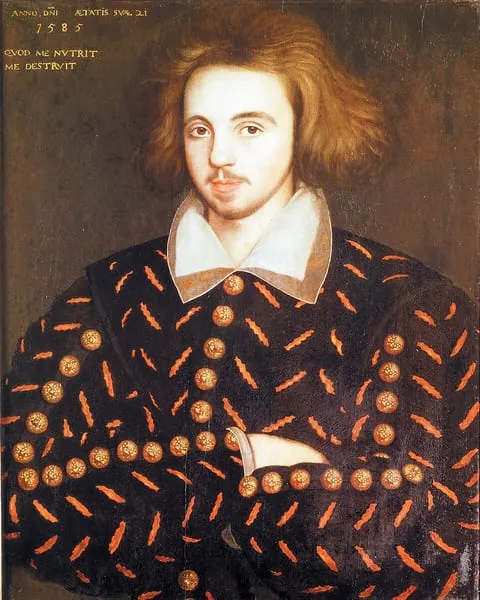
Christopher Marlowe was baptised in Canterbury on 26 February 1564, two months before William Shakespeare was baptised. He was the second of nine children of John Marlowe, a shoemaker, and his wife Katherine. Scholarships took him to The King's School in Canterbury and then to Corpus Christi College, Cambridge, where it was expected that he would become a clergyman. Instead he mastered Latin, translated Ovid and took his degree in 1584.
In 1587 the university hesitated over his Master of Arts until the Privy Council intervened, praising his unspecified "good service" to the Queen. That year his Tamburlaine was staged in London, the first English play written in blank verse, and scholars now see Marlowe as the foremost dramatist in London in the years that followed. His plays were the foundation of the repertoire of the Admiral's Men, the company of the actor Edward Alleyn.
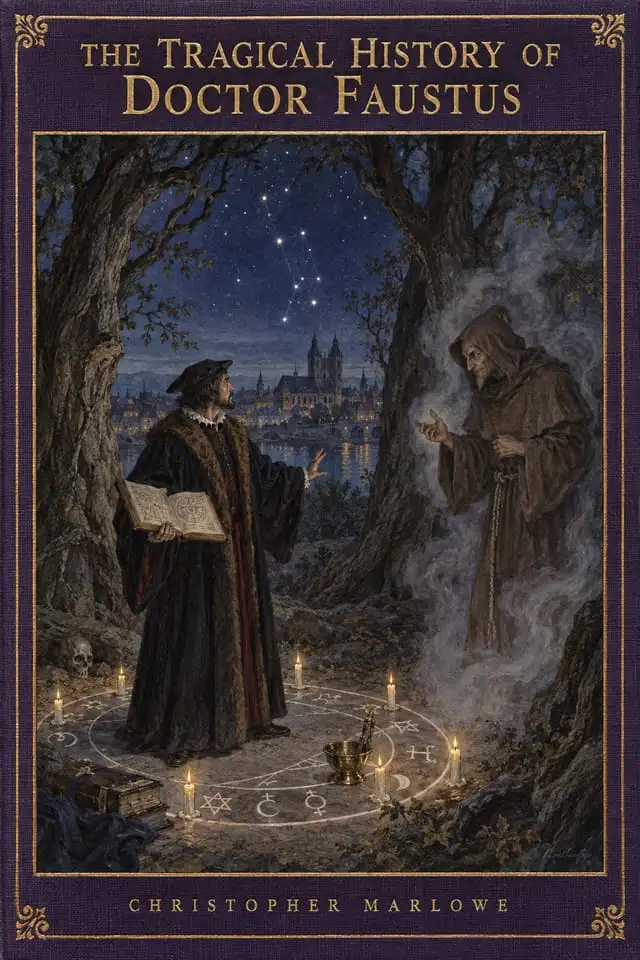
The Tragical History of Doctor Faustus, written around 1588-1592, was the first stage version of the Faust legend of a scholar's dealings with the devil. It was printed only after Marlowe's death, and the earliest surviving copy dates from 1604. His other work includes The Jew of Malta, Edward the Second and the poem Hero and Leander, and Ben Jonson wrote of "Marlowe's mighty line".
In May 1593 a warrant was issued for Marlowe's arrest, and he presented himself to the Privy Council. On 30 May he was killed at a house in Deptford, in circumstances still argued over, and he was buried in the churchyard of St Nicholas there.
Sources: wikipedia.org