Author
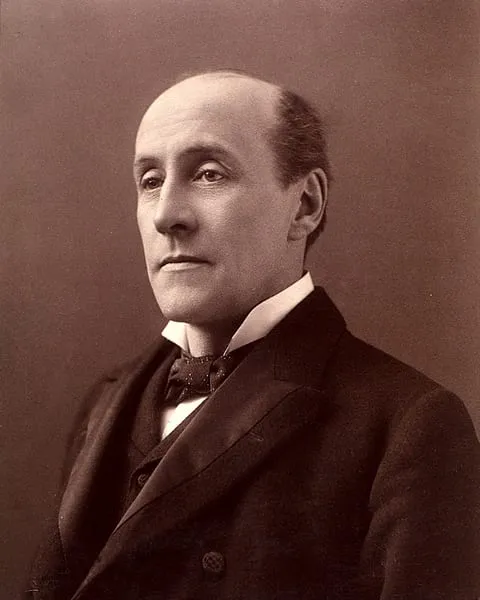
Anthony Hope
1863-1933
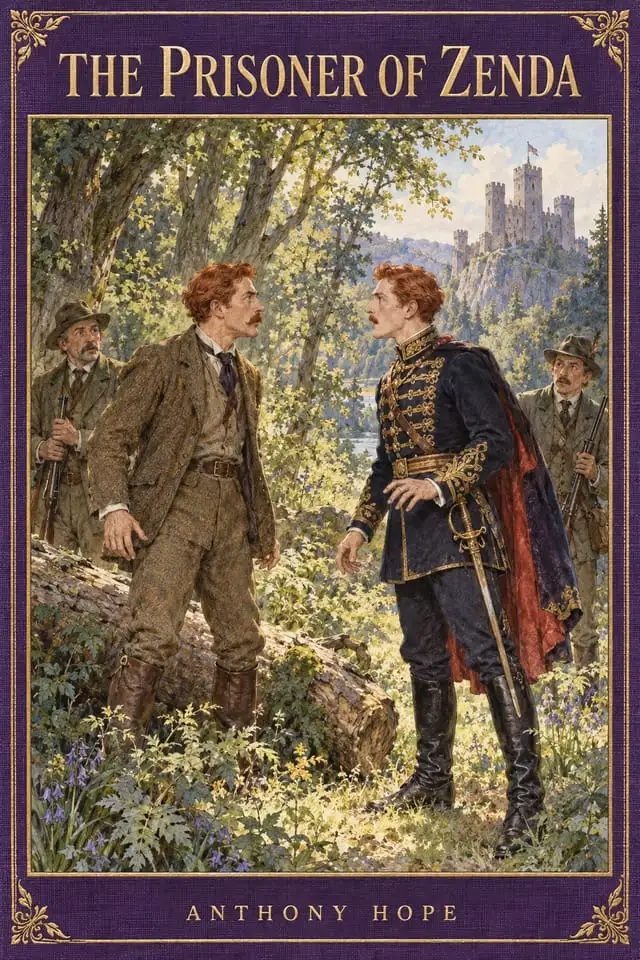
Anthony Hope was a British novelist and playwright whose novel The Prisoner of Zenda, set in the imaginary kingdom of Ruritania, gave rise to the Ruritanian romance.
Born Sir Anthony Hope Hawkins.
Anthony Hope Hawkins was born on 9 February 1863. He was educated at St John's School, Leatherhead, Marlborough College and Balliol College, Oxford, where he took first-class honours. He was called to the Bar in 1887 and served his pupillage under H. H. Asquith, the future Liberal Prime Minister, who thought him a promising barrister.
In his early years as a lawyer he had time to write, and lived with his widowed father, then Rector of St Bride's Church in Fleet Street. He had to publish his first book, A Man of Mark (1890), himself, and in 1892 he stood unsuccessfully as the Liberal candidate for Wycombe. His first major success was The Dolly Dialogues (1894), sketches first printed in The Westminster Gazette.
The idea for The Prisoner of Zenda (1894) came to him while he was walking in London at the end of 1893. He finished the first draft in a month, and the book was in print by April. A tale of political intrigue set in Ruritania, an invented European kingdom, it was an instant success. Ruritania came to mean any modern setting for court romance. A sequel, Rupert of Hentzau, followed in 1898.
Zenda's popularity persuaded him to give up the law and write full time. He wrote 32 volumes of fiction as well as plays, married Elizabeth Somerville in 1903, and was knighted in 1918 for his contribution to propaganda in the First World War. He died at his country home in Surrey on 8 July 1933, aged 70.
Sources: wikipedia.org